




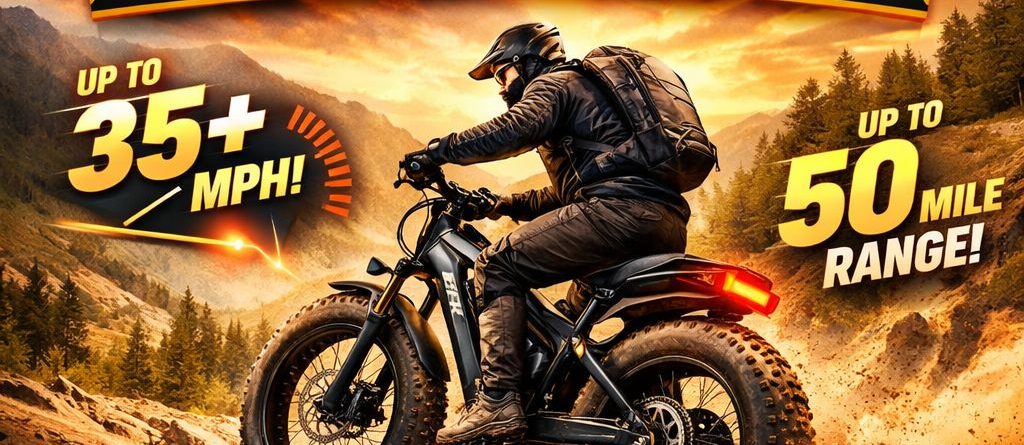
1000W Ebike: The Shocking Truth About Speed
Finding the perfect 1000w ebike requires more than just looking at raw power numbers. Whether you are building a custom high-torque mountain climber or searching for a fast daily commuter, understanding how a 1000W motor interacts with your battery and local laws is essential. In this 2026 performance guide, we break down the top-rated kits, real-world speeds, and technical specs.

A 1000W motor provides the torque needed for steep climbs and off-road terrain.
Top Recommended 1000W Systems for 2026

EM3ev 52V High-Power Pack
Optimized for 30A+ controllers to minimize voltage sag.
Bafang 1000W BBSHD Kit
Ultimate hill-climbing torque and efficiency for off-road builds.
Choosing a 48V eBike battery?
See our complete 48V guide: compatibility, capacity (Ah/Wh), range, and how to pick the right pack for your build.
48V eBike Battery GuideWhat Is a High-Power 1000W System?
Technically, this rating refers to the nominal power output of the motor. While many manufacturers label their motors by “peak” output (what the motor can hit for a few seconds), a true 1kW system is designed to handle that level of power continuously without overheating.
These drivetrains are often paired with robust frames—frequently seen as a fat tire electric bike or a heavy-duty cargo hauler. The extra wattage translates directly into torque (turning force) and top-end speed.
Quick Summary:
- Power: High torque for steep hills and rapid acceleration.
- Use Case: Off-road adventure, heavy cargo hauling, private land use.
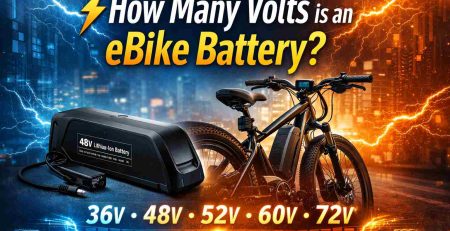
- System Voltage: Usually requires a 48V or 52V battery to operate efficiently.
How Fast Is a 1000W Electric Bike?
One of the most common questions we receive is about the real-world velocity of these machines.
Generally, a high-power setup will top out between 28 mph and 35 mph (45–56 km/h) on flat ground. However, the exact top speed depends heavily on the voltage of your battery, the weight of the rider, and the aerodynamics of the bicycle.
Here is a breakdown of expected performance based on battery voltage:
Performance Comparison Table:
| Battery Voltage | Motor Rating | Estimated Top Speed | Typical Range (Throttle Only) |
| 48V System | 1000W | 28 – 32 mph (45 – 51 km/h) | 25 – 35 miles |
| 52V System | 1000W | 32 – 36 mph (51 – 58 km/h) | 30 – 40 miles |
| 52V (Unlocked) | 1500W Peak | 38 – 42 mph (60+ km/h) | < 20 miles |
Note: Speeds listed are for flat terrain with a 175lb rider. “Unlocked” refers to off-road settings used on private property.
⚡ 1000W Ebike Technical Specs Matrix
| Feature | Bafang BBSHD (Mid) | High-Speed Hub Motor |
|---|---|---|
| Nominal Power | 1000W | 1000W |
| Max Torque | 160 N.m | 85 N.m |
| Controller Limit | 30A (Continuous) | 25A – 30A |
| Climbing Ability | Excelllent (Uses Gears) | Moderate (Flat Speed Focused) |
| Top Speed (52V) | 32 – 35 mph | 35+ mph |
Safety Upgrades: Stopping 1000 Watts
Before you build or buy, there is a critical factor that is often overlooked: stopping power.
When you upgrade from a standard bicycle speed of 15 mph to electric speeds of 30+ mph, the kinetic energy doesn’t just double—it quadruples. Standard mechanical rim brakes or basic cable-actuated disc brakes are often insufficient for a 1000W build, especially during emergency stops or long descents where brake fade becomes a serious risk.
For any 1kW build, we strongly recommend the following safety components:
- Hydraulic Disc Brakes: Look for 4-piston calipers (like Magura MT5 or Shimano Zee). These provide the modulation and clamping force needed to stop a heavy bike reliably.
- Larger Rotors: Upgrade your brake rotors to 180mm or 203mm. Larger rotors dissipate heat faster, preventing your brakes from “cooking” and failing on steep downhill sections.
- E-Bike Rated Tires: Standard bicycle tires wear out quickly under high torque. Use e-bike specific tires (often labeled E-50) which have thicker sidewalls and harder rubber compounds designed for higher speeds.
Motor Types: Hub vs Mid Drive
Not all high-power systems deliver energy the same way. The two main contenders are the hub motor and the mid-drive. In my experience testing both, the “feel” is radically different.
A hub motor pushes you from the wheel, giving that “scooter-like” thrust. A mid-drive pulls the chain, leveraging your bike’s gears. Here is a quick breakdown based on field testing:
Hub Motor (1kW)
- Best For: Commuting, flat speed, simple maintenance.
- Pros: Less wear on the chain and gears; often cheaper.
- Cons: Heavier rear wheel; less efficient on very steep, slow climbs.
Mid Drive (1kW)
- Best For: Steep hills, off-road technical trails.
- Pros: Uses the bike’s gears to keep the motor in its efficient RPM range; balanced weight distribution.
- Cons: High wear on chains and cassettes; more complex installation.
The Controller: The Brain Behind the Brawn
Many enthusiasts focus solely on the motor’s wattage, but the controller is equally important. The controller regulates the flow of amps from the battery to the motor.
The Math of Power:
- Watts = Volts × Amps
A 1000W motor paired with a weak controller (e.g., 15 Amps) will feel sluggish. To truly unlock the potential of a 1000w electric motor, you need a controller capable of delivering 25 to 30 Amps of continuous current.
However, increasing the amps puts significant stress on your battery. This is why pairing a high-amp controller with a cheap, generic battery often leads to voltage sag (loss of power under load) or the battery management system (BMS) shutting down the bike completely to prevent overheating.
48V Battery & Range Explained
A powerful motor is useless without a battery that can sustain it. The standard for this class is a 48V or 52V pack.
How far can it go? Realistically, a 1kW motor consumes about 20–25 watt-hours per mile (Wh/mi) at cruising speeds.
- 48V 15Ah (720Wh): Expect ~25–35 miles of range (throttle only).
- 48V 20Ah (960Wh): Expect ~35–50 miles of range.
- 52V 20Ah (1040Wh): Better voltage sag performance and slightly longer range.
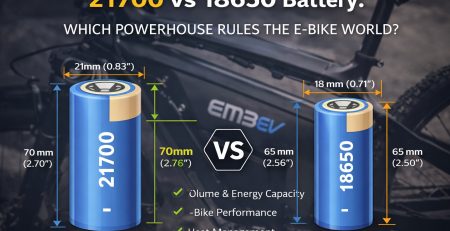
Engineering Insight: When choosing a battery for a high-performance kit, pay close attention to the “C-rating” (discharge rate) of the cells. A 30A controller pulls significant current. If the battery cells are cheap generics, they will sag under load, cutting your speed and reducing the lifespan of the pack. Always look for reputable cells (like Samsung or LG) to ensure safety and longevity.
Is This Legal in the US?
This is the grey area every rider must navigate.
In the United States, federal law (CPSC) generally defines a “low-speed electric bicycle” as having a motor of less than 750 Watts and a top speed of 20 mph on throttle. Therefore, a bike of this power class technically exceeds the federal Class 1, 2, and 3 classifications in many jurisdictions.
However, enforcement and local laws vary wildly:
- Private Land / OHV Trails: Almost always legal for off-road use.
- “Off-Road” Mode: Many high-power bikes are sold with speed limiters set to 750W/20mph for street use, with a software unlock for “private property” use.
- Moped Registration: In some states, you can register a powerful cycle as a moped if it has a VIN, mirrors, and lights.
Disclaimer: Always check your local city and state regulations. I am an enthusiast, not a lawyer.
Maintenance: The Cost of Power
Driving 1000 watts of power through a bicycle drivetrain significantly accelerates wear and tear. If you choose a mid-drive system (like the Bafang BBSHD), the motor power is transmitted through your bicycle chain and rear gears.
What to expect:
- Chain Stretch: On a standard bike, a chain might last 2,000 miles. On a high-power mid-drive, you may need to replace the chain every 500 to 800 miles.
- Cassette Wear: The smallest cogs on your rear wheel take the most abuse. We recommend using a steel cassette rather than lightweight aluminum to prevent teeth from snapping off.
- Spoke Tension: For hub motors, the torque is applied directly to the spokes. Check your spoke tension monthly to prevent the wheel from going out of true.
Maintaining this equipment is part of the hobby. Regular checks ensure that your ride remains safe and responsive.
Should You Choose a Kit or a Complete Bike?
If you have a solid mountain bike frame collecting dust, a 1000w ebike conversion kit might be your best route. It is often cheaper and lets you customize the battery capacity.
EM3ev 52V High-Performance Battery
Best for Max Speed & Range
- Specs: 52V 20Ah+ with high discharge BMS (Samsung/LG cells).
- Pros: Higher top speed than 48V; reduces voltage sag under load.
- Cons: Requires compatible controller/charger; slightly heavier.
EM3ev 1000W Ebike Conversion Kit
Best for DIYers & Custom Builds
- Components: Hub motor wheel, controller, throttle, LCD.
- Pros: Reuse your own bike, usually lower cost ($300-$600 + battery).
- Cons: Requires installation skills; battery mounting can be tricky.
Need Power for Your Build?
Whether you are building a 1000w ebike kit or upgrading an existing setup, the battery is the heart of your system. Don’t skimp on safety.
Frequently Asked Questions
How fast can a 48V 1000W system go?
A 48V system typically reaches top speeds of 28 to 32 mph (45–51 km/h) on paved surfaces. Factors like rider weight, tire width (fat tires are slower), and battery charge level will affect the final speed.
Is a 1000W setup street legal?
In most US states, a 1000W motor exceeds the 750W federal limit for electric bicycles. It may be classified as a moped or motorcycle, requiring registration and a license. However, many riders use them on private land or off-road trails where these limits do not apply.
How long does the battery last?
With a standard 48V 20Ah battery, you can expect a range of 30–50 miles with moderate pedal assist. If you ride aggressively using only the throttle at top speed, the range may drop to 15–20 miles.
Do I need special brakes for high-power bikes?
Yes. We strongly recommend hydraulic disc brakes for any bike exceeding 750 watts. Mechanical brakes often lack the stopping power needed to safely handle the increased weight and speed of a high-performance build.
Is 1000W too powerful for daily commuting?
For flat city streets, 1000W is often overkill and less efficient than 500W or 750W motors. However, if your commute involves steep hills, heavy cargo, or keeping up with 30mph traffic flow, the extra power is a significant safety feature.
Author’s Note: This guide is based on real-world testing of high-power electric drivetrains. Battery safety is paramount—always ensure your 1000W system is paired with a battery capable of handling high discharge currents.
EM3ev Technical Team Shelley
Battery engineers with 10+ years in lithium pack design & QC, sharing insights on e-bike battery safety and performance.
Last updated: 2025-12-17



LEAVE A COMMENT