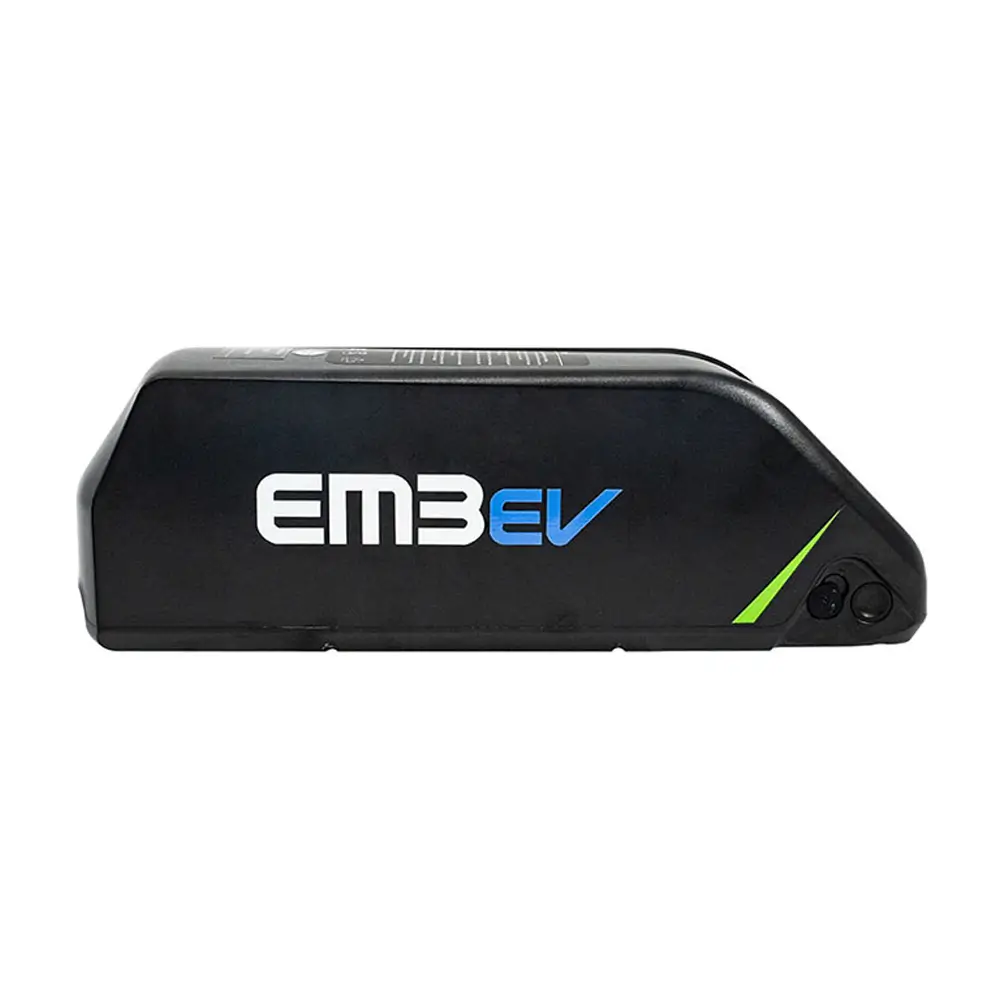
48V eBike Batteries for Sale — Long Range, Samsung Cells, Smart BMS
Choose a 48V eBike battery (48 volt / 13S lithium‑ion battery pack) by case style and capacity for the right fit, range, and power. Replacing an old pack? See the 48V replacement checklist. Compare downtube Shark, Jumbo Shark, and Rectangle packs in 13.6Ah, 17Ah and 19.6Ah (≈Wh shown on each model), built with genuine Samsung cells and smart BMS protection, and use a 54.6V charger on compatible 48V controllers (popular for Bafang & CYC builds).

48V King Shark 13S4P – Samsung 50GB
Versatile 19.6Ah pack with great balance of range, weight and current capability.
- Capacity: 19.6Ah (~917Wh)
- Best for: daily use, mixed surfaces

48V Super Shark 13S4P – Samsung 35E
Slightly lighter pack for riders who prioritize nimble handling with solid range.
- Capacity: 13.6Ah (~636Wh)
- Best for: touring, moderate power builds

48V Jumbo Shark 13S5P – Samsung 35E
High-load-capable pack for heavier bikes or cargo builds that demand reliability.
- Capacity: 17Ah (~796Wh)
- Best for: cargo, high-load commuting
48V eBike Battery Replacement — Match Your Old Pack Safely
Replacing an aging or underperforming pack? Use this quick checklist to choose a safe, compatible 48V eBike battery replacement. Most “48V” packs are 13S lithium‑ion (full charge ~54.6V) — and your controller, charger, and mounting space must match.
1) Confirm voltage & controller rating
- 48V system: typically 13S (nominal ~48V).
- Controller: must explicitly support 48V / 13S.
- LVC: ensure display/controller low‑voltage cut‑off is set correctly.
If your controller is “52V/14S capable,” you can compare 48V vs 52V below.
2) Match the charger voltage (don’t mix)
- 48V (13S): uses a 54.6V charger.
- 52V (14S): uses a 58.8V charger.
- 36V (10S): uses a 42.0V charger.
Using the wrong charger can damage the pack or reduce lifespan.
3) Check mounting space & connectors
- Case fit: Shark / Jumbo Shark / Rectangle dimensions must match your frame.
- Discharge lead: confirm connector type and polarity.
- Power demand: higher‑amp builds should use packs designed for higher load.
Need help? Share controller model + max current + frame space with support.
Why Choose a 48V eBike Battery?
48V packs deliver higher top speed potential and stronger hill performance versus 36V, while keeping broad controller compatibility for performance-focused builds.
48V vs 36V — What Changes in Real Use
48V typically feels stronger on hills and during acceleration, while 36V is lighter and often cheaper — range depends mainly on watt-hours (Wh), not voltage alone.
- Performance: 48V offers more headroom under load (less voltage sag at similar power).
- Efficiency: For the same power, higher voltage can mean lower current and less heat in wiring.
- Compatibility: Controller must match voltage (36V ≈ 10S, 48V ≈ 13S) and LVC settings.
- Feel under load: 52V can hold speed a bit better at the same current limits (controller permitting).
- Controller limits: many “48V” controllers are 13S only—52V requires explicit 14S support.
- Charging: 48V uses a 54.6V charger; 52V uses a 58.8V charger. Don’t mix them.
- Range: mostly comes from Wh (V × Ah), not voltage alone.
If you’re unsure, 48V is the safer default for compatibility; choose 52V only when your controller is rated for it.
- Controller voltage: must explicitly support the pack voltage (36V/48V/52V).
- Charger voltage: 36V → 42.0V, 48V → 54.6V, 52V → 58.8V.
- Low-voltage cut-off (LVC): ensure your controller/display LVC matches the pack.
- Mounting space: confirm case dimensions (Shark / Jumbo Shark / Rectangle).
Not sure? Share your controller model + max current + frame space with support.
| Use case | 36V | 48V | 52V |
|---|---|---|---|
| City commuting (mostly flat) | ✅ Smooth & efficient | ✅ Stronger acceleration | ✅ Best “snap” (if supported) |
| Hills / heavier rider / cargo | ⚠️ Can feel strained | ✅ Common sweet spot | ✅ Extra headroom |
| Max range goal | Depends on Wh | Depends on Wh | Depends on Wh |
| Controller compatibility | Broad | Very broad | More limited (must be 14S) |
- Short commute: ~600–800Wh
- Mixed riding: ~800–1000Wh
- All-day / cargo: 1000Wh+
Rule of thumb: buy 20–30% extra Wh to avoid deep discharge.
If you want a strong, reliable upgrade from 36V with wide controller compatibility, 48V is usually the best default. It pairs well with common mid-drives and 750–1500W class setups (controller permitting).
View 48V models →Choose 52V if your controller explicitly supports 52V/14S and you want a bit more speed headroom under load. You’ll also need the correct 58.8V charger and matching LVC settings.
Browse 52V batteries →More performance vs 36V
Higher voltage means more power at the same current — great for spirited commuting and mixed terrain.
Less voltage sag
Quality cells + smart BMS help maintain output on hills and during acceleration.
Built for common kits
Popular for Bafang / CYC and many 750–1500W setups (ensure controller voltage rating matches).
Looking for a Custom eBike Battery?
Need a custom eBike battery or replacement battery for your current setup? Our engineering team can design, test and assemble a bespoke lithium battery pack matched to your frame, motor, voltage and range requirements.
Tell us about your motor, controller and frame space and we’ll recommend a safe, reliable pack that fits your riding style.
48V eBike Battery Buying Guide
This 48V eBike battery guide covers the essentials: 48V is typically a 13S lithium pack (full charge ~54.6V). Capacity (Ah/Wh) dictates your range, and cell choice influences voltage sag and longevity.
Before ordering, confirm your controller supports 48V/13S (many are rated “48V/48V”), and verify case fitment on your frame.
48V eBike Battery FAQ
Still have questions about compatibility, charging or lifespan? Expand the FAQs below or contact the EM3ev support team for help with a specific build.
Need a Different Voltage?
Browse our full eBike battery collection by voltage, or jump directly to the most common options.