




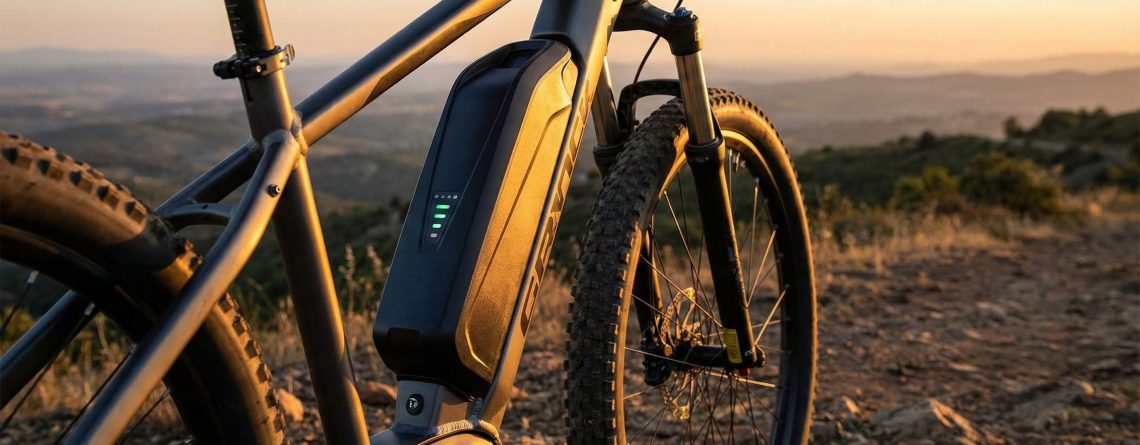
5 Proven Ways To Extend Ebike Battery Life
WHAT IS AN EBIKE BATTERY?
An eBike Battery acts like the fuel tank for your system. It stores energy to power the bicycle’s motor. Most packs use lithium-ion cells. The battery determines two main things: your range and your speed.
Key Takeaways:
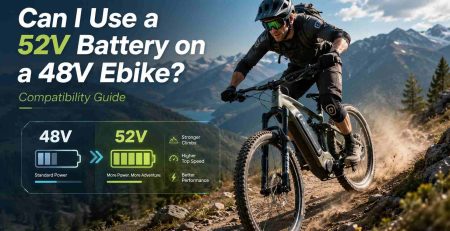
- Voltage: 48V is the standard for hills; 52V offers better top speed.
- Lifespan: Keep your charge between 20% and 80% to double battery life.
- Safety: Never charge a lithium battery when it is freezing cold.
My first DIY build was stressful. I stood in my garage with messy wires.
The numbers confused me. I had to choose between a 48v ebike battery and a 52v ebike battery. I also worried about safety.
If you are feeling that confusion, you are not alone. The battery is the most expensive part of your ride. It is also the most sensitive.
Making the wrong choice hurts your wallet. Worse, it can be a safety hazard. This applies whether you are buying replacement batteries for electric bikes or building a fast custom bike.
Choosing a 48V eBike battery?
See our complete 48V guide: compatibility, capacity (Ah/Wh), range, and how to pick the right pack for your build.
48V eBike Battery Guide
This guide cuts through the jargon. We will cover real-world range and cold weather tips. You will also learn 5 simple steps to extend your battery life.
Understanding Voltage: The “Push” Behind the Power
Think of voltage as water pressure. Higher voltage pushes electricity to your motor faster. When I swapped my old 36v ebike battery for a 52v system, the difference was huge. The bike did not just struggle up hills anymore; it flew up them.
Which Voltage Should You Choose?
Here is the breakdown based on typical ebike conversion kits and factory models:
| Voltage System | Best Used For | Top Speed Potential* |
|---|---|---|
| 36V | Commuting, flat terrain, smaller riders. | ~15–20 mph |
| 48V (Most Common) | Hills, cargo, and all-around performance. The standard for battery for electric bicycle kits. | ~25–30 mph |
| 52V | Enthusiasts wanting sustained power without “voltage sag” near the end of a ride. | ~30–35 mph |
| 60V / 72V | High-performance racing or off-road use only. Requires specialized motors. | 40+ mph |
*Speed depends heavily on motor Kv, controller amps, and rider weight.
Capacity: The “Gas Tank” (Ah & Wh)
Voltage is speed, but Amp Hours (Ah) is distance. A 48v 20ah battery ebike setup will theoretically take you twice as far as a 10ah version.
To compare different batteries, use Watt Hours (Wh): Voltage (V) × Amp Hours (Ah) = Watt Hours (Wh)
For example, a 48v ebike battery with 14Ah has 672Wh of energy. My rule of thumb is simple. Aim for at least 600Wh if you plan on doing rides longer than 25 miles.
Common Questions: Matching Parts
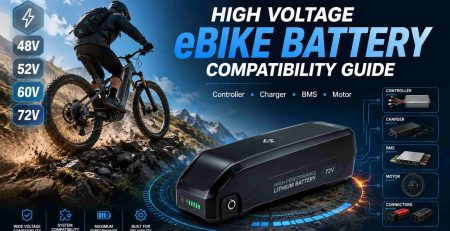
Can I use a 52v battery on a 48v controller?
Usually, yes. Most 48V controllers have capacitors rated for 63V, which can handle a fully charged 52V pack (58.8V). However, always check your controller’s specs before upgrading to avoid blowing a capacitor.
What about dual battery ebike setups?
Running two batteries requires a discharge balancer. Don’t just plug two packs together unless you want fireworks. A proper dual battery ebike kit manages the load safely.
5 Proven Ways to Extend Ebike Battery Life
Lithium-ion batteries are chemically sensitive. I once ruined a good electric bicycle battery by leaving it in a freezing shed. Cold temperatures can damage battery performance permanently.
CRITICAL SAFETY WARNING: Never charge a frozen battery. Charging below freezing (32°F/0°C) is dangerous. It can lead to failure or fire. Always bring the battery to room temperature before plugging it in.
Here are the 5 steps to make your battery last longer:
- 1. The 80/20 Rule: Try not to drain it to 0% or charge to 100% every day. Keeping it between 20% and 80% can double its cycle life.
- 2. Proper Storage: If you store your bike for winter, keep the battery at 50% charge. Check the voltage once a month.
- 3. Watch the Temperature: Avoid leaving the battery in a hot car or direct sunlight. Heat is the number one killer of lithium cells.
- 4. Use the Correct Charger: Always use a matching ebike battery charger. Never use a 52v charger on a 48v battery. This is a common cause of fire.
- 5. Minimize Vibration: Vibration destroys welded connections. Ensure your ebike battery mounting clamps are tight. If you use a battery bag, add foam padding to absorb shock.
Choosing the Right Replacement
When looking for replacement batteries for electric bikes, you need to match the mounting style (Shark, Dolphin, Triangle, or Rear Rack). Here are the categories you’ll likely encounter:

EM3ev 48V E-Bike Batteries
The industry standard. The perfect balance of range and torque for most 500W–1000W motors.
Fitment: Shark/Downtube (Fits most frames)
Best for: Daily commuting & moderate hills
Range: ~30–50 miles (depending on Ah)
EM3ev 52V Performance Series
Higher voltage gives more speed and less sag.
Cells: High-discharge Grade A cells
Best for: Enthusiasts & 1000W+ Kits
Speed: Faster acceleration & top end
Pro Tip: If you are building a custom bike, consider a triangle battery pack ebike configuration. It centers the weight low in the frame, which drastically improves handling compared to a heavy rear-rack battery.
Frequently Asked Questions
Here are the top questions riders ask about their power systems.
How long does an ebike battery last?
A high-quality lithium pack typically lasts for 3 to 5 years. This is roughly 500 to 800 full charge cycles. After this, the capacity will drop to about 70-80%. You won’t get as much range, but it will still work.
Can I perform ebike battery repair myself?
We do not recommend DIY repair. Replacing dead cells requires spot welding and specific safety knowledge. It carries high fire risks. For most riders, buying a new battery for electric bike use is safer and cheaper than a professional rebuild.
How do I choose a battery for my ebike conversion kit?
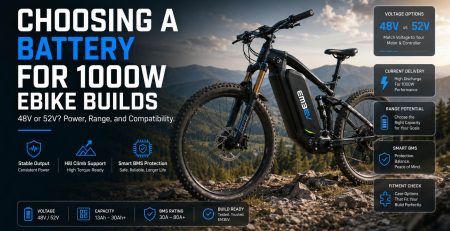
You must match the battery to your controller. If you have a 48V controller, use a 48V or 52V battery. Also, check the “Continuous Discharge” rating. If your motor pulls 30 amps, your battery BMS must handle at least 30 amps.
What is the safest way to charge?
Always charge on a non-flammable surface, like concrete. Use the charger specifically designed for your voltage. Ensure the battery is at room temperature. Never charge it unattended or overnight.
How do I access the battery if I lost the keys?
If you lose the locking key, a locksmith can often pick the simple cylinder. Or, you may need to drill out the core carefully. You can then install a replacement cylinder, which is a common part on most “Shark” style cases.
Why choose a lithium triangle battery pack?
A lithium triangle pack is designed to fit inside the bicycle’s main frame triangle. This configuration maximizes space for higher capacity (Ah) and keeps the center of gravity low, offering better handling for high-performance custom builds compared to rear-rack options.
Ready to power up your ride?
You might need a 72v ebike battery for range. Or you might want a simple daily pack. Either way, put safety first.
Disclaimer: Working with high-voltage lithium batteries carries inherent risks. Always follow manufacturer instructions and local regulations regarding disposal and charging.
EM3ev Technical Team Shelley
Battery engineers with 10+ years in lithium pack design & QC, sharing insights on e-bike battery safety and performance.
Last updated: 2025-12-4


LEAVE A COMMENT