





52V Ebike Battery Guide: How to Choose the Right Pack
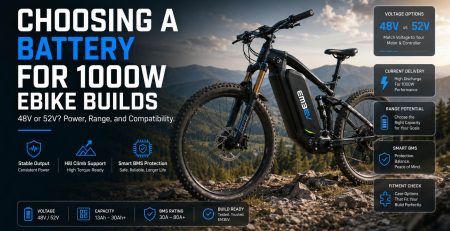
Choosing a 52V ebike battery is mostly about compatibility: your controller voltage range, charger output, frame space, discharge current, and the type of riding you do. This guide walks through the main checks before moving from a 48V setup to a 52V pack.
What Is a 52V Battery and When Is It Worth Upgrading?
A 52V pack can feel noticeably stronger than a typical 48V setup, especially under load or on climbs. The difference is not just the extra nominal voltage; a fully charged 52V pack reaches 58.8V, which gives the motor more headroom before voltage sag becomes noticeable.
That sluggish feeling on the big hill near my house? Gone.
For many riders, the 52V upgrade is the sweet spot between safety and high performance. While 72V systems require expensive custom controllers and 48V systems can feel a bit “saggy” when the battery gets low, the 52 volt electric bike battery keeps the power punchy right until the end of the ride.

Who Should Choose a 52V Battery?
A 52V upgrade makes the most sense for riders who care about climbing power, stronger acceleration, or better performance under heavier loads.
You don’t need to be a speed demon to appreciate the extra voltage. In my experience, the upgrade is most practical for:
- Hill Climbers: The extra voltage translates directly to more watts (Power = Voltage × Amps), helping you conquer gradients without the motor bogging down.
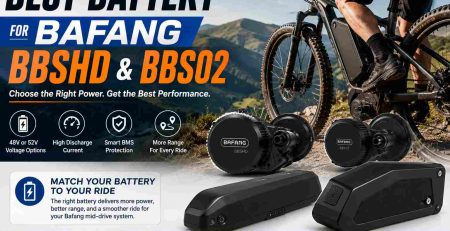
- Bafang BBSHD/BBS02 Owners: These motors are robust and handle 52V natively, making the 52 volt ebike battery for Bafang HD a common pairing for many Bafang BBSHD and BBS02 builds
- Heavy Loads: If you are a heavier rider or hauling cargo, the voltage sag on a 48V battery can be annoying. A 52V system stays “stiffer” under load.
The Technical “Secret”: 13S vs. 14S
Here is the jargon simplified: A standard 48V battery is built with 13 groups of cells in a series (13S). A 52V pack adds one more cell group in series, changing a 13S layout into a 14S configuration, making it 14S.
- 48V (13S): Max charge is 54.6V.
- 52V (14S): Max charge is 58.8V.
That extra “fully charged” voltage is where you feel the initial kick. It gives you higher RPMs and allows your motor to run cooler for the same amount of power output.
Need help comparing 52V options?
Check if your controller can handle the voltage (most can!) and see the top-rated options available now.
52V vs 48V Battery Comparison Table
When people ask me about the 48 volt vs 52 volt ebike battery debate, I usually point to the “voltage sag.” As a battery drains, voltage drops. On a 48V system, once you hit 50% capacity, the bike starts to feel sluggish. A 52V battery at 50% charge still has more voltage than a fully charged 48V battery does after 10 minutes of riding. That consistency is why people upgrade.
52V vs 48V Ebike Systems: What Actually Changes?
| Specification | 48V Battery (13S) | 52V Battery (14S) | Real World Impact |
|---|---|---|---|
| Full Charge Voltage | 54.6V | 58.8V | Higher top speed & torque off the line. |
| Nominal Voltage | 46.8V | 50.4V | Consistent power delivery. |
| Low Voltage Cutoff | ~39V – 41V | ~43V – 45V | Critical: Controller must accept higher cutoff. |
| Compatibility | Universal | Most 48V controllers | Check if your screen shows correct % (might read 100% for longer). |
Understanding the Cutoff Voltage
This is the one “gotcha” you need to know. Your controller has a “Low Voltage Cutoff” (LVC) to protect the battery. If you put a 52V pack on a controller designed strictly for 48V, the controller might think the battery is empty when it still has juice left, or conversely, it might drain the battery too low because it thinks it’s a 48V pack.
💡 Expert Insight: “I once ran a 52V pack on a stock controller that had a fixed 41V cutoff. It worked, but I risked over-discharging the battery. Always use a display or voltmeter to monitor your voltage manually if your controller isn’t smart enough!”
Performance, Range, and Real-World Riding
Can a 52V setup deliver more range than a 48V system? Technically, yes, because it holds more Watt-Hours (Wh) for the same Amp-Hours (Ah).
For example: 46.8V x 14Ah = 655Wh.
50.4V x 14Ah = 706Wh.
That’s roughly 8% more energy in the “same size” tank.
Q&A: Performance Queries
Q: Will a 52V battery burn out my motor?
A: Generally, no. Motors are fried by Amps (current), not a few extra Volts. As long as your controller limits the Amps, the 52v ebike battery just runs more efficiently. However, keep an eye on heat during long climbs.
Q: Can I use my old charger?
A: Absolutely not. You need a specific 52 volt ebike battery charger that cuts off at 58.8V. A 48V charger (54.6V) will never fully charge a 52V pack, leaving it unbalanced and weak.
How to Choose the Right 52V Battery Format
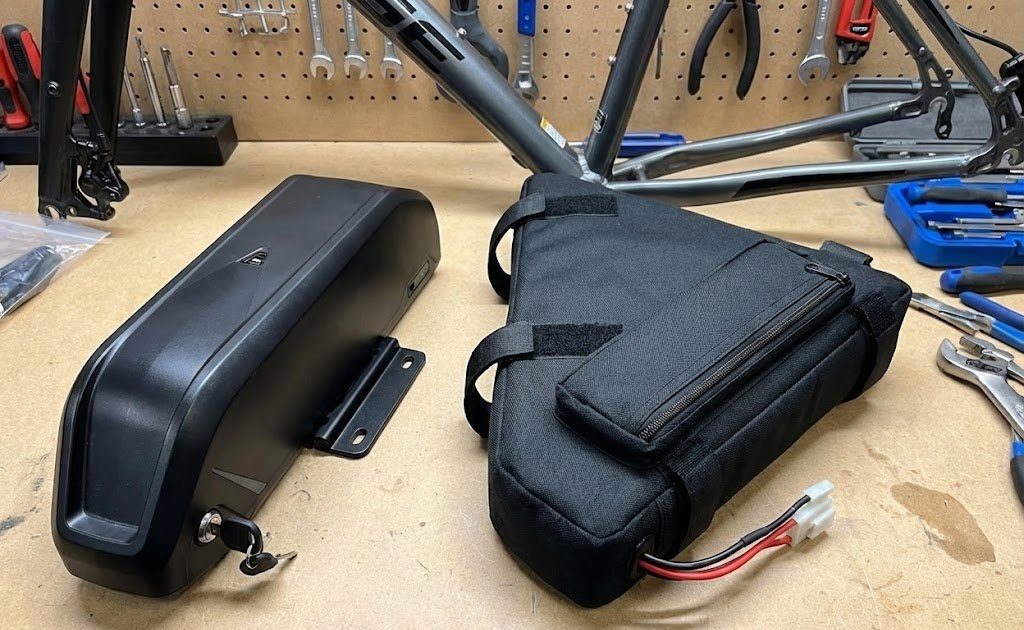
Choosing the right battery isn’t just about voltage; it’s about capacity (Amp Hours) and form factor. Are you doing a 52 volt ebike battery build for a custom frame, or do you need a sleek “Shark” pack that clicks onto your water bottle mounts?
Amp-Hours Explained (20Ah vs 40Ah)
Think of Voltage as horsepower and Amp-Hours (Ah) as the fuel tank size.
- 20Ah 52V pack: This is the “Goldilocks” size. It fits in most triangle frames and offers a realistic range of 35-50 miles (55-80km) with moderate pedaling.
- 40Ah 52V option: These are massive. Usually rectangular “brick” packs for cargo bikes or long-range delivery riders. Expect to mount this on a sturdy rear rack.
Installation Notes
Most 52 volt battery for ebike kits come with a mounting bracket. In my experience, the hardest part is soldering the connector to your motor. Many vendors now offer pre-soldered XT90 or Anderson connectors—definitely worth checking before you buy to save yourself the hassle.
How to Extend 52V Battery Lifespan
Batteries are expensive, so you want yours to last. The number one killer of a battery lifespan is heat and leaving it fully charged for weeks.
The 80% Charge Rule
While it’s tempting to charge to 100% (58.8V) every time, you can double your cycle life by charging to 80-90% (approx 56V-57V) for daily rides. Save the full 100% charge for those days when you really need the max range. This is why a “smart” 52V charger with a voltage knob is a great investment.
Frequently Asked Questions
What is the low voltage cutoff for a 52V ebike battery?
A safe low voltage cutoff (LVC) for a 52V battery is around 43V to 45V. Draining it lower than 42V can permanently damage the chemistry. If your controller is set to 39V (standard for 48V systems), you risk over-discharging the pack.
Can I use a 52V battery on a 48V controller?
In most cases, yes. Most 48V controllers have capacitors rated for 63V, which can handle the 58.8V peak of a 52V battery. However, your battery percentage display might be inaccurate (showing “Full” for a long time) unless you have a display that supports 52V settings.
Does a 52V battery make my bike faster?
Yes. Since electric motors spin faster at higher voltages, switching from 48V to 52V typically adds 2-4 mph to your top speed, assuming your motor isn’t strictly speed-limited by software.
What does “20A” mean on a 52V battery?
This usually refers to the Continuous Discharge Current (Amps), not the capacity. It means the BMS allows the battery to output 20 Amps continuously without shutting down. For high-power motors like the Bafang BBSHD, you ideally want a battery capable of 30 Amps or more.
Conclusion
A 52V upgrade can be a great fit if you want stronger acceleration, better climbing performance, and more consistent power than a typical 48V setup. The key is matching the pack to your controller, charger, frame space, and riding style.
Need Help Choosing a 52V Pack?
Find a 52V pack that fits your frame, controller, and riding style.
Safety Disclaimer: Lithium batteries store a lot of energy. Always use the correct charger, follow the battery manufacturer’s guidelines, and never charge a pack unattended.




LEAVE A COMMENT