






New Ebike Battery Cold Weather Performance Guide
Ebike battery cold weather performance refers to the reduced efficiency of lithium-ion cells when temperatures drop below freezing. In cold climates, riders often experience a temporary range loss of 20% to 50% because the chemical reactions inside the battery slow down, increasing internal resistance and voltage sag.
Key Takeaways for Winter Riding
- Expect Range Loss: Be prepared for reduced mileage as the temperature drops.
- Charge Warm: Never charge a frozen pack; always wait for the battery at room temperature.
- Insulate: Use covers to trap heat while riding.
- Protection: A quality battery management system is vital to prevent low-voltage damage in the cold.
I still remember my first “real” winter commute on my electric bike. It was a crisp January morning, about 25°F (-4°C). I had charged my battery fully the night before, leaving it in the unheated garage attached to my house. I confidently set off for my 15-mile round trip, a distance my bike usually devoured with 40% battery to spare.
By mile six, I noticed something concerning. The battery bar wasn’t just ticking down; it was plummeting. The motor felt sluggish, lacking that usual “zip” on the hills. I barely limp-moded it into my office parking lot with the display flashing empty.
That day, I learned a hard lesson about how cold weather affects e bike batteries.
If you are planning to ride your e-bike in winter, you aren’t just battling the wind and snow; you are battling chemistry. But don’t worry—you don’t have to put your bike away until spring. With the right adjustments, you can maintain decent range and protect your investment.
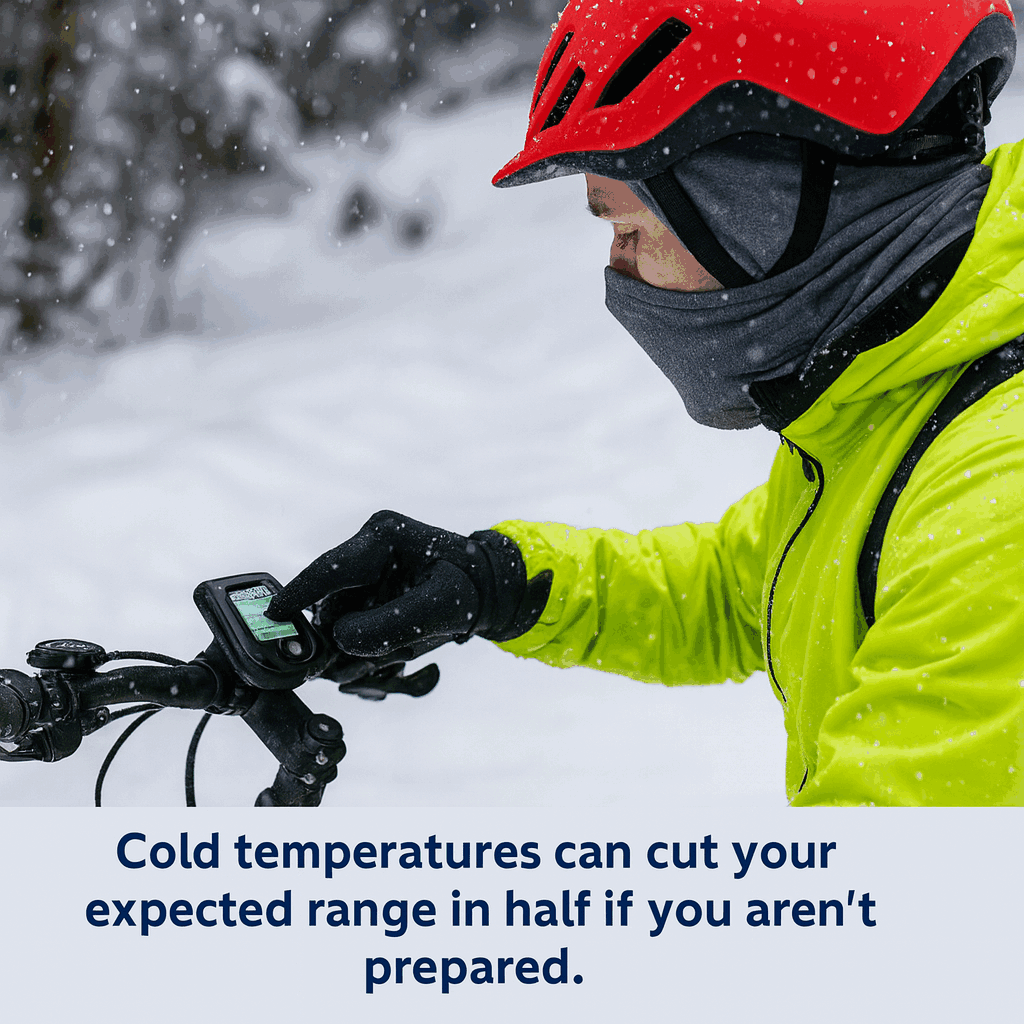
Cold temperatures can cut your expected range in half if you aren’t prepared.
The Winter Reality Check
Did you know? Most manufacturers state that lithium-ion batteries perform best at room temperature (around 68°F / 20°C). Once the mercury drops near freezing, the electrolyte fluid inside the cells thickens, making it harder for ions to move. This is why your ebike battery range loss in winter feels so dramatic.
Why Winter Reduces Range: The Science
To understand why ebike battery drains fast in winter, we have to look inside the casing. Your e-bike likely uses Lithium-Ion (Li-ion) cells, similar to those in your phone or laptop.
Think of the lithium ions as runners and the electrolyte (the fluid inside the battery) as the track they run on.
- In Warm Weather: The track is clear and solid. The runners (ions) sprint easily from the negative side to the positive side, providing power.
- In Cold Weather: The track turns into mud. The low temperatures cause the electrolyte to become more viscous (thick). The ions have to work twice as hard to move through it.
This increased internal resistance causes “voltage sag.” Even if your battery is fully charged, the bike thinks it has less power because the voltage drops under load. This is where your battery management system becomes critical. A high-quality BMS monitors this voltage drop and may cut power early to protect the cells from permanent damage, which feels like a sudden loss of range to the rider.
Temperature vs. Efficiency Table
Based on general industry data for standard 18650 and 21700 lithium cells, here is what you can expect regarding ebike battery performance comparison cold vs warm weather:
| Temperature | Est. Usable Capacity | Performance Feel |
|---|---|---|
| 68°F (20°C) | 100% | Optimal torque and range. |
| 32°F (0°C) | 80% – 85% | Slight sag on steep hills. |
| 14°F (-10°C) | 60% – 70% | Noticeable power loss; drains fast. |
| -4°F (-20°C) | 40% – 50% | Severe lag; risk of cutoff. |
Protecting Ebike Battery in Freezing Temperatures
The cold doesn’t just annoy you; it can damage your battery if you aren’t careful. The biggest danger isn’t riding in the cold—it’s charging in the cold.
Critical Warning: Never Charge Frozen!
Ebike battery charging tips in cold weather #1: Never plug in your charger if the battery temperature is below 32°F (0°C). Charging a frozen lithium battery causes “lithium plating,” where metallic lithium builds up on the anode. This is permanent damage and can lead to battery failure or fire hazards.Always bring the pack inside and wait until you have a battery at room temperature before connecting the charger.
Q: Can I leave my battery on the bike outside?
A: For short stops (like running into a shop), it’s fine. But for long-term parking or overnight? Absolutely not. Always bring removable batteries inside with you. If you store it indoors, you keep the core temperature up, meaning you act like a fully efficient cold weather battery when you start your next ride.
How to Improve Ebike Battery Performance in Cold Weather
So, the chemistry is working against us. Does that mean we stop riding? No way. Over years of winter commuting, I’ve developed a protocol to minimize ebike battery range loss in winter.
1. The “Bring It Inside” Rule
This is the golden rule. Always store it indoors. Treat your battery like a houseplant. If it’s too cold for a fern, it’s too cold for your battery. Ensuring you start with a battery at room temperature is the single most effective way to maximize range.
2. Insulate Your Battery
Once you head out into the cold, the wind chill starts cooling the battery casing. Ebike battery insulation solutions are a game changer. You can buy neoprene covers specifically designed for downtube batteries.
3. Start Riding Immediately
Don’t put a warm battery on a cold bike and let it sit for 20 minutes while you get your gear on. Slot the battery in right before you ride. Using the battery generates internal heat; if you start riding immediately, the discharge current helps keep the cells warm.
Combat Winter Range Loss: Upgrade Your Power
The most effective way to beat the cold is simply having more capacity. Since winter can rob you of 30% of your range, if you need a reliable cold weather battery, upgrading to a high-quality EM3ev pack with premium cells ensures you still reach your destination with power to spare.

EM3ev 48V Jumbo Shark Battery
Best for: Maximum Range.
Massive Ah capacity acts as a buffer against winter efficiency loss. Perfect for long commuters who can’t risk running out of juice.
EM3ev 52V Super Shark Battery
Best for: Winter Power & Speed.
Higher voltage means less voltage sag in freezing temps. Equipped with a Smart battery management system and premium cells to handle cold starts reliably.
Not Sure Which Voltage You Need?
Whether you need a 36V replacement or a 52V upgrade, our packs are built with genuine Samsung/LG cells that outperform generic batteries in harsh conditions.
Frequently Asked Questions (FAQ)
Why does my ebike battery drain fast in winter?
Cold temperatures thicken the electrolyte fluid inside lithium-ion cells, increasing internal resistance. This means the battery has to work harder to deliver power, leading to voltage sag and faster depletion. You can lose 20-40% of your range in freezing conditions.
How do I store my ebike battery in winter if I don’t ride?
If you are putting the bike away for the season, store the battery indoors at room temperature (50°F–77°F). Charge it to about 50-60%—never store it fully charged (100%) or fully empty (0%) for months, as this degrades cell health.
Can I use a battery warmer on my e-bike?
Yes, ebike battery warming methods are effective. Neoprene covers help retain heat generated during use. Some high-end cold climate e-bikes even have built-in heating elements, but for most riders, an external thermal cover is sufficient.
Is it safe to ride an e-bike in -10°C weather?
Yes, riding in the cold is safe for the electronics as long as the battery is rated for it (most are). The main risk is charging. Always wait until the battery warms up to room temperature before plugging it in to avoid permanent damage.
Final Thoughts
Riding in the winter can be incredibly rewarding. The trails are empty, and the crisp air is refreshing. Don’t let the fear of how cold weather affects e bike batteries stop you.
Remember the simple formula: Charge Warm, Ride Immediately, Insulate.
By treating your lithium-ion battery with a little extra care—bringing it inside and keeping it cozy—you’ll ensure it survives the winter and is ready for thousands more miles when the spring flowers bloom.
Disclaimer: Always consult your specific e-bike manufacturer’s manual for temperature ratings. Dealing with lithium batteries carries risks; never charge a damaged or frozen battery.


LEAVE A COMMENT