




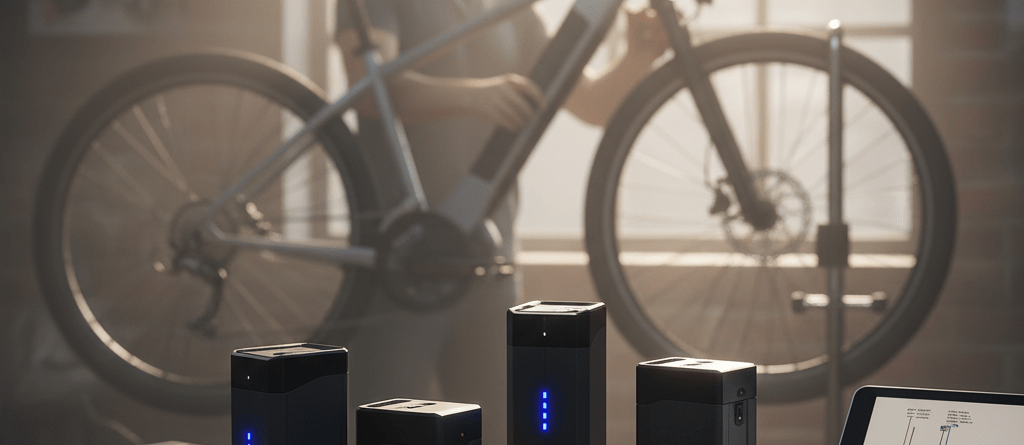
Your Ultimate Guide to Finding the Perfect Lithium Battery for Ebike
Your Essential Guide to Choosing a Lithium Battery for Ebike
A lithium battery for an ebike is a rechargeable power pack that uses lithium-ion technology to run your bike’s motor. Known for being lightweight and energy-dense, it’s the heart of your electric bike, directly impacting your speed, range, and overall ride quality. Choosing the right one is crucial for performance and safety.

The right ebike lithium battery isn’t just a component; it’s the key to unlocking your bike’s true potential.
I still remember the day my first ebike battery died. I was halfway up a hill I’d conquered a hundred times, and suddenly… nothing. The pedal assist vanished, and my zippy ebike turned into a 50-pound beast of dead weight. That long, sweaty push home taught me a valuable lesson: not all ebike batteries are created equal, and choosing the right replacement is about more than just finding one that fits.
To be honest, the world of ebike batteries can feel overwhelming. You’re hit with terms like Volts, Amp-hours, and BMS, and every manufacturer claims to offer the best performance. What do you actually need? Are you a casual weekend rider or a daily commuter tackling steep hills? The perfect battery for your friend might be completely wrong for you.
That’s why I put this guide together. We’re going to break down everything you need to know about finding the perfect lithium battery for your e bike. We’ll decode the specs, compare the popular options, and give you a practical checklist to follow. My goal is to help you buy with confidence, so you can spend less time worrying and more time riding.
Ready to Power Up Your Ride?
Let’s find the battery that matches your needs and budget. Keep reading to become an ebike battery expert.
What Type Do You Need? 🌱
First things first, let’s talk about the chemistry. When you see “lithium battery,” it’s almost always referring to a lithium ion battery for ebike systems. These have become the industry standard for a reason: they pack a ton of energy into a lightweight package and have a long lifespan compared to older technologies. You might also hear about LiFePO4 (Lithium Iron Phosphate) batteries, which are known for being extra safe and long-lasting but are a bit heavier. For most riders, a high-quality li ion battery for ebike use is the perfect choice.
“My first upgrade was to a well-known brand of lithium-ion cells. The difference in weight and consistent power delivery, especially on cold mornings, was immediately noticeable. It felt like a brand-new bike.”
Voltage Guide (36V vs 48V) ⚡
Voltage (V) is all about power. Think of it as the muscle behind your motor. Higher voltage means more power, which translates to faster acceleration and better hill-climbing ability. The two most common options you’ll encounter are 36V and 48 volt lithium battery for ebike models.
- 36V Ebike Lithium Battery: This is the standard for many commuter and entry-level ebikes. It provides plenty of power for cruising on flat terrain and handling moderate hills. It’s often lighter and more affordable.
- 48V Ebike Lithium Battery: If you crave more speed, tackle steep hills regularly, or carry heavier loads, a 48V system is a significant upgrade. It delivers power more efficiently under stress, which can feel much more responsive.
Comparison: 36V vs. 48V Ebike Batteries
| Feature | 36V Battery | 48V Battery |
|---|---|---|
| Best For | Urban commuting, casual riding, flat terrain | Hilly areas, faster acceleration, heavy loads |
| Power Output | Moderate | High |
| Weight | Lighter | Heavier |
| Cost | More affordable | More expensive |
Capacity & Range 💡
If voltage is power, capacity is your fuel tank. Measured in Amp-hours (Ah), capacity tells you how long you can ride before needing a recharge. A higher Ah number means a longer range, all other things being equal. You’ll often see this combined with voltage to give a Watt-hour (Wh) rating (Volts x Ah = Wh), which is the most accurate measure of total energy.
For instance, you might see a 30ah lithium battery for ebike specifications, which would offer an exceptionally long range, but would also be quite large and heavy. A more common size is between 10Ah and 20Ah. When I was choosing a new lithium ion battery pack for ebike commuting, I calculated my daily round-trip distance and added a 40% buffer. This ensures I never have “range anxiety,” even on windy days or when I’m using a higher assist level.
Price & Value 🚀
The lithium battery for ebike price can vary dramatically. Why the big difference? It often comes down to the quality of the individual cells inside the pack (brands like Samsung, LG, and Panasonic are top-tier), the sophistication of the Battery Management System (BMS), and the warranty.
While a cheap, unbranded battery might be tempting, it’s one of the worst places to cut corners. In my experience, these often use lower-grade cells that degrade quickly and may have a questionable BMS. If you’re looking for value, consider options from a reputable lithium battery for ebike factory or a wholesale lithium battery for ebike supplier that provides transparency about their components and testing standards. You get what you pay for in terms of both performance and peace of mind.
Best Choices & Buying Checklist 📖
Finding the best lithium battery for ebike use depends entirely on your needs. Before you buy, run through this checklist:
- Assess Your Ride: Are you on flat city streets or tackling mountain trails? Your terrain dictates your power (Voltage) needs.
- Calculate Your Range: How far is your typical ride? Choose a capacity (Ah) that gives you a comfortable buffer.
- Check Physical Fit: Does the battery mount to your frame, rear rack, or downtube? Measure the dimensions and check the mounting bracket style.
- Verify Connector Types: Ensure the discharge connector on the battery matches the one on your bike’s controller.
- Read the Reviews: Look for feedback on longevity and real-world range, not just out-of-the-box performance.
Pro Tip: When comparing batteries, always look at the Watt-hour (Wh) rating. A 36V 15Ah battery (540Wh) will give you a longer range than a 48V 10Ah battery (480Wh), even though the latter is more powerful. It’s all about balancing power and endurance.
Compatibility & Safety ✅
Safety should be your #1 priority. A high quality ebike battery’s most important safety feature is its Battery Management System (BMS). The BMS is the battery’s brain, protecting it from overcharging, over-discharging, overheating, and short circuits. A good BMS not only prevents catastrophic failure but also extends the battery’s lifespan by keeping the cells balanced.
Always use the charger that came with your battery or one specifically rated for its voltage and chemistry. Using an incompatible charger is a serious fire hazard and can destroy your battery. Never compromise on safety features.

Commuter Series Battery Pack
A reliable choice for daily riders focused on range and consistency.
- Specs: 36V, 13.6Ah (490Wh)
- Use Case: Urban commuting, moderate terrain.
- Pros: Excellent range, lightweight design.
- Cons: Less power for very steep hills.
Performance Series Battery Pack
Built for riders who demand more power for hills and acceleration.
- Specs: 48V, 19.6Ah (917Wh)
- Use Case: Hilly regions, performance riding.
- Pros: High power output, quick acceleration.
- Cons: Heavier and more expensive.
Frequently Asked Questions 🤔
Is a 36V or 48V ebike battery better?
Neither is universally “better”—it depends on your needs. A 36V battery is great for casual riders and flat commutes, offering a lighter and more affordable option. A 48V battery delivers more power, making it better for climbing steep hills, carrying heavy loads, or achieving faster acceleration.
How long does a lithium ebike battery last?
A quality lithium-ion ebike battery typically lasts between 3 to 5 years, or 500 to 1,000 full charge cycles. Its lifespan is affected by factors like usage, charging habits, and storage conditions. Even with light use, batteries lose capacity over time.
What does Ah mean for ebike batteries?
Ah stands for Amp-hours, which measures the battery’s capacity—think of it as the size of the fuel tank. A higher Ah rating means the battery can store more energy and will provide a longer riding range on a single charge.
Can I use any charger with my ebike lithium battery?
No, this is extremely important for safety. You must use a charger that is specifically designed for your battery’s voltage (e.g., a 48V charger for a 48V battery) and lithium-ion chemistry. Using the wrong charger can damage the battery and create a significant fire risk.
Power Your Journey with Confidence
Choosing the right lithium battery for your ebike transforms your entire riding experience. It’s not just about specs; it’s about matching the technology to your lifestyle. By understanding the fundamentals of voltage, capacity, and the critical role of a high-quality BMS, you’re now equipped to make a smart, safe investment.
Don’t just replace your battery—upgrade your ride. Take your time, do your research, and you’ll be rewarded with more power, greater range, and thousands of miles of happy riding.
Have Questions About Compatibility?
Our team can help you verify the right fit for your ebike model. Contact us for a free compatibility check or to request a quote for a custom solution.
References:
- Battery University. (n.d.). BU-303: Confusion with Voltages.
- Ebike School. (n.d.). The Complete Guide to Ebike Batteries.
Disclaimer: Always follow the manufacturer’s instructions for your specific ebike and battery. Electrical systems can be dangerous. Consult a professional if you are unsure about installation or compatibility. This article shares expert experiences and was organized with AI assistance.








LEAVE A COMMENT