





Battery for Electric Bicycle: How To Power Your Ride
Your e-bike’s battery is the key to unlocking its full potential. Choosing the right one is vital, whether you’re upgrading your current bike or just starting with electric bikes. This guide will walk you through everything you need to know about e-bike batteries, from the different types and their features to tips on how to care for them. With this knowledge, you can ensure your ride remains powerful and dependable.
⚡ Understanding Your E-Bike’s Power Source: The Core of Performance
An e-bike’s battery is the single most important component determining its performance, range, and lifespan. Modern electric bicycle batteries are sophisticated systems that deliver consistent power to the motor, making today’s e-bikes lighter and more efficient than ever before.
To choose the right battery, you must understand three key specifications: voltage (V), ampere-hours (Ah), and watt-hours (Wh). These numbers tell you everything about the battery’s power and range potential.
What is Voltage (V)? Voltage directly relates to the power and speed your e-bike can achieve. A higher voltage (like 48V) delivers more power than a lower voltage (like 24V), resulting in faster acceleration and better hill-climbing ability.
What are Ampere-Hours (Ah)? Ampere-hours measure the battery’s capacity—essentially, how much energy it can store. The higher the Ah, the longer your ride will last before needing a recharge.
What are Watt-Hours (Wh)? Watt-hours represent the total energy in the battery. It is the most reliable metric for comparing the potential range of different batteries. You can calculate it by multiplying voltage by ampere-hours (V x Ah = Wh).
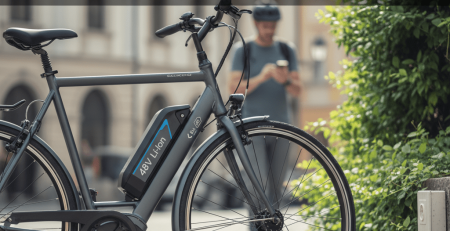
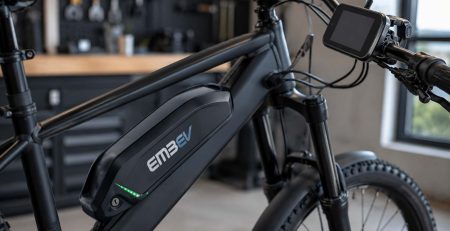
For a clean look and better protection, many modern e-bike batteries are built right into the bike’s frame.

Modern electric bicycle battery packs are often integrated seamlessly into the frame for aesthetics and protection.
💡 Why Lithium-Ion Batteries Are the Top Choice for E-Bikes
Most of today’s e-bikes run on lithium-ion batteries, and there are good reasons for that. These batteries can store a large amount of energy without being too heavy, which makes the bike easier to handle and more efficient. They are also great for providing quick bursts of power when you need to climb hills or accelerate. Plus, they can be charged and discharged many times before they start to lose their ability to hold a charge.
Older types of batteries, like lead-acid or Nickel-Metal Hydride (NiMH), are not as common anymore. Lead-acid batteries are very heavy and don’t hold much energy. NiMH batteries are an improvement, but they still can’t compete with the lightweight and powerful performance of lithium-ion. This is why almost all e-bike batteries you’ll find for sale now are lithium-based.
Pro Tip: Not All Lithium-Ion Batteries Are the Same!
Even in the lithium-ion category, there are different types, such as LiFePO4 (Lithium Iron Phosphate), Li-NMC (Lithium Nickel Manganese Cobalt), and Li-NCA (Lithium Nickel Cobalt Aluminum). LiFePO4 batteries are known for being safer and lasting longer. On the other hand, Li-NMC and Li-NCA batteries have a higher energy density, which means they can provide more range for their size. It’s a good idea to check the specific type of lithium battery you’re buying to make sure it fits your needs.
📊 Key Things to Look for in an E-Bike Battery
UnderstandinUnderstanding the numbers on an e-bike battery is important for making a smart choice. Here is a simple explanation of what they mean:
- Voltage (V): Most e-bikes use a 24V, 36V, 48V, or 52V system. A higher voltage usually means more power and can be used with stronger motors. Make sure the battery’s voltage is compatible with your motor and controller.
- Ampere-hours (Ah): This tells you the battery’s capacity. A higher Ah number means the battery can store more energy, which will give you a longer range. For example, a 36V 10Ah battery has a total of 360Wh of energy.
- Watt-hours (Wh): This is the most direct way to know a battery’s total energy and its potential range. You can calculate it by multiplying the Voltage (V) by the Ampere-hours (Ah). When you’re comparing different e-bike batteries, the Wh value gives you the clearest picture of their total energy.
- Cycle Life: This is the number of times a battery can be fully charged and then fully used before its capacity drops to a certain level (for example, to 80% of what it was originally). Good quality Li-ion batteries usually last for 500 to 1000 or more charge cycles.
Choosing the right battery for your electric bicycle will help it perform at its best and last longer. It’s an investment that has a direct effect on how much you enjoy riding and what you can do with your bike.

Product Spotlight: 36V 13.6Ah Super Shark Battery Pack
Price: $329
Voltage: 36V
Chemistry: Li-NMC
Compatibility: Most 36V hub/mid drive motors
Use case: Daily commuting, light trail
Product Spotlight: King Shark 48V 19.6Ah Battery Pack
Price: $379
Voltage: 48V Capacity 19.6Ah (917Wh)
Chemistry: Li-NCA
Compatibility: High-power 48V e-MTBs
Use Case: Off-road, long-distance touring
Safety and Disclaimer
Always read and follow the manufacturer’s instructions for installing, charging, and taking care of your electric bicycle battery. If you don’t handle it correctly, it could lead to poor performance, damage, or even a safety hazard. Also, be sure to follow your local rules for getting rid of and transporting batteries. This article is meant to give you general information and should not be used as a substitute for professional advice.
🔋 Finding the Right Battery: Compatibility and Capacity
Choosing the best battery for your electric bicycle is about more than just picking the one with the highest voltage or Ah rating. It’s very important that it works with your e-bike’s existing parts (motor, controller, and charger). If you use parts that don’t match, it can lead to bad performance, damage to your system, or even put you at risk. Most electric bikes have a specific voltage range that they can work with, so you should always check your bike’s manual or the manufacturer’s information before you buy a new lithium electric bicycle battery.
⚖️ Matching Voltage and Amperage to How You Ride
The voltage of your battery pack for your electric bicycle has a direct effect on its speed and how it delivers power. Common voltages are 24V, 36V, 48V, and 52V. A 24V battery for an electric bicycle might be fine for lighter e-bikes that are used in the city and have less powerful motors. But a 48V or 52V battery is usually needed for more powerful motors, like those in e-mountain bikes or cargo bikes that need more torque and speed.
You should always make sure that the battery voltage you choose matches what your motor and controller need to avoid any problems with your system.
The capacity, which is measured in Ampere-hours (Ah), decides how far you can go. If you’re planning on long rides to work or long trips, you’ll need a battery with a higher Ah. For instance, a 36V 15Ah battery will let you ride much farther than a 36V 7Ah battery, even though they both have the same voltage.
Think about how long and on what kind of ground you usually ride. Are you mostly making short trips in the city, or are you riding on difficult, hilly paths that use more power and energy? Knowing your riding style is important for picking the right electric batteries for your bicycle.
🔄 Form and Mounting Choices
Besides the technical details, the actual shape and how you attach your electric bicycle battery for sale are also very important. Batteries are made in several common shapes:
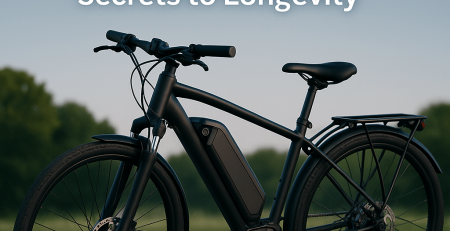
- Downtube Batteries: These are built into or attached to the downtube of the bike’s frame. They look good and help to spread the weight out evenly. This is a very popular option for new e-bikes.
- Rear Rack Batteries: These are put on a cargo rack at the back and are often used with conversion kits or on older e-bikes. They are simple to put on, but they can make the bike’s center of gravity higher and more towards the back.
- Seatpost Batteries: These are not as common and are attached behind the seatpost.
- Bottle Cage Batteries: These are made to fit in a standard water bottle cage and are often used for smaller batteries or as a backup power source.
Make sure the battery you choose will physically fit on your bike’s frame and with its mounting system. The sizes and places to attach them are not all the same, so you should measure carefully or check your bike’s information.
🛡️ The Battery Management System (BMS)? The Unsung Hero
A Battery Management System (BMS) is an essential electronic circuit board built into every high-quality lithium-ion e-bike battery. Its primary job is to protect the battery, ensure its longevity, and keep it operating safely. A reliable BMS is non-negotiable for safety and performance.
The key functions of a BMS include:
* Overcharge Protection: Prevents damage from charging the battery beyond its maximum voltage.
* Over-Discharge Protection: Stops the battery from draining completely, which can permanently reduce its capacity.
* Overcurrent Protection: Safeguards the battery and motor during moments of high power draw.
* Temperature Protection: Monitors temperature to prevent the battery from operating in dangerously hot or cold conditions.
* Cell Balancing: Ensures all individual cells within the battery pack maintain an equal state of charge, which significantly improves the battery’s overall lifespan and performance.

Be careful of cheap, unregulated batteries!
There are a lot of low-cost, unregulated batteries on the market, especially from sellers online that you don’t know. These often don’t have a good BMS, use low-quality cells, and can be a serious fire hazard. To be safe, you should invest in a certified electric bicycle battery for sale from a seller you can trust.
Comparing Battery Specifications: A Quick Reference
Here’s a comparison table highlighting common battery types and what they are usually like:
| Feature | Standard 36V 10Ah (Li-NMC) | High-Capacity 48V 17.5Ah (Li-NCA) | Long-Life 36V 15Ah (LiFePO4) |
|---|---|---|---|
| Voltage | 36V | 48V | 36V |
| Capacity (Ah) | 10Ah | 17.5Ah | 15Ah |
| Total Energy (Wh) | 360Wh | 840Wh | 540Wh |
| Typical Range (Miles/Km) | 25-40 miles (40-65 km) | 50-80+ miles (80-130+ km) | 35-55 miles (55-90 km) |
| Cycle Life | 500-800 cycles | 600-1000 cycles | 1500-2000+ cycles |
| Weight | Moderate | Heavier | Moderate to Heavy |
| Best For | Commuting, leisure rides | Long-distance, power-intensive use | Longevity, frequent use, safety-focused |
Product Spotlight: 36V 19.6Ah King Shark Downtube Battery
Price: $319
Voltage: 36V
Capacity: 19.6Ah (706Wh)
Chemistry: Li-Ion
Compatibility: Universal downtube mounting
Use Case: E-bike conversion kits, utility bikes
Product Spotlight: 52V 19.6Ah King Shark Downtube Battery
Price: $399
Voltage: 52V
Capacity: 19.6Ah (988Wh)
Chemistry: Li-NMC (Samsung cells)
Compatibility: 52V systems, mid-drive motors
Use Case: Mixed terrain, advanced riders
Our Methodology / How We Test
We test batteries using strict standards, which include lab tests to check their actual capacity (Ah/Wh), how consistently they provide power under different amounts of use, how well they work in different temperatures, and how long we expect them to last. We also look at the quality of the Battery Management System (BMS) and where the cells come from.
We also do real-world tests on different types of terrain to get a practical idea of their range, in addition to the information provided by the manufacturer.
🌡️ How to Care for and Maintain Your E-Bike Battery
To make your battery for your electric bicycle last as long as possible and work at its best, you need to take good care of it. Lithium-ion batteries are strong, but they will benefit a lot from good habits when it comes to charging, storing, and keeping them out of extreme weather.
If you don’t pay attention to these things, it can lead to a lower capacity, a shorter range, and a shorter life for your valuable lithium-ion electric bicycle battery.
🔌 The Right Way to Charge Your E-Bike Battery
It is very important to use the correct battery charger for your electric bicycle. You should always use the charger that came with your battery or one that is certified to work with it. Using a generic charger can damage the battery’s cells or its important Battery Management System (BMS). Here are some good practices to follow:
- Charge it regularly, but not always to 100%: To make your battery last as long as possible, it’s often best to charge it to about 80% and not let it go below 20%. It’s okay to charge it to 100% sometimes, especially before a long ride, but not every time you charge it.
- Don’t let it run all the way down: Letting the battery go completely to 0% can be hard on the cells and make it not last as long. Your BMS should stop this from happening, but it’s best to try to avoid it yourself.
- Charge it at room temperature: Charging the battery when it’s very hot or cold can damage it. Try to charge it when the temperature is between 10°C and 25°C (50°F to 77°F). Never charge a battery that is frozen.
- Unplug it when it’s full: Even though new chargers and BMS units will stop it from overcharging, it’s a good habit to unplug the charger after the battery is full. Leaving it plugged in all the time can cause small, continuous charging cycles that are not good for it in the long run.
- Always use the original charger or one that is certified to work with your e-bike battery.

🏠 The Best Way to Store Your Battery
How you store your electric bicycle battery when you’re not using it has a big impact on its health. If you’re not going to be riding your e-bike for a long time (like over the winter), here’s what you should do:
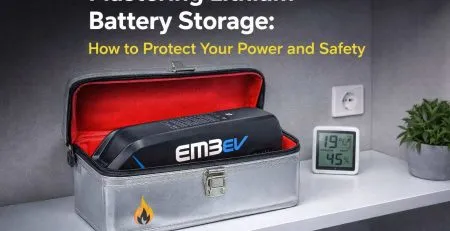
- Store it with a partial charge: The best way to store a lithium-ion battery is to have it charged to between 40% and 60% of its full capacity. Storing it when it’s fully charged or completely empty for a long time can be hard on the cells.
- Keep it at a moderate temperature: Store the battery in a place that is cool and dry, away from direct sunlight and very hot or cold temperatures. A normal indoor room temperature is ideal. Don’t store it in a garage or shed that gets very hot or very cold.
- Keep it away from things that can catch fire: Always store the battery in a safe place, away from anything that could easily catch fire, and on a surface that won’t burn.
- Check the charge from time to time: If you’re storing it for many months, you should check how much charge it has every few months and charge it back up to the 40-60% range if it has gone down.
☀️ Managing Temperature While You Ride
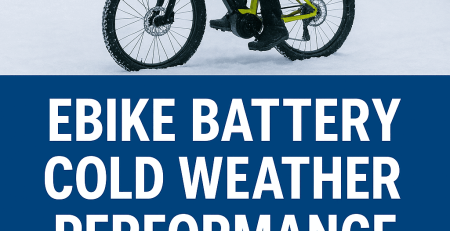
Very hot or cold temperatures are not just a problem for charging and storing; they also affect how well the battery works while you’re riding. Riding in very cold weather can temporarily make your range shorter and give you less power, because the chemical reactions inside the battery slow down.
On the other hand, very hot weather can make the battery get too hot. The BMS will handle this by possibly cutting back on power or shutting down to keep it from getting damaged.
If you’re riding in freezing temperatures, you might want to put some insulation on your battery pack or, if you can, keep it inside until right before you ride. On very hot days, try to park your e-bike in the shade and let the battery cool down before you charge it right after a hard ride.
Myth Buster: Does my battery have a “memory effect”?
No! Unlike the older Nickel-Cadmium batteries, modern lithium batteries for electric bicycles do not have a “memory effect.” You don’t have to use them until they are completely empty before you charge them again; in fact, it’s better if you don’t.
♻️ End-of-Life and Recycling
Even if you take the best care of them, all batteries will eventually wear out. When your battery pack for your electric bicycle doesn’t hold enough charge for what you need, it’s time to get a new one. Don’t just throw it in the regular garbage. Lithium-ion batteries have valuable materials and dangerous chemicals in them that need to be disposed of in the right way.
52V Large Triangle Battery
52V Large capacity 20.4Ah triangle hardcase battery with built in battery monitoring software and include triangle bag.
52V Jumbo Shark Battery
52V 17Ah Jumbo Shark battery the perfect size for longer trips. Complete with Smart BMS.
❓ Frequently Asked Questions About E-Bike Batteries
How long does an electric bicycle battery last?
A typical electric bicycle battery lasts between 3 to 5 years, or 500 to 1,000 full charge cycles. The exact lifespan depends on the battery chemistry (e.g., LiFePO4 batteries last longer), charging habits, and how it is stored. With proper care, such as avoiding extreme temperatures and not leaving it fully charged for long periods, you can significantly extend its life.
Can I upgrade my e-bike battery to a higher voltage?
Yes, you can upgrade an e-bike battery to a higher voltage (e.g., from 24V to 48V), but only if the bike’s motor and controller are also compatible with that higher voltage. Using a battery with a voltage that is too high for your system will damage the electronic components. Always confirm compatibility with the e-bike manufacturer or a specialist before upgrading.
What affects an e-bike battery’s range?
The primary factors affecting an e-bike’s range are the battery’s total capacity (watt-hours), the level of pedal assist used, and the terrain. Other significant factors include rider weight, tire pressure, wind resistance, and outdoor temperature. Using a lower assist mode on flat terrain will yield the longest possible range.
🚀 The Future: New Things in Electric Bicycle Battery Technology
The future for electric batteries for bicycles looks very promising. There is a lot of research and development happening that will bring even better performance and be better for the environment:
- Solid-State Batteries: These are often called the “holy grail” for electric vehicles. They are expected to have a higher energy density, charge faster, and be much safer than the Li-ion batteries we use now, which have a liquid electrolyte. While they are still mostly being tested in labs for e-bikes, they could completely change future models.
- Improved Cell Chemistry: Scientists are continuing to make the existing Li-ion chemistries (Li-NMC, Li-NCA) better so they can store more energy in smaller, lighter cells and last for more charge cycles.
- Smart Batteries & Connectivity: Batteries that have Bluetooth or can connect to an app could give you real-time information about their health, tell you exactly how much range you have left, and even have anti-theft features that you can see on your smartphone.
- Better for the Environment: People are working on making it easier to recycle electric bicycle batteries for sale and to use fewer rare earth minerals, so that the way they are made is better for the environment.
- The next generation of batteries for electric bicycles will probably give you more range, power, and be more convenient than ever before. This will make e-bikes an even bigger part of our daily lives and how we get around.
References
Environmental Protection Agency (EPA): Recycling Used Lithium-Ion Batteries
Battery University: How to Prolong Lithium-based Batteries
ISO 13849-1: Safety of machinery – Safety-related parts of control systems (Relevant for BMS safety standards)





LEAVE A COMMENT