





Dual Battery eBike Range: How to Go Farther Safely
A dual battery ebike system integrates two separate power packs to increase total energy capacity. These setups function via parallel blenders, which discharge both batteries simultaneously, or manual/automatic switches that toggle between packs. Key requirements include matching voltage platforms and ensuring the Battery Management System (BMS) supports the combined current demand.
Quick Answer: Is a Dual Battery Worth It?
- The Value: Ideal for long-range touring or high-torque cargo hauling where a single pack falls short.
- Range Factor: It doubles capacity, but actual range depends heavily on weight, terrain, and motor efficiency.
- Safest Setup: A professionally engineered parallel balancer is best for continuous performance.
- Storage: Always store both packs at partial charge (approx. 50-60%) if not riding for long periods.
- Common Pitfall: Attempting to mix different voltage batteries (e.g., 36V and 48V), which can destroy the controller.
Actually, I remember the exact moment I realized my single 500Wh pack wasn’t enough. I was three miles from home, facing a notorious 10% grade hill, and my display started flashing that dreaded single red bar. I spent the last fifteen minutes ghost-pedaling a 60-pound machine. It was humbling. That’s the reality of “range anxiety”—it’s not just about the distance; it’s about the loss of confidence in your machine’s ability to get you over the finish line.

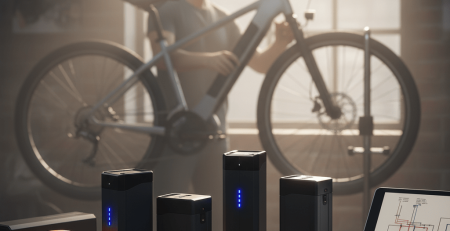
A typical dual battery ebike wiring layout featuring primary and secondary power paths.
To be honest, most riders start looking into dual battery ebikes because they want to stop calculating every mile. Whether you are a delivery rider doing 8-hour shifts or a weekend explorer hitting the backroads, adding a second pack changes the fundamental experience. You move from “can I make it?” to “where else can I go?” But before you bolt a second brick to your frame, you need to understand the underlying logic of how these systems talk to each other.
Ready to Build Your Setup?
Find the right high-power pack for your bike. Browse our full range of tested battery solutions at EM3ev.
A dual battery ebike is an electric bike dual battery setup that uses two matched packs to extend range, stabilize load under climbing, and reduce range anxiety on long rides. If you have searched for a dual battery e bike, dual battery ebikes, or even a 2 battery ebike, the real question is usually the same: do you need a longer-range system, or do you just need a better single-pack setup?
For commuting, cargo hauling, mountain routes, and conversion builds, a double battery ebike can make sense when the frame, controller, wiring, and battery management system are all compatible. The safest path is not simply adding more watt-hours, but choosing a configuration that matches your voltage, mounting space, charging routine, and riding style.
Dual battery ebike: how it works (parallel vs switch)
The most reliable dual battery setup for modern riders is a parallel system using a dedicated balancer, as it reduces strain on individual cells while providing seamless power.
When you decide to run a two-battery ebike setup, you essentially have two paths. You can treat them like two separate fuel tanks that you switch between, or one giant reservoir. In my case, I prefer the latter, but the technical differences are significant for your motor’s health.
Which dual battery system is better?
- Parallel system: Best for riders who want seamless power delivery, longer hill-climbing support, and a true dual battery system e bike experience.
- Switch system: Better for simpler commuting setups where you prefer lower cost, easier troubleshooting, and manual control over which pack is active.
- Not sure which is better? If your rides are longer, heavier, or more technical, parallel usually wins. If you value simplicity and easier installation, a switch-based setup is often the safer starting point.
Parallel vs Switch Systems
Actually, the choice between parallel and switch systems comes down to how your Battery Management System (BMS) and controller handle the Low-Voltage Cutoff (LVC). In a switch system, you run one battery down, stop (or use an automatic relay), and then tap into the second. In a parallel system, a “balancer” or “mixer” allows both batteries to provide current at the same time.
- Voltage Alignment: Parallel systems require nearly identical voltage levels before connection to prevent massive current surges between packs.
- Discharge Curves: Using two batteries in parallel flattens the discharge curve, meaning you stay in the “power sweet spot” longer before the voltage sags.
- BMS Protection: Modern balancers prevent one battery from “charging” the other, which is a critical safety feature for high-capacity dual battery ebikes.
| Setup Type | Best For | Is It Easy? | Main Advantage | Main Risk |
|---|---|---|---|---|
| Manual Switch | Daily commuting, flat routes, budget-conscious riders | Yes — easiest to understand and service | Simple wiring and lower cost | Power interruption when switching packs |
| Parallel Balancer | Long-range riding, cargo loads, steep hills | Moderate — requires closer matching and cleaner wiring | Seamless output and better shared load | Back-charging risk if packs are mismatched |
| Aftermarket Dual Battery Ebike Kit | Conversion projects and upgrade-focused riders | Moderate to advanced | Strong upgrade flexibility | Mounting and compatibility mistakes |
| Complete Dual Battery Electric Bike | Riders who want an all-in-one solution | Yes — easiest ownership path | Factory-integrated compatibility | Higher upfront cost |
Battery Pack Matching Checklist
Before connecting anything, you must verify that your components are “speaking the same language.” Here is the baseline protocol:
- Same Voltage Platform: Both packs must be 36V, 48V, 52V, 60V, or 72V. Never mix platforms.
- Internal Resistance: Try to use packs of similar age; an old, high-resistance pack can drag down the performance of a new one.
- BMS Rating: Ensure the continuous current rating of your BMS matches or exceeds the controller’s peak demand.
- Anti-Spark Connections: Use XT60 or XT90-S connectors to prevent arcing when plugging in high-capacity packs.
If your plan involves moving from 48V to 52V, first check whether your 48V controller supports a 52V battery. That check alone does not confirm compatibility between two packs.
| Component | Requirement | Risk Level |
|---|---|---|
| Voltage | Identical (e.g., both 48V) | CRITICAL |
| Connector | High-current (XT60/XT90) | High |
| BMS Current | > Controller Amp rating | Medium |
| Fuse/Wiring | 10-12 AWG / In-line Fuse | High |
| Mounting | Vibration-proof / Secure | Medium |
| Charger | Matched to chemistry | Medium |
Secure mounting and high-gauge wiring are essential for a safe dual battery electric bike.
Experience Validation Process
To ensure your electric bike dual battery setup is safe and functional, follow this methodology. We don’t rely on guesswork; we rely on a systematic check of the hardware under load.
- Voltage Platform Verification: Confirm both packs are labeled for the same nominal voltage. Use a multimeter to check that their current state of charge is within a very close range (usually within 0.5V) before the first parallel connection.
- Open-Circuit Sanity Check: Let both packs rest after a full charge. Check for any unusual heat or “ghost” voltage drops which might indicate a failing cell group.
- Low-Load Test: Perform a short ride on flat ground. Monitor the display for any flickering or premature LVC (Low Voltage Cutoff) triggers.
- Thermal Monitoring: After a few miles, stop and check the connectors. They should be cool to the touch. If they are warm, your wire gauge or connector quality is insufficient for the current.
- Final Weatherproofing: Once the electrical logic is confirmed, secure the second mount and apply dielectric grease to connectors to prevent moisture ingress.
Field Note: “I once saw a DIY setup where the rider mixed a 10Ah pack with a 20Ah pack. While it worked because the voltages matched, the smaller pack hit its BMS limit much faster during hill climbs. Always aim for similar capacity if you want the best longevity.”
Which dual-battery option fits your riding
Select your dual-battery configuration based on your primary environment: use simple switchers for flat city commutes and parallel balancers for heavy-duty cargo or mountain trekking.
Not every rider needs the same build. A dual battery electric mountain bike setup often prioritizes climbing stability, frame balance, and removable charging convenience, while a cargo or delivery bike usually values all-day range and easier battery rotation. For lighter city use, an e bike dual battery setup may only be worth it if your current single pack is already proven too small for your real-world route.
For delivery work, compare a compatible spare battery with an onboard dual-battery setup. A planned stop to swap packs may suit your shift. Use our delivery bike battery sizing guide to plan capacity and charging breaks. If you are considering that pack size, see whether a 52V 20Ah battery is enough for food delivery.
Decision Matrix: Your Ideal Setup
- Simplest & Safest: A manual battery selector switch. It’s essentially “plug and play” once you have two matched voltage packs. Great for commuters who don’t mind a 10-second stop to swap.
- Seamless Range: A dual battery ebike kit with a digital balancer. This allows for the longest range and best performance on steep hills by sharing the load.
- Extreme Conditions: If you ride in freezing temperatures, your priority is storage. Ensure your second pack is easily removable so you can bring it inside to charge.
If you’re looking for a dual battery electric bike feel without buying a brand-new frame, the aftermarket “kit” route is very popular. However, you have to be honest about your mechanical skills. Bolting a 10-pound weight to a down-tube requires more than just zip ties.
Need help choosing the right setup?
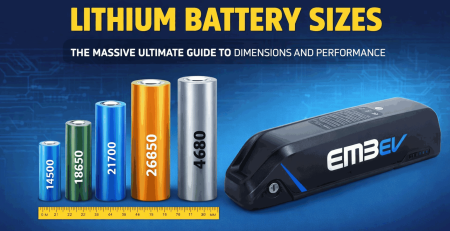
Compare battery form factors, discharge capability, and mounting options before you buy or upgrade your dual battery ebike system.
Comparing mounting positions: Rear rack vs. triangle frame for optimal weight distribution.

EM3ev Super Pack
- Voltage: 52V
- Capacity: 20Ah
- Continuous Discharge: 40A smart BMS
- Case / Mount: Reention King Shark downtube rail
- Use-case: High-performance DIY
Compact Secondary Module
- Voltage: 36V
- Capacity: 13.5Ah
- Continuous Discharge: 40A smart BMS
- Mount: Reention Super Shark downtube rail
- Use-case: Light Commuting
The “Avoid” List: Never use a double battery e bike setup if the packs show signs of swelling, have cracked casings, or use different chemistry (e.g., mixing LiFePO4 with Li-ion).
Ready to Double Your Range?
Check out our latest selection of high-discharge packs and parallel balancers designed for electric bikes with two batteries.
FAQ
Does a dual battery eBike double the range?
Not always. Two 500Wh packs have 1,000Wh of rated energy, while a 500Wh pack plus a 250Wh pack has 750Wh. Actual range depends on usable energy, load, terrain, temperature, and assist level. There is no fixed percentage gain for every setup.
Can I mix two different battery packs on an eBike?
You can mix different capacities (Ah) if using a proper balancer, but you must never mix different voltage platforms (e.g., 36V and 48V).
Is parallel connecting two eBike batteries safe?
It is safe only if you use a “Dual Battery Discharger” or “Balancer” that prevents back-charging between packs of different voltages.
Should I charge both packs together or separately?
Charging separately is safer for the BMS health unless your ebike is specifically engineered with a unified dual-port charging system.
How do I mount a second battery safely?
The best mount is inside the frame triangle for better center of gravity, followed by a reinforced rear rack for larger “brick” style packs.
Is it easy to set up a dual battery ebike?
It can be easy if you are using two matched packs with a simple selector switch and a frame that already has secure mounting space. It becomes harder when you mix capacities, add custom connectors, or try to create a high-power dual battery ebike kit without checking controller limits, cable thickness, and BMS behavior first.
Can you use dual motor and dual battery on the same ebike?
A dual motor dual battery ebike setup is possible, but it raises the bar for controller tuning, heat management, battery matching, and frame stability. For most riders, dual motor plus dual battery is not the easiest starting point. It is usually better suited to advanced builds where each component has been selected around the total current demand.
What is the difference between a dual battery electric bike and a conversion kit?
A complete dual battery electric bike is designed around integrated compatibility from the start, while an aftermarket dual battery ebike kit gives you more upgrade freedom but demands more attention to wiring, mounting, and installation skill. The better option depends on whether you want convenience or customization.
Summary Checklist
- Match Priority: Ensure identical voltage platforms and similar internal resistance before connecting.
- Protective Parts: Use a high-quality balancer and in-line fuses for any DIY e bike with 2 batteries.
- Validation: Always perform low-load thermal tests before heading out on a long-distance trek.
- Clear explanation of parallel vs switch dual battery ebike setups
- Practical safety checklist (voltage matching, connectors, BMS current)
- Helpful mounting & range guidance for touring, cargo, and hills
- DIY readers may still need a professional to confirm wiring/current limits
- Exact range gain varies widely by bike weight, terrain, and efficiency
If you’re building or upgrading a dual battery ebike, this guide is one of the safest ways to plan it: it highlights the must-match voltage rule, why a proper balancer matters, and how to avoid common controller-killing mistakes.

LEAVE A COMMENT