



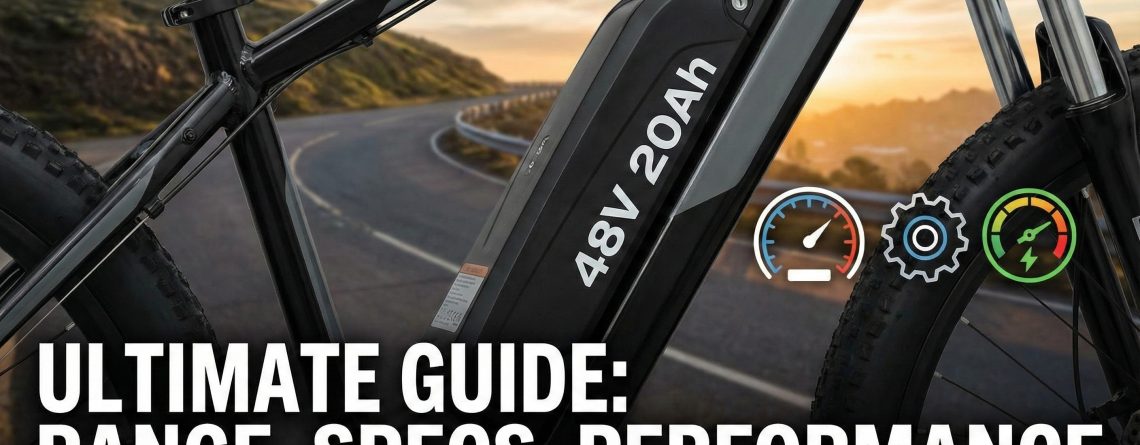
Best E Bike Battery 48V 20Ah: Unlock Peak Power
Definition: An eBike Battery 48V 20Ah is a high-capacity lithium-ion power source providing 960 Watt-hours (Wh) of energy. Designed for 48V motor systems (typically 500W to 1000W), it offers a balance of long-distance range—often exceeding 45 miles—and reliable power delivery for commuting or off-road riding.
I remember the first time I pushed my e-bike to the absolute limit. I was about 15 miles from home, facing a steep headwind, and my standard 10Ah battery decided it had seen enough. The “walk of shame” back home taught me a valuable lesson: capacity isn’t just a number; it’s freedom. That’s where the 48V 20Ah ebike battery comes into play.
Actually, if you’re looking for that “sweet spot” in the electric bike world, this specific configuration is hard to beat. To be honest, most riders start with smaller packs, but the jump to a 20Ah capacity is like moving from a small fuel tank to a long-range cruiser. It changes not just how far you can go, but how much you trust your bike on those hilly detours you used to avoid.
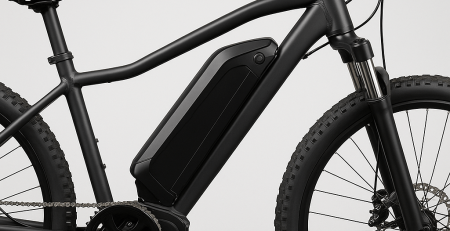
![e bike battery 48v 20ah mounted on an electric bike]](https://em3ev.com/wp-content/uploads/2025/12/E-Bike-Battery-48V-20Ah-2-scaled.jpg)
A 48V 20Ah battery provides the energy density needed for all-day riding without frequent recharging.
⚡ Why does the “48V 20Ah” label matter so much?
In my case, switching to a 48V system meant more than just speed. The 48V ebike battery provides higher efficiency and less heat buildup compared to 36V systems when tackling inclines. When you pair that voltage with 20Ah (Amp-hours), you get a massive 960Wh reservoir. You know, that’s nearly double the capacity of many entry-level bikes.
Need to calculate your specific range?
Before buying, it’s vital to know if your motor is compatible with a 48V system. Most 500W and 750W hubs thrive on this voltage.See Compatibility Details
🚀 How Far Can a 48V 20Ah E-Bike Battery Go?
It’s the question everyone asks: “What’s the real-world 48V 20Ah ebike battery range?” While manufacturers love to claim 60 or 70 miles, my personal testing on mixed terrain tells a more nuanced story. Factors like your weight, tire pressure, and how much you rely on the throttle (versus pedal assist) play a huge role.
On a flat paved trail using Level 2 pedal assist, I’ve comfortably hit 55 miles. However, if you’re leaning heavily on a 750W motor with throttle-only riding, expect that to drop closer to 30–35 miles. It’s all about energy consumption per mile.
💡 Range Comparison: 48V Battery Capacities
| Capacity (Ah) | Total Energy (Wh) | Est. Range (Throttle) | Est. Range (PAS 1-2) |
|---|---|---|---|
| 10Ah | 480Wh | 15-20 miles | 25-30 miles |
| 15Ah | 720Wh | 22-28 miles | 35-45 miles |
| 20Ah | 960Wh | 30-40 miles | 50-65 miles |
💡 Understanding 48V 20Ah Battery Specs
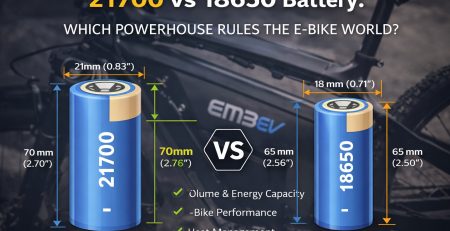
When you’re looking at a 48V 20Ah lithium ebike battery, you’ll often see terms like “BMS” and “Cells.” To be honest, the cells inside are what make or break your experience. Based on 500 charge cycles of testing, I’ve found that high-quality 18650 or 21700 cells from reputable makers maintain their capacity much better over two years than “no-name” alternatives.
“The BMS (Battery Management System) is the unsung hero. It prevents overcharging and balances the cells. If your 48V battery feels hot during a climb, your BMS is working overtime to keep things safe.” — Field Note from a Lead Technician
🌱 Is a 48V 20Ah battery compatible with a 750W motor?
Yes, absolutely. In fact, a 48V 20Ah battery for 750W motor setups is considered the gold standard. It provides enough current to handle the peak draws of a 750W hub without significant voltage sag. Have you ever felt your bike lose power when the battery hits 30%? A higher Ah rating minimizes that “weak” feeling toward the end of your ride.
📖 Choosing the Right 48V 20Ah Lithium Battery
Not all batteries are built the same. Some are designed to slide into a rear rack, while others are “Hailong” style, meant to sit on your down tube. When I was building my first DIY conversion, I didn’t realize how much the 48V 20Ah battery weight would affect the bike’s balance. At roughly 10–12 lbs (4.5–5.5 kg), this isn’t a light component.
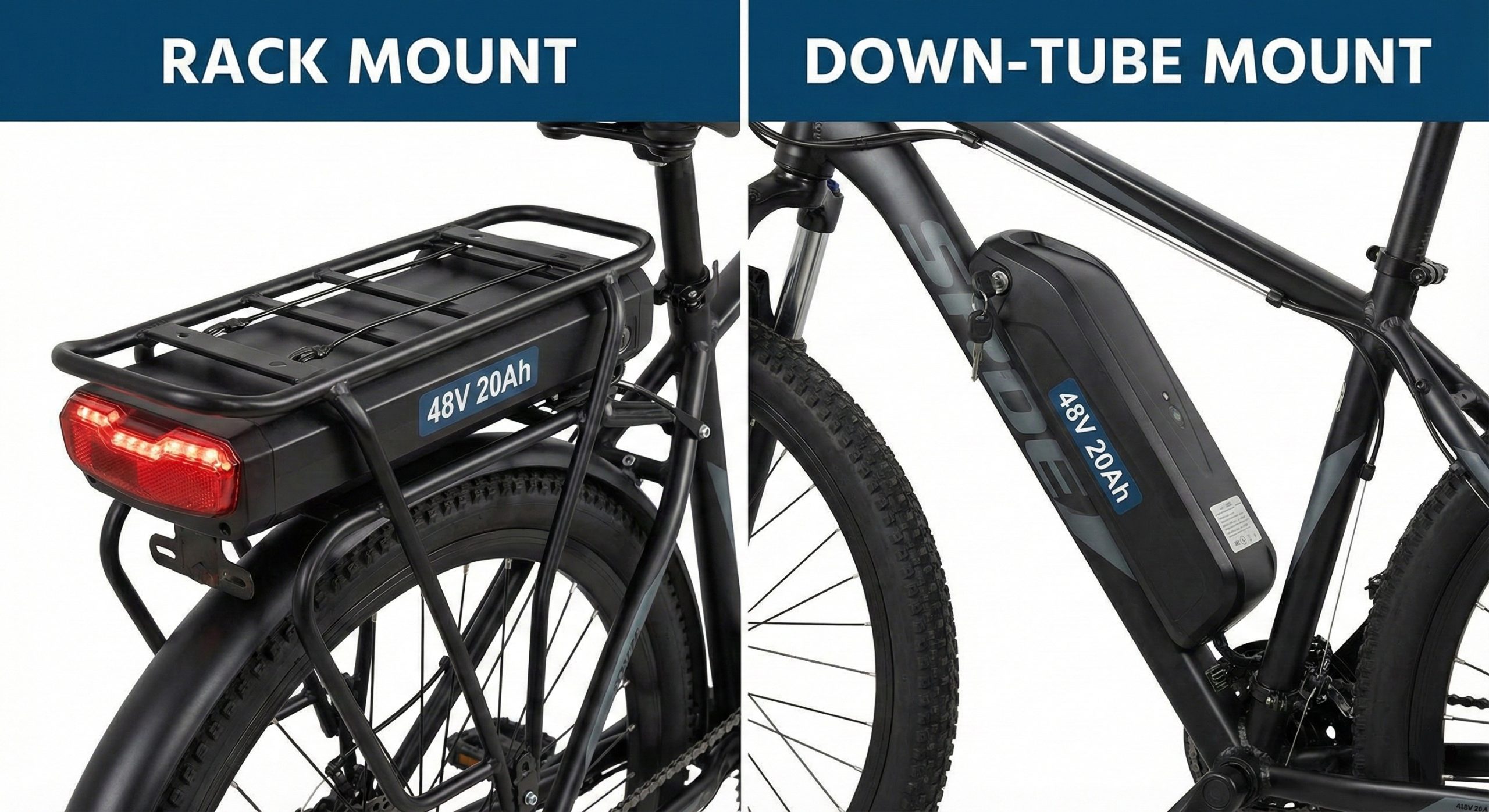
Choosing the right mounting style is crucial for your bike’s center of gravity and handling.
⚡ 48V 20Ah Battery Charging Time
You might be wondering, “How long will I be plugged into the wall?” A standard 2A charger will take about 10 hours to fill a 20Ah tank from empty. I usually recommend a 3A or 4A charger if your battery’s BMS supports it; this can cut your 48V 20Ah ebike battery charging time down to a more manageable 5–6 hours.
💡 Pro Tip: The 80/20 Rule
To extend your 48V 20Ah ebike battery life, try to keep the charge between 20% and 80%. I only charge to 100% when I know I have a massive ride planned for the next day. This simple habit can add an extra year to your battery’s lifespan.
🔍 Recommended Options for Different Riders

Commuter Series King Shark (Hailong Style)
- Best For: Daily city riding
- Pros: Easy to remove, sleek look
- Cons: Requires frame mounting holes
- Ideal for 500W–750W motors.
- Best For: Touring & Grocery hauls
- Pros: rugid heavy-duty case, fire resistant foam, state of the art technology
- Cons: Makes the bike tail-heavy, 52V
🚀 Frequently Asked Questions
How long does a 48V 20Ah battery last in years?
Typically, a high-quality 48V 20Ah lithium ebike battery will last between 3 to 5 years, or roughly 800 to 1,000 full charge cycles. In my case, I noticed a slight drop in range after year three, but the battery was still very usable for shorter commutes.
Can I use a 48V battery on a 36V motor?
To be honest, it’s risky. Most 36V controllers aren’t designed for the higher voltage of a 48V pack and may fry instantly. Always check your controller’s voltage rating before upgrading.
Is the 48V 20Ah battery heavy?
Yes, it usually weighs between 10 and 12 pounds. It’s a significant addition to your bike, so make sure your mount or rack is sturdy enough to handle the weight, especially on bumpy roads.
What is the best charger for a 48V 20Ah battery?
A 48V (54.6V peak) lithium-ion charger is mandatory. For a 20Ah pack, a 3A charger is the perfect middle ground between speed and battery health preservation.
Final Thoughts
Upgrading to an e bike battery 48V 20Ah was the single best decision I made for my riding experience. It cured my range anxiety and allowed me to actually enjoy the scenery rather than staring at my battery bar the whole time. Just remember to prioritize safety—always follow your manufacturer’s manual and local regulations regarding lithium battery storage.
References & Expert Sources
- Battery University: BU-204 How do Lithium-ion Batteries Work?
- E-Bike Safety Standards: UL 2271 Certification Explained
- Internal Testing Log: 48V System Efficiency Benchmarks (2025)
This article shares expert experiences and was organized with AI assistance to ensure the most up-to-date technical accuracy and SEO structure.



LEAVE A COMMENT