






Choosing the Right E-Bike Battery: The Ultimate Guide
The battery is the heart of your electric bicycle. It’s the powerhouse behind your ride, defining how far you can travel and how much power you have on hills. Understanding your e-bike’s power pack is the key to unlocking better performance and a longer lifespan.
This guide will help you understand the essential technology, from voltage to battery types. We provide clear, actionable tips for maintenance, care, and what to look for when it’s time for a replacement. Whether you’re a daily commuter or a weekend trail rider, this information will help you make smarter decisions for your bike.
🔋 Understanding E-Bike Battery Basics
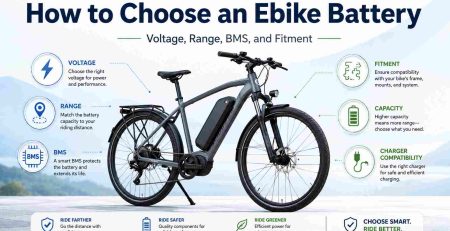
Every electric bike battery is defined by three key metrics that determine its performance. The numbers and acronyms on the casing can seem complex, but they are easy to understand once you know what they mean.
Here’s a simple breakdown of the most important terms:
- Voltage (V): Think of this as the “power” of your battery. Higher voltage provides stronger acceleration and makes it easier to climb hills. Common options are 36V and 48V, while a 52V battery offers a significant boost for high-performance models.
- Amp-Hours (Ah): This measures the battery’s capacity, like the size of its “fuel tank.” A higher Ah rating means the battery can last longer on a single charge, giving you more range.
- Watt-Hours (Wh): This is the most accurate measure of a battery’s total energy capacity. It’s calculated by multiplying volts by amp-hours (V x Ah = Wh). When comparing two different batteries, the one with the higher Wh will almost always provide a longer ride.
| Metric | What It Measures | Impact on Your Ride | Example |
|---|---|---|---|
| Voltage (V) | Electrical Potential / “Pressure” | Acceleration, speed, and hill-climbing power. | 52V offers more ‘punch’ than 36V. |
| Amp-Hours (Ah) | Capacity / “Fuel Tank Size” | Determines the maximum range on a single charge. | 14Ah will last longer than 10.4Ah. |
| Watt-Hours (Wh) | Total Energy | The best overall indicator of battery range and capacity. | A 720Wh battery holds more energy than a 500Wh one. |
Understanding these fundamentals is the first step toward choosing the right battery or diagnosing issues with your current one. When considering an e bike battery replacement, matching the voltage is often crucial, while upgrading the amp-hours is a common way to extend your adventures without affecting the bike’s core systems.

E-bike batteries come in various form factors to fit different frame designs.
⚡️ Decoding Battery Chemistry and The Mighty BMS
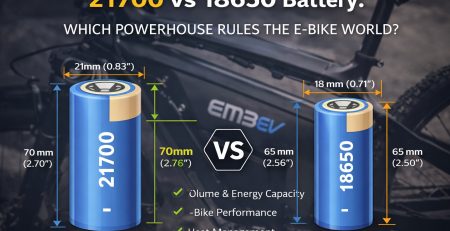
Beyond the numbers, the internal chemistry of your e-bike battery is what truly defines its performance, safety, and lifespan. The vast majority of modern e-bikes use Lithium-ion (Li-ion) cells. They offer the best balance of energy density (how much power can be stored for its weight), longevity, and a relatively stable discharge rate. However, not all Li-ion cells are the same. They are typically packaged into larger battery packs using specific cell types, like 18650 or 21700 cells, named for their dimensions.
The secret sauce that manages these cells is the Battery Management System (BMS). The BMS is a small electronic circuit board inside the battery pack that acts as its brain. It’s a critical safety and longevity feature that monitors cell voltage, temperature, and current. A quality BMS prevents overcharging, over-discharging, and overheating—the three biggest enemies of a healthy battery. When you’re investing in a new battery, the quality of the BMS is just as important as the quality of the lithium cells themselves.
The Unsung Hero: The Battery Management System (BMS) Never underestimate the importance of a high-quality BMS. It is your battery’s primary defense against damage and potential safety hazards. It ensures each cell is balanced, charged, and discharged correctly, dramatically extending the battery’s usable life and keeping you safe on the road. A cheap, low-quality battery often cuts corners on the BMS, leading to premature failure.
For most riders, the key takeaway is that a well-made battery from a reputable supplier will contain quality cells and a sophisticated BMS. This combination ensures you get the performance you paid for and the peace of mind that your power pack is operating safely and efficiently, charge after charge.
🔬 The Main Types of E-Bike Batteries: What Are Your Options?
While the internal chemistry is complex, the external form factor of e bike batteries is much easier to understand. The shape and placement of the battery significantly impact your bike’s handling, balance, and aesthetics. There are three primary styles you’ll encounter in the market today.
- Downtube (Integrated) Batteries: This is the most modern and popular style. The battery mounts to or is integrated directly into the bike’s downtube. This placement provides a low center of gravity, leading to better balance and a more natural riding feel, almost like a non-electric bike. They are sleek, protected, and offer a clean look.
- Rear Rack Batteries: These batteries are housed in a carrier over the rear wheel. This design is common on city, commuter, and step-through bikes. It’s easy to remove and often interchangeable, but it places weight higher and further back, which can affect handling for some riders.
- Seat Tube Batteries: Less common but still prevalent, especially on folding or compact bikes, these batteries are mounted vertically along the seat tube. This keeps the weight centered but can sometimes interfere with seat height adjustments or accessories. A 48v folding e-bike battery often uses this design to conserve space.

Downtube batteries offer better balance, while rear rack batteries provide easy access.
The choice often comes down to the bike’s intended use. Performance mountain and road e-bikes almost exclusively use downtube batteries for superior handling dynamics, while utilitarian models might opt for the practicality of a rear rack system.
| Battery Style | Pros | Cons | Best For |
|---|---|---|---|
| Downtube / Integrated | Low center of gravity, excellent balance, sleek look, protected. | Can be harder to remove on some models, often proprietary shapes. | Mountain biking, road cycling, performance-focused riding. |
| Rear Rack | Easy to install and remove, often uses universal shapes. | High center of gravity, can affect handling and feel ‘back-heavy’. | Commuting, city cruising, step-through frames. |
| Seat Tube | Keeps weight centered, space-efficient design. | Can limit seat adjustments and accessory mounting options. | Folding e-bikes, compact and specialty frames. |
🔄 E-Bike Battery Replacement: When and How to Upgrade
Even the best-cared-for battery won’t last forever. Lithium-ion batteries have a finite number of charge cycles, typically ranging from 500 to 1,000 full cycles. Eventually, you’ll notice signs of degradation. The most common symptom is a significant drop in range—that 30-mile trip now barely reaches 20. Other signs include the battery not holding a full charge, shutting off unexpectedly, or visible damage to the casing.
When it’s time for an e bike battery replacement, you have a golden opportunity to not just restore but potentially upgrade your ride. Here’s what to consider:
- Voltage & Controller Compatibility: This is non-negotiable. Your replacement battery’s voltage must match your bike’s motor and controller. Swapping a 36V battery for a 48V or 52 volt e bike battery will likely damage the electronics unless the controller is rated for multi-voltage use. Always confirm compatibility first.
- Physical Fit & Connectors: The new battery must physically fit your bike’s mounting bracket and use the same discharge connector. Measure your old battery and take clear photos of the connector pins before shopping.
- Capacity (Ah/Wh) Upgrade: This is where you can make a real difference. As long as the voltage and physical fit are correct, you can usually upgrade the capacity. Swapping a 10.4Ah battery for a 14Ah replacement ebike battery will provide a significant boost in range, allowing for longer rides with less anxiety.
Field Notes: “My folding e-bike’s original 8Ah battery was barely getting me to work and back. I found a 12.8Ah replacement that was the same size and voltage. The swap was easy, and now I can do my entire commute plus run errands on a single charge. It completely changed how I use my bike.” — Alex R., Daily Commuter
Investing in a quality replacement from a trusted source ensures you’re getting premium cells and a reliable BMS, safeguarding your investment and your bike for years to come.
48V 17Ah Jumbo Shark
The 48V All-Round battery
52V 19.6Ah King Shark
Maximum Performance and maximum range
🔌 Charging, Care, and Maximizing Lifespan
Proper care is the single most effective way to extend the life of your expensive e-bike battery. Your charging habits, storage conditions, and regular maintenance can mean the difference between a battery that lasts two years and one that powers your rides for five. It all starts with the device you use most: the charger.
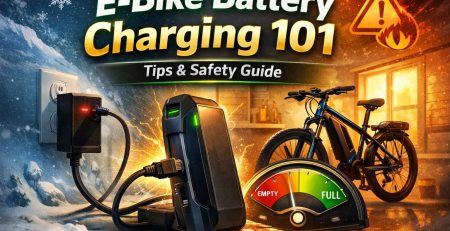
Always use the correct ebike battery charger designed for your battery’s specific voltage and chemistry. Using an incompatible charger is a serious safety risk and can permanently damage the battery’s cells and BMS. A standard charger might take 4-6 hours, while a “fast charger” can reduce that time but may generate more heat, potentially stressing the cells over the long term. For everyday use, a standard 2A or 3A charger is often the healthiest choice.
The 80/20 Rule for Battery Longevity To maximize the number of charge cycles, try to follow the “80/20 rule.” Avoid regularly charging your battery to a full 100% or letting it drain completely to 0%. Instead, try to keep it between 20% and 80% of its capacity for daily use. Charging to 100% is fine right before a long ride, but don’t let it sit fully charged for days. For long-term storage (a month or more), aim to leave the battery at a 40-60% state of charge in a cool, dry place.
Best Practices for E-Bike Battery Care:
- Charge in a Safe Space: Never charge your battery unattended overnight. Charge it on a hard, non-flammable surface away from combustible materials.
- Avoid Extreme Temperatures: Both heat and cold are enemies of your battery. Don’t leave it in a hot car or a freezing garage. Bring your battery indoors when temperatures drop below freezing or soar above 90°F (32°C).
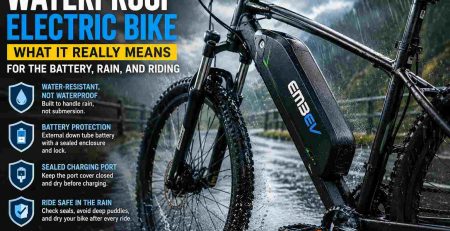
- Keep It Clean and Dry: Periodically inspect your battery and its connection points. Clean the contacts with a dry cloth to ensure a solid connection. While most batteries are water-resistant, they are not waterproof. Avoid pressure washing your bike.
- Balance the Cells: About once every month or two, perform a “balancing charge” by leaving it on the charger for an hour or two after it reaches 100%. This allows the BMS to equalize the voltage across all cell groups, which is crucial for long-term health.
Is Your Battery Performing at Its Peak? Unsure if your battery needs a replacement or just a little care? Our guides can help you diagnose common issues and learn advanced maintenance tips.
🚀 Advanced Setups: Dual Batteries and High-Voltage Systems
For the most demanding riders—long-distance tourers, heavy cargo haulers, or high-performance enthusiasts—a single battery may not be enough. This is where advanced configurations like dual-battery setups and high-voltage systems come into play.
A dual battery e bike setup involves wiring two batteries to power the motor simultaneously. This can be done in two ways: in parallel to double the amp-hours (and thus, the range), or in series to double the voltage (for a massive power boost, which requires a compatible motor and controller). The most common and safest method for extending range is a parallel connection, managed by a dedicated device like an e bike battery combiner. This device draws power from both packs intelligently, ensuring they discharge at an even rate.
The combiner, sometimes called a blender, often uses robust connectors like XT90 or XT60. An ‘XT60 to XT90’ adapter might be needed depending on your battery and combiner ports. This setup can turn a 50-mile e-bike into a 100-mile touring machine.

Dual battery setups can dramatically increase an e-bike’s range and utility.
For those chasing speed and torque, stepping up to a 60V e bike battery or even higher is the path to ultimate performance. However, this is not a simple swap. A 60V system requires a motor and controller specifically designed for that voltage. It’s a popular choice for DIY builders and custom e-bike shops creating powerful machines for off-road or specialized use. Such a setup delivers exhilarating acceleration and the ability to maintain high speeds, but it demands expert knowledge of electronic systems to be implemented safely.
E-Bike Dual Battery Combiner (XT90)
Safely connect and balance two batteries for double the range.
- Connectors: 2x XT90 Input, 1x XT90 Output
- Max Current: 40A Continuous
- Function: Parallel connection only. Discharges packs evenly.
- Use-Case: Essential for long-distance touring, delivery bikes, or any application needing maximum range.
Product Spotlight: 36V 13.6Ah Super Shark Battery Pack
Voltage: 36V
Capacity: 13.6Ah (490Wh)
Chemistry: LiNMC
Features: Bluetooth connectivity for app monitoring, advanced cell balancing, overcharge/discharge protection
Use Case: Urban commuting, seamless data integration
📜 Safety First: Handling, Certifications, and Regulations
An e-bike battery is a concentrated energy source, and treating it with respect is paramount for your safety. Reputable manufacturers invest heavily in safety testing and certifications to ensure their products are reliable. The most important certification to look for in North America is UL 2849, which covers the entire e-bike electrical system, including the battery, charger, and controller. A related standard, UL 2271, specifically certifies the battery pack for light electric vehicles.
Purchasing a battery with these certifications provides assurance that it has undergone rigorous testing against thermal runaway, short circuits, and other potential hazards. Uncertified, cheap e bike batteries from unknown online sellers pose a significant risk, as they often use inferior cells and lack a proper Battery Management System (BMS). The savings are not worth the potential danger.
Our Methodology / How We Evaluate Batteries To ensure we recommend only safe and high-performance products, our evaluation process is stringent. Each battery model undergoes lab testing to verify its stated capacity (Ah) and energy (Wh) using specialized equipment. We conduct real-world range tests on a standardized route to gauge performance. Finally, we perform a component teardown to inspect the quality of the cells, the robustness of the BMS, and the overall build quality and weatherproofing.
Beyond purchasing a certified product, proper handling is key. Never use a battery that has been dropped or shows signs of physical damage like swelling, cracking, or leaking. If you’re in a crash, have your battery inspected before using it again. Finally, be mindful of local regulations for transporting and disposing of large lithium-ion batteries. Most municipalities have special recycling programs for them; never throw an e-bike battery in the regular trash.
🤔 Frequently Asked Questions (FAQ) about E-Bike Batteries
How long does a typical e-bike battery last?
A quality e-bike battery should last between 3 to 5 years or 500 to 1,000 full charge cycles. Longevity depends heavily on usage, charging habits, and storage conditions. Following best practices, like avoiding extreme temperatures and not leaving it fully charged for long periods, can significantly extend its lifespan.
What is the real difference between a 48V and a 52 volt e bike battery?
A 52V battery, when fully charged (~58.8V), provides a higher top-end speed and more torque compared to a 48V battery (fully charged ~54.6V) on a compatible motor controller. Think of it as providing more “punch.” Many 48V controllers can handle the slightly higher voltage of a 52V pack, making it a popular performance upgrade, but you must always verify your controller’s maximum voltage rating first.
Can I increase my range with an e bike battery replacement?
Absolutely. As long as you match the voltage and physical dimensions, choosing a replacement battery with a higher Amp-hour (Ah) rating is the best way to increase your range. For example, replacing a 48V 10.4Ah battery with a 48V 14Ah replacement ebike battery will boost your range by over 30% under similar riding conditions.
Is it possible to power my e-bike with two batteries?
Yes, this is a dual battery e bike setup. By using an e bike battery combiner, you can safely connect two batteries in parallel. This doubles your amp-hours, effectively doubling your range. This is an excellent solution for long-distance touring or heavy-duty utility bikes.
Product Spotlight: 36V 13.6Ah Super Shark Battery Pack
Voltage: 36V
Capacity: 13.6Ah (490Wh)
Chemistry: LiNMC
Features: Bluetooth connectivity for app monitoring, advanced cell balancing, overcharge/discharge protection
Use Case: Urban commuting, seamless data integration
Product Spotlight: King Shark 48V 19.6Ah Battery Pack
Voltage: 48V
Capacity: 19.6Ah (918Wh)
Chemistry: LiNMC
Features: Quick-mount for portability, integrated basic BMS, excellent cycle life
Use Case: Extended range, riders prioritizing safety and durability
Safety and Disclaimer The information in this article is for educational purposes only. Always consult your e-bike’s manual and follow the manufacturer’s guidelines for battery handling, charging, and replacement. Adhere to all local, state, and federal regulations regarding e-bike use and battery transportation. Modifying your e-bike’s electrical system is done at your own risk.
References Section: References



LEAVE A COMMENT