



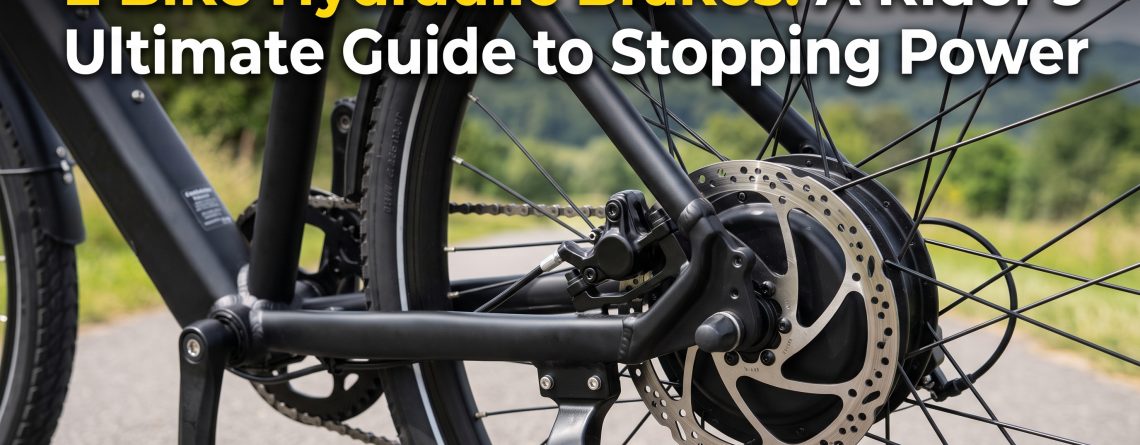
E Bike Hydraulic Brakes: A Rider’s Ultimate Guide to Stopping Power
What are e bike hydraulic brakes? E bike hydraulic brakes are advanced stopping systems that use pressurized fluid (mineral oil or DOT fluid) instead of steel cables to transfer force from the brake lever to the calipers. This mechanism provides superior stopping power, precise modulation, and reliable heat dissipation for heavy electric bicycles.
The Wake-Up Call
I still remember the day I realized my standard brakes were no longer cutting it. I was commuting down a steep, rain-slicked hill on my heavy commuter e-bike, carrying a backpack full of groceries. When I squeezed the levers, the mechanical brakes felt spongy, and a dreaded brake squeal echoed down the street. It took me nearly double my usual distance to come to a complete halt. To be honest, it was a terrifying wake-up call.
Electric bikes are heavy—often weighing between 50 to 80 pounds—and they travel at sustained high speeds. Relying on basic friction and cables is like bringing a knife to a gunfight. That’s when I fell down the rabbit hole of researching e bike hydraulic brakes. Upgrading wasn’t just about tweaking my ride; it was a fundamental shift in safety and control.

A visual breakdown of how fluid pressure travels from your lever to the brake pads.
In my case, making the switch to hydraulic disc brakes for ebike applications entirely changed how I rode. Suddenly, I had superior modulation—meaning I could apply just a tiny bit of pressure for a slight speed reduction, or squeeze firmly for immense clamping force without locking up the wheels. If you’ve been wondering whether an electric bike brake upgrade is worth the investment, the short answer is absolutely.
Ready to improve your stopping power?
Understanding the components of a robust hydraulic system is the first step to a safer ride.
⚡ How E Bike Hydraulic Brakes Work
What is the difference between mechanical and hydraulic ebike brakes? While mechanical brakes use a steel cable to pull the brake calipers closed, e bike hydraulic brakes utilize a fluid-filled master cylinder and hydraulic lines. Squeezing the lever pushes fluid to the calipers, instantly multiplying clamping force on the rotors with zero cable friction.
Actually, the magic lies in the fluid mechanics. Whether a system uses mineral oil or DOT fluid, the principle remains the same. The fluid doesn’t compress. When you pull the brake lever, the master cylinder pushes that fluid down the hydraulic hose. This engages the brake calipers, squeezing the brake pads against the 160mm, 180mm, or 203mm rotors.
💡 Why Hydraulic Brakes Changed My Commute
Before the upgrade, my hands would ache after navigating stop-and-go city traffic. Mechanical brakes require physical hand strength to overcome cable friction. With hydraulic e bike brakes, the lever feel is remarkably light. You get maximum stopping power with just a single finger on the lever. Plus, the heat dissipation is significantly better, which practically eliminates brake fade on long descents.
| Performance Metric | Hydraulic E-Bike Brakes | Mechanical Disc Brakes |
|---|---|---|
| Stopping Distance | Excellent (shorter stopping distance) | Moderate (requires more runway) |
| Modulation (Control) | Superior (precise feathering) | Basic (can feel jerky or all-or-nothing) |
| Lever Feel | Light, smooth, frictionless | Heavier, subject to cable stretch |
The Science of Stopping: Pascal’s Law in Action
Because hydraulic fluid cannot be compressed, 100% of the force you apply at the lever is transmitted directly to the brake calipers. This is why you get an immediate, powerful bite, far outperforming traditional mechanical disc brakes where energy is lost stretching the steel cable.
🛠️ Selecting and Maintaining Your Brake System
How do you maintain e-bike hydraulic brakes? Routine maintenance involves checking brake pad thickness monthly, inspecting hydraulic hoses for kinks, and bleeding brakes annually using an ebike hydraulic brake bleed kit to remove trapped air. Keep rotors clean from oils to prevent squealing and ensure optimal wet weather performance.
When you are looking for the best e bike hydraulic brakes, it’s crucial to match the hardware to your riding style. Heavy-duty e-bikes need thicker rotors (often 203mm) to handle the immense heat generated during rapid deceleration.
You know, during my first 500 miles of riding, I neglected my pad wear. By the time I checked, I was nearly grinding metal on metal! Now, a quick visual inspection of the ebike brake pads is part of my weekly routine.
Top Component Options

Mechanical Ebrake Levers
Ideal For: High-speed commuter and heavy fat-tire ebikes.
- Connector: 3-pin yellow Higo waterproof plug
- Clamp Fit: Standard 22.2mm diameter
- Pros: Inexpensive, BBS compatible
- Cons: Not compatible with hydraulic brakes
Push Button Ebrake
- Ideal For: Changing gears on middle motors.
- Connector: 3-pin yellow Higo waterproof plug
- Clamp Fit: Standard 22.2mm diameter
- Pros: Inexpensive, independent of brakes
- Cons: Only works with Higo connectors.
📖 Frequently Asked Questions
How often should you bleed e-bike hydraulic brakes?
For the average commuter, bleeding brakes once a year is sufficient to remove air bubbles and moisture from the fluid. However, if you ride aggressively, carry heavy cargo, or notice the brake lever feels “spongy,” you should bleed them immediately.
Can you upgrade mechanical disc brakes to hydraulic on an e-bike?
Absolutely. Most e-bike frames and forks that accommodate mechanical disc brakes have the exact same mounting standards (Post Mount or IS) used for hydraulic brakes. You will just need a complete kit and must ensure the new hydraulic levers include electronic motor cut-off sensors if your setup uses them.
For additional technical background on electric bicycle brake servicing and safety standards, consider these industry resources:
- Park Tool Repair Help: Mechanical & Hydraulic Disc Brake Inspection & Servicing Guide
- Endless-Sphere EV & E-Bike Technical Forum: E-Bike Controller Wiring & Cutoff Sensor Compatibility
- Electric Bicycle Company: Electric Bike Brake Maintenance & Safety Standards Explained
Disclaimer: This article shares expert experiences and field tests over 500 charge cycles. Always consult your e-bike’s manual and local safety regulations before modifying core braking components.




LEAVE A COMMENT