



eBike Battery Swelling: Causes, Signs & What to Do
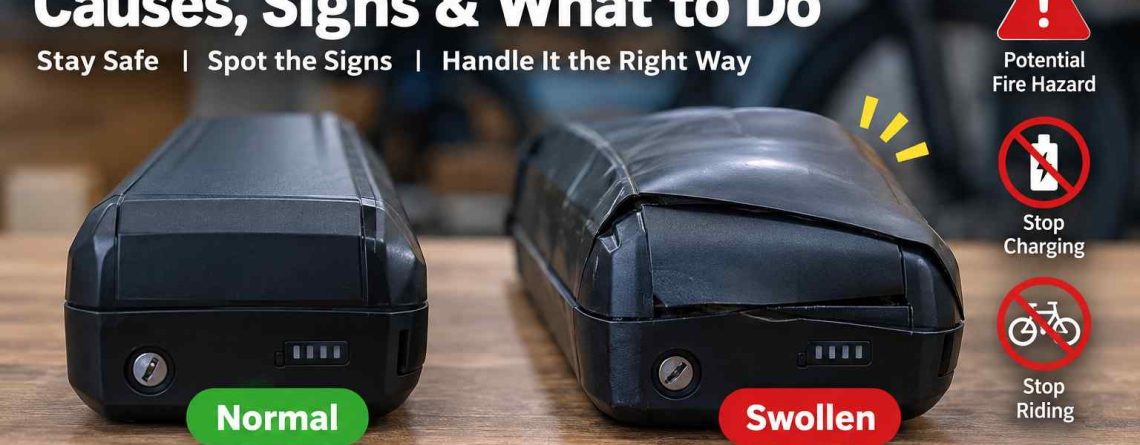
eBike battery swelling means the battery pack or case has started to bulge, bow, or expand. Visible swelling can be a sign of internal battery damage and a possible fire hazard. Stop normal use and charging, and do not open, squeeze, puncture, or test the cells yourself.
Quick Answer
- Stop riding and charging a visibly swollen battery.
- Do not press the case flat, open the pack, or try to release pressure.
- If the battery is smoking, hissing, leaking, or heating quickly, move away and call emergency services.
- If it is stable, contact the manufacturer or a qualified battery recycling or hazardous-waste service before transport.
An early sign can be easy to miss. A battery that once slid into its mount smoothly may feel tight, or a side panel may look bowed. That does not prove the exact fault, but it is enough to stop and inspect the pack from the outside.

What Should You Do If an eBike Battery Is Swollen?
Stop using and charging a visibly swollen eBike battery. Treat it as damaged, avoid DIY testing, and arrange qualified handling or disposal.
- Stop riding. Do not use the bike to see whether the battery still delivers normal power.
- Stop charging. If it is safe to disconnect power without touching a hot or damaged area, stop the charge.
- Do not open the case. Do not puncture, squeeze, clamp, or try to flatten the pack.
- Watch for active warning signs. Smoke, hissing, leakage, a strong unusual odor, or fast-rising heat can mean the situation is getting worse.
- Escalate if needed. If the pack is actively failing, move people away and contact emergency services.
- Get handling instructions. If the pack is stable, ask the manufacturer or a qualified disposal service what to do before moving it.
The U.S. EPA says battery swelling indicates damage and is a potential fire hazard. It also advises keeping lithium-ion batteries out of household trash and curbside recycling.
Why Does an eBike Battery Swell?
Swelling can happen when internal cell changes cause expansion or gas buildup. Heat, aging, charging faults, physical damage, water entry, or cell defects may contribute.
A swollen case is a symptom, not a full diagnosis. Damaged or aging cells can expand or produce gas. Battery-swelling research also links the problem to factors such as temperature, voltage, state of charge, and charge or discharge rate.
Do not guess the exact cause from appearance alone. Whether swelling appears after heat, charging, a crash, or storage, the pack should stay out of normal use until it is handled by a qualified professional.
| Observed Sign | What It May Mean | Safer Next Step |
|---|---|---|
| Case is visibly bulging | Possible internal damage | Stop use and charging |
| Pack no longer fits normally | Possible case deformation | Do not force it into the mount |
| Swelling with unusual heat | Higher concern | Keep people away and seek help |
| Swelling with odor or leakage | Possible cell failure | Avoid unnecessary handling |
| Smoke or hissing | Possible active failure | Move away and call emergency services |
| Stable swollen pack | Damaged battery that should be retired | Ask for disposal instructions before transport |
How to Check Suspected Swelling Without Opening the Pack
Use only external checks. Do not open, force-charge, puncture, or electrically probe a battery that already shows visible swelling or damage.
- Compare the closed case with photos of its normal shape.
- Look for a bowed side, raised panel, spreading seam, or distorted end cap.
- Notice whether the pack suddenly feels tighter in its normal mount.
- Note recent events such as a crash, water exposure, heat, or charging trouble.
- From a safe distance, look for leakage, discoloration, smoke, or melted parts.
Do not turn this into a home repair project. Visible swelling changes the situation: stop normal use and get the pack handled safely.
Can You Keep Using or Charging a Swollen eBike Battery?
No. Once genuine swelling is visible, the pack should leave normal service. The next step is safe handling and retirement, not another ride or charge cycle.
Do not “charge it once more,” ride it as a test, puncture the case, or squeeze the pack back into its mount.

Swollen Battery Decision Box
- Swollen but cool and stable: stop use and ask the manufacturer or recycler for handling instructions.
- Swollen and unusually hot: keep people away and do not continue testing.
- Smoke, hissing, rapid heating, or fire: leave the immediate area and contact emergency services.
- Swelling after a crash or water exposure: report that history when you ask for help.
How to Dispose of a Swollen eBike Battery
Do not put a swollen lithium-ion pack in household trash or curbside recycling. Damaged packs may need special handling, and a recycler may have different rules for transport and drop-off. Contact the receiving service first, then follow its instructions.
For the full process, see how to dispose of a damaged eBike battery. For the wider safety mechanism, read why lithium eBike batteries can catch fire.
Need a Replacement eBike Battery?
Once the swollen battery has been safely removed from service, compare replacement options based on your bike’s voltage, controller requirements, connector, and mounting space.
eBike Battery Swelling FAQ
These answers cover the questions riders most often have after they notice a battery case starting to bulge or change shape.
Is a swollen eBike battery dangerous?
It can be. Swelling is a sign of damage and can be linked to fire risk. Stop use and charging, then arrange qualified handling.
Can I charge a swollen eBike battery one more time?
No. Do not charge a visibly swollen pack to test it or recover capacity. Retire it from normal use and get handling advice.
Can I ride an eBike with a swollen battery?
No. A visibly swollen battery should be removed from normal service rather than tested on the bike.
Can a swollen eBike battery be repaired?
Do not attempt a home repair. Whether professional service is possible depends on the pack and damage, but treat the battery as damaged first.
Why did my eBike battery swell after charging?
Charging may have revealed an existing problem, but timing alone cannot confirm the cause. Stop charging and have the pack assessed.
How do I dispose of a swollen eBike battery?
Contact a battery recycler, hazardous-waste program, or manufacturer before transport. Do not place the pack in household trash or curbside recycling.
Conclusion
If an eBike battery is swollen, stop using and charging it, avoid DIY testing or repair, watch for active warning signs, and arrange qualified handling or disposal.
The goal is not to identify the failed cell at home. Recognize the physical change, stop normal use, and move to a qualified handling or disposal path.




LEAVE A COMMENT