




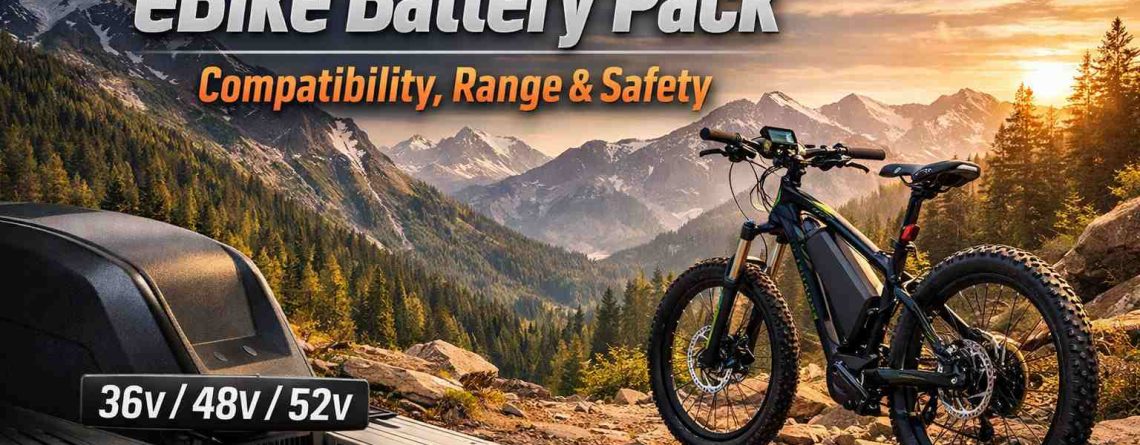
Electric Bikes Motor: The Easy Battery Hack
In this guide, the electric bikes motor refers to the motor setup or conversion kit that dictates your power needs. Choosing the right eBike battery pack requires matching the voltage platform (36V/48V/52V), ensuring the BMS discharge rate covers the controller’s demand, and verifying safe charging and storage protocols.
You’ve finally installed that high-performance hub motor. You twist the throttle, expecting a rush of torque. But instead, the system cuts out the moment you hit a hill.
It gets worse. You might wake up in winter to find your range has dropped by half.
Actually, in my early building days, I blamed the motor for everything. But to be honest, 90% of the time, that “motor problem” was actually a battery pack mismatch.
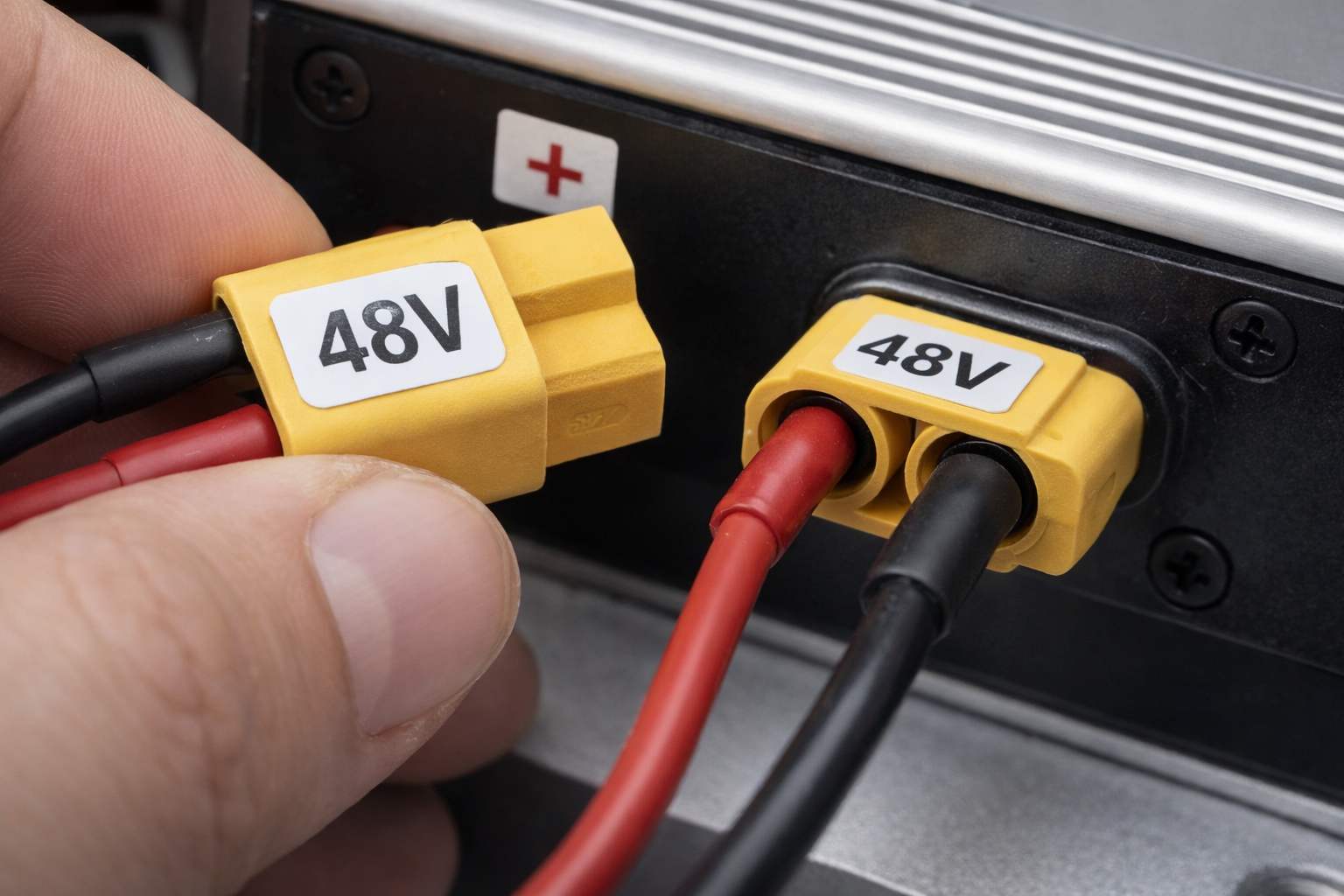
Matching the battery pack voltage and connectors to your motor controller is the first step to safety.
The battery is the fuel tank and the pump combined. If it can’t deliver the current your controller demands, your ride ends early. If you treat it wrong in freezing temps, it dies young. Here is the quick reality check before you buy.
Quick Guide: Matching Battery to Motor
- Match the Voltage Platform: Ensure your pack (36/48/52/60/72V) matches the motor + controller rating.
- Plan Range with Wh: Don’t just look at Ah; Volts × Amp-hours = Watt-hours (the real energy tank).
- Check BMS Discharge: The pack’s continuous discharge amps must meet or exceed your controller’s current limit.
- Respect the Cold: Ride vs. charge vs. store are different rules—never charge a frozen pack.
- Safety First: Use a compatibility checklist (connectors, fuse, mount) before the first ride.
Need a battery that actually fits?
Stop guessing on specs. We stock high-discharge packs tested specifically for these motor kits.
E-bike Motor Conversion: battery pack compatibility first
Lead with a strict voltage-platform match and controller protection logic, then size for range by Wh; if BMS or connectors don’t meet system needs, you risk cutoffs and safety hazards.
Many builders get obsessed with “motor watts,” but the controller is the gatekeeper. Your battery pack must talk the same language as the controller. If you pair a 36V pack with a 48V controller, the Low Voltage Cutoff (LVC) will likely prevent the system from even turning on. Conversely, over-volting a system without checking component ratings is a recipe for fried electronics.
eBike battery pack for electric bike motor kits (36V/48V/52V)
The voltage determines your top speed and torque baseline. Here is the compatibility checklist to run through before buying:
- Voltage Platform Match: Does the pack voltage align with the controller’s nominal voltage? (e.g., 48V pack for 48V kit).
- LVC/HVC Behavior: Ensure the controller’s Low Voltage Cutoff isn’t higher than your battery’s safe minimum voltage.
- Connectors & Wire Gauge: Are you using XT60, XT90, or Anderson? Thin wires melt under high amp draw.
- Physical Fitment: Measure your triangle or rack space twice. Vibration is the enemy of heavy packs.
eBike battery pack + controller pairing guide (LVC/HVC, BMS limits)
The Battery Management System (BMS) is the brain protecting the cells. If your motor controller pulls 30A peak but your battery BMS is rated for only 20A continuous, the BMS will trip to protect the cells. This results in the dreaded “shut down on a hill” scenario. Always size the battery BMS to handle more than the controller’s peak draw.
Understanding Voltage Sag: When your motor draws peak current, the battery voltage temporarily drops—this is known as voltage sag. Premium cells like Samsung 35E or LG MJ1 minimize sag compared to generic cells. If your voltage sag hits the controller’s Low Voltage Cutoff (LVC), your system will shut down. Ensure your BMS continuous rating exceeds your controller limit by at least 10%.
Q: What causes sudden cutoff on hills: controller or BMS?
A: It is usually the BMS triggering over-current protection because the motor load exceeded the battery’s discharge limit, or voltage sag hit the controller’s cutoff.
Table: eBike battery pack selection matrix for motor kits
| Scenario | Voltage Priority | Capacity Focus | BMS Requirement |
|---|---|---|---|
| Daily Commute (Flat) | 36V / 48V | Medium (Wh) | Low-Med Amps |
| Hills / Heavy Cargo | 48V / 52V | High (Wh) | High Amps (Peak) |
| High Speed / Performance | 52V / 60V / 72V | High (Wh) | Very High Amps |
| Winter Riding | 48V+ (sag comp) | Oversize by 20% | Cold-rated Cells |

Visualizing the size and connector differences between common voltage platforms.
Practical verification method (Safety First)
Don’t rely on forum guesses. Here is how I verify a setup safely. Note that we do not use fake cycle life numbers here; battery life depends entirely on how you treat it.
- Step 1: Map the Platforms: Write down your controller’s LVC (e.g., 41V for a 48V system) and max current (e.g., 25A).
- Step 2: Paper Check: Compare this against the battery spec sheet. Does the BMS continuous discharge exceed 25A? Is the full charge voltage safe for the controller capacitors?
- Step 3: Field Observation: On a safe, closed stretch, test three cases: a cold start, a steep hill climb, and a long steady drag. Monitor for excessive heat at the connectors (warm is okay, hot is dangerous).
- Step 4: Storage Validation: After the ride, let the battery sit for 30 minutes to cool before charging. Never charge immediately after a hard discharge.
Voltage & capacity without hype (Ah vs Wh, range, cutoff)
Use Wh to size energy for your rides; Ah alone misleads across voltages, and controller cutoff plus cold performance determine how much energy you can actually use.
Marketing often screams “20Ah Battery!” but that means nothing without voltage. A 36V 20Ah pack has 720 Watt-hours (Wh). A 52V 20Ah pack has 1040 Wh. That is a massive difference in range.
Ah vs Wh in plain language
Think of Voltage as the water pressure and Amp-hours (Ah) as the diameter of the tank. Watt-hours (Wh) is the total volume of water. To choose an eBike battery pack that lasts your whole commute, calculate your estimated consumption (usually 15-20 Wh per mile for moderate riding) and buy a pack with a 20% buffer.
E-bike Battery Range Calculator Logic
To calculate your theoretical range, use the formula: Watt-hours (Wh) = Volts (V) × Amp-hours (Ah). Most high-performance electric bikes motors consume between 15-20Wh per mile. For example, a 52V 20Ah pack provides 1040Wh, offering roughly 52 miles of range. Always factor in a 20% safety buffer for hilly terrain or heavy throttle use.
Q: What’s more important: Ah or Wh for eBike range?
A: Watt-hours (Wh) is the only accurate measure of total energy, as it accounts for both voltage and amp-hour capacity together.
Range planning checklist
- Calculate theoretical Wh (V × Ah).
- Subtract 15% for “usable capacity” (you rarely drain to 0%).
- Divide by your efficiency (e.g., 20 Wh/mile for hub motors).
- Adjust for terrain: reduce range by 30% for hilly areas.
Cold weather & storage rules for eBike battery packs
Cold primarily reduces usable energy and output; the fix is separating ride/charge/store rules and prioritizing safety and consistency over “bigger numbers.”
I learned this the hard way when my range dropped 40% in January. Lithium-ion chemistry slows down in the cold. Internal resistance goes up, causing voltage sag.
Ride vs charge vs store rules
- Ride: You can ride in the cold, but expect less range and “spongier” acceleration.
- Charge: NEVER charge a battery pack that is below freezing (0°C/32°F). This can permanently damage the cells and cause plating. Bring it inside and wait until it reaches room temp.
- Store: If you aren’t riding for weeks, store the pack at roughly 50% charge (storage voltage). Don’t leave it at 100% or 0% for long periods.
Real-world Application: The Commuter Upgrade
Last year, I helped a friend upgrade a standard 36V commuter to a 52V system. He wanted speed, but he forgot about his frame space. We bought a massive “whale” shark pack that physically wouldn’t fit inside the triangle of his mountain bike. We ended up having to mount it on a rear rack, which made the bike handling top-heavy and unstable.
The lesson? Measure three times. Check the template. And consider how the weight distribution affects your ride, especially if you carry cargo.
Mounting location affects handling—center frame mounts offer the best balance for heavy motor kits.
Decision box: pick the right eBike battery pack for your motor setup
First, match your motor/controller and riding style to the right voltage and discharge level. Then confirm compatibility and safety. Finally, choose the smallest pack that still meets your range goal.
Use this logic flow to decide:
- System Voltage: Match your kit (36V/48V/52V/60V/72V).
- Discharge Needs: Controller Peak Amps + 10% safety margin = Required BMS Constant.
- Space/Mount: Frame triangle (best) vs. Rear Rack (easier fit, worse handling).
- Risk Tolerance: High-quality cells (Samsung/LG/Panasonic) are safer than generic cells, especially for home storage.

48V High-Energy Pack
Best for: All-around conversion kits (750W-1000W)
- Cells: Samsung/LG usually
- Range: 40-60 miles (depends on Wh)
- Mount: Shark/Dolphin cases
52V Performance Pack
Best for: Speed & Torque (1000W+)
- Less voltage sag under load
- Requires 58.8V charger
- Check controller HVC limits
36V Lightweight Pack
Best for: Low-power assists (250W-500W)
- Compact & Light
- Bottle/Tube mounts
- Good for short commutes
EM3ev Rhino-3P 52V 15Ah Rectangle Ebike Battery
Best for: High power builds
- Smart BMS options
- Custom shape/triangle bags
- Fused balance leads safety
Ready to power up?
Ensure you have the right connectors and a safe charger before you checkout.
Frequency Asked Questions
Answer: To reset your BMS, first disconnect the battery from the motor. Turn off the battery switch (if applicable) and wait for 1-2 minutes. Then, plug in your charger for 5-10 seconds. This “jumpstarts” the BMS logic, clearing most temporary over-current or short-circuit protection locks.
Answer: A 52V battery provides higher top speed and more consistent power throughout the discharge cycle compared to a 48V pack. It experiences less “voltage sag,” meaning your motor maintains its punch even when the battery is half-empty. Ensure your controller is rated for 60V capacitors before upgrading.
Answer: Charging at or below 0°C (32°F) causes lithium plating on the anode, which leads to permanent capacity loss and internal short circuits. While you can ride in the cold, you must always let the battery warm up to room temperature before connecting the charger.
Final Thoughts
Choosing the right battery for your e-bike setup isn’t just about getting the biggest numbers. It is about balancing voltage compatibility, safe discharge limits, and practical range needs. Whether you are commuting or climbing mountains, a well-matched system is safer, lasts longer, and rides better.
Editor’s Review: Battery Upgrade for Electric Bikes Motor
5.0 / 5
Pros
- High discharge BMS prevents motor cutoffs
- True capacity ratings (Wh) for reliable range
- Smart fusing options for enhanced safety
- Compatible with Bafang & generic motor kits
Cons
- Slightly heavier due to premium cells
- Requires specific mounting space measurements
Verdict
When upgrading your electric bikes motor, choosing a battery pack isn’t just about voltage—it’s about safety and sustained power. The EM3ev high-performance battery series offers the best balance of discharge capability and cycle life. It is the definitive “hack” for solving voltage sag and range anxiety on high-power motor setups.



LEAVE A COMMENT