




Fix Ebike Battery Voltage Sag in Cold Weather Explained Now
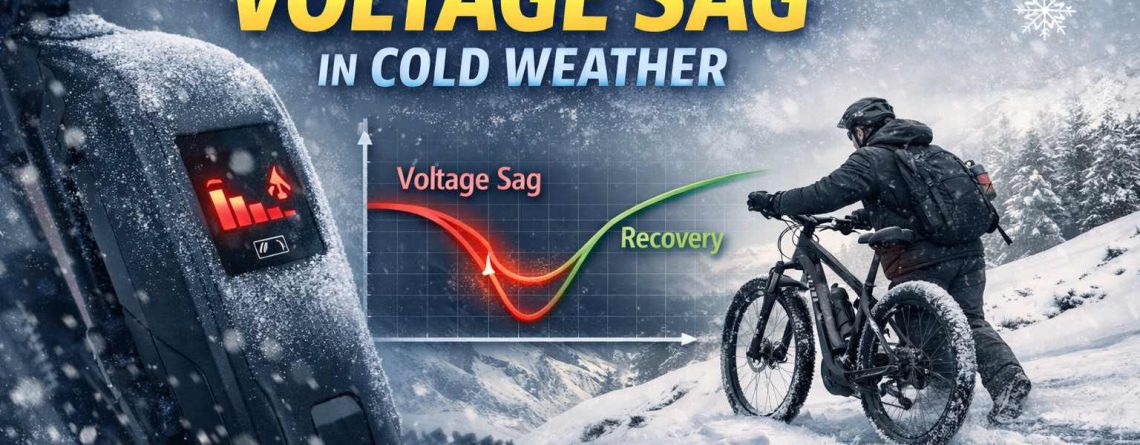
Ebike battery voltage sag in cold weather explained: it is a temporary dip in power that occurs when low temperatures increase the internal resistance of lithium-ion cells. This physical reaction makes it harder for electricity to flow, often causing your ebike display to show a sudden drop in battery bars or even triggering a system shutdown when you accelerate or climb hills in the winter.

Cold weather doesn’t just reduce range; it changes how your battery handles high-stress moments like hill climbing.
Why does my ebike die so fast in the winter?
If you’ve noticed your bike losing its “punch” when the temperature drops below 40°F (4°C), you aren’t alone. Lithium ion batteries are essentially chemical engines. Inside, ions move through a liquid electrolyte to provide power. When that liquid gets cold, it thickens, creating internal resistance. This is why many riders ask why does my ebike die so fast in the winter—it’s not that the energy is gone, but that it’s physically “stuck” and cannot move fast enough to meet the motor’s demand.
This phenomenon leads to significant ebike battery range loss in winter. While your battery might still hold a full charge, it can’t deliver that charge with the same efficiency as it would on a warm summer day. Understanding this shift is the first step toward reclaiming your winter commute.
Is your winter ebike range dropping fast?
Cold temperatures don’t have to end your ride. EM3ev high-performance battery packs are engineered with low-resistance cells and robust BMS tuning to deliver stronger output, even in winter conditions. Explore how the right battery can help you ride farther when temperatures drop.
Ebike battery voltage sag rebound under load
To understand what is happening inside your frame, imagine trying to drink a thick milkshake through a straw. In the summer, the “milkshake” is thin and easy to pull. In the winter, it becomes thick and frozen. When you ask your motor for power, you are pulling on that straw. The ebike battery voltage sag rebound under load happens because once you stop pulling (stop accelerating), the chemicals eventually “settle,” and the voltage appears to climb back up on your screen.
However, the cold weather low voltage cutoff ebike controller doesn’t wait for a rebound. If the sag is deep enough to hit the safety limit, your bike shuts off instantly to prevent the cells from being over-discharged. This is a protective measure, but it can feel like a total battery failure when you’re halfway up a hill.
Winter Performance Expectations by Temperature
The following data illustrates how lithium ion batteries typically behave as the temperature drops. These percentages represent the likely ebike battery range loss winter riders experience at different thresholds.
| Temperature (°F / °C) | Estimated Range Loss | Expected Battery Behavior |
|---|---|---|
| 68°F (20°C) | 0% | Optimal flow; standard manufacturer range. |
| 32°F (0°C) | 15–20% | Noticeable voltage drop on steep inclines. |
| 14°F (-10°C) | 30–45% | Sluggish throttle response; high sag risk. |
| -4°F (-20°C) | >55% | System may shut down under any significant load. |
Why does my ebike shut off on hills in cold weather?
Hills demand the highest current from your cells. Because cold increases internal resistance, the ebike battery BMS cut off under load is much more likely to trigger during a climb. The BMS (Battery Management System) sees the voltage drop sharply and assumes the battery is empty, even if you just took it off the charger.
The Cell Factor: Not all batteries are created equal. In technical head-to-heads like Samsung 50S vs LG M50LT, higher-discharge cells (like the 50S) often handle cold weather sag better because they are designed to maintain higher voltage under heavy stress.
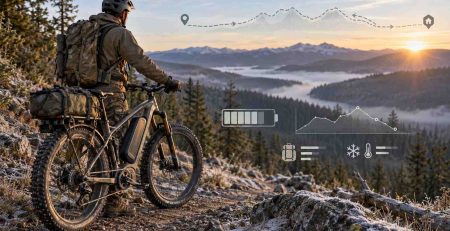
Visualizing how voltage “sags” during an uphill climb and “rebounds” when you stop.
How to keep ebike battery warm in winter commute
To fight back against lithium ion ebike battery cold performance issues, you have to think about thermal management. While your battery naturally generates heat during discharge, sub-freezing winds strip that warmth away. Starting your ride with a battery that has been stored at room temperature is the single most effective way to reduce initial voltage sag.
For those riding in extreme conditions, neoprene ebike battery insulation covers act as a vital thermal barrier. While they don’t “create” energy, they trap the heat generated by the cells. In my experience, a quality cover can reduce effective range loss by 5–10% by keeping the battery’s internal chemistry in a more efficient temperature window during your winter commute.
Professional-grade packs like those from EM3ev are built to handle higher loads with minimal voltage drop.
Winter Performance: The EM3ev Advantage
When it comes to resisting ebike battery voltage sag in cold weather, the quality of the cells and the assembly matters. EM3ev is widely recognized for using genuine high-tier cells and robust interconnects that minimize internal resistance.

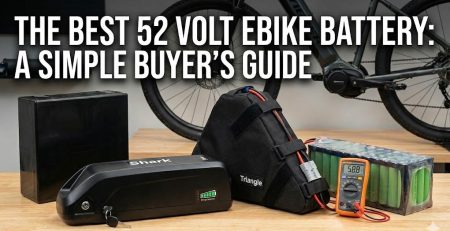
EM3ev 52V Super Shark
Utilizing high-discharge cells (like Samsung 50S), this pack is engineered to maintain stable voltage even under heavy winter loads.
EM3ev 52V Custom Triangle Pack
Built with high-density cells that offer superior cold-weather resilience and high peak current for hill climbing
Expert Tip: If you are choosing between cells for a custom EM3ev build, the Samsung 50S vs LG M50LT debate is relevant here. The 50S typically offers lower internal resistance, which directly translates to less voltage sag when the mercury drops.
The Danger of Charging in the Cold
Never charge your battery if it is freezing. Lithium plating risk charging ebike battery below freezing is a serious safety concern. Always bring your battery indoors and let it warm up for at least two hours before plugging it in to avoid permanent damage.
Frequently Asked Questions
Why does my ebike die so fast in the winter?
It’s a matter of chemistry. Cold temperatures increase the viscosity of the electrolyte inside the lithium ion batteries, slowing down ion movement. This increases internal resistance, meaning your battery has to work much harder (and loses more energy as heat) to provide the same amount of power.
How much range will I lose in cold weather?
Expect a ebike battery range loss winter average of 20% to 40%. For those off-roading, the emtb battery range loss cold weather percentage can be higher because the motor requires more frequent bursts of high torque, which triggers deeper voltage sag.
Can I recover an ebike battery left in a freezing garage?
Yes, usually. If you find your ebike battery left in freezing garage, do not try to use or charge it immediately. Bring it into a room-temperature environment and allow it to warm up slowly. Once it has reached room temperature, check the voltage; if it hasn’t dropped below the BMS cutoff, it should function normally.
Are neoprene ebike battery covers worth it?
Specifically for long rides, yes. A neoprene ebike battery cover is worth it because it prevents “flash cooling” from the wind, helping the battery stay at a functional temperature longer.
Summary
Ebike battery voltage sag in cold weather is caused by increased internal resistance in freezing temperatures, leading to sudden power drops. To maintain performance, use high-quality packs like those from EM3ev, store batteries indoors, use thermal covers, and never charge a battery while it is frozen to avoid lithium plating and permanent damage.




LEAVE A COMMENT