




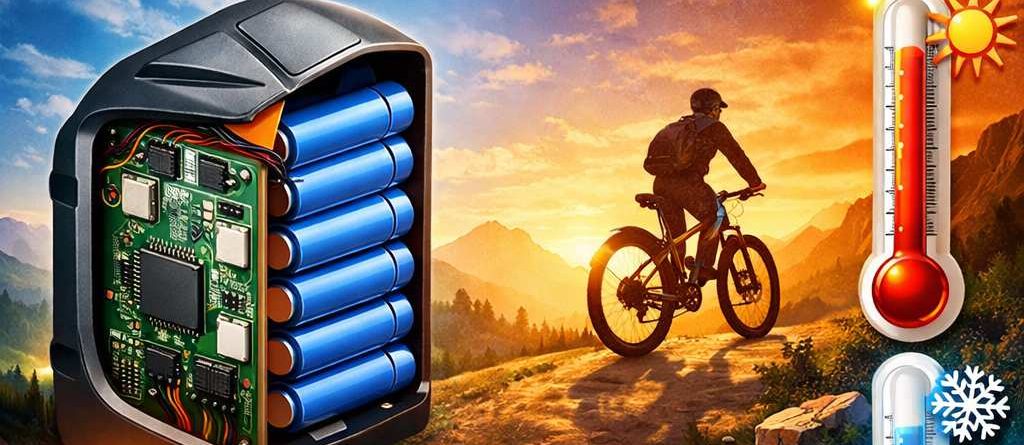
How Long Does an E-Bike Battery Last? Years & Cycles
How long does an eBike battery last? Many well-matched lithium-ion packs remain useful for roughly 3 to 5 years, but there is no universal expiration date. Service life depends on the exact cells, charge cycles, depth of discharge, temperature, current demand, storage, BMS settings and the capacity level you consider acceptable.
Measure battery life in both calendar time and equivalent full cycles. A pack can still function after its range has noticeably declined, so track usable watt-hours, voltage sag, cut-outs and abnormal heat rather than relying on age alone.
Quick Answer: How Long Does an Ebike Battery Last?
A common planning range is about 3 to 5 years or roughly 500 to 1,000 equivalent full cycles, but the specification for the exact cell and pack takes priority. Some packs reach 80% of original capacity sooner or later depending on temperature, charge rate, depth of discharge, current load and storage.
Quick Summary: Maximizing Electric Bike Battery Pack Life
- Cycle life: Use the exact cell and pack specification; 500–1,000 equivalent full cycles is only a broad planning range.
- Heat Control: High temperatures negatively affect battery chemistry.
- Smart Storage: Proper long term storage is crucial for longevity.
- Charging: Partial charging can reduce stress, but follow the battery maker’s instructions and charge sufficiently for the route.
A useful early sign of ageing is a repeatable change under the same conditions: less range on a familiar route, greater voltage sag during acceleration, a shorter time to charge, or a cut-out at a higher indicated state of charge. One ride is not enough—temperature, wind, tyre pressure and speed can also change range.

Is Your Battery Setup Optimized?
Using an incompatible charger can damage a pack, while prolonged storage near full or empty charge can accelerate ageing. Check the battery maker’s charging and storage instructions.
How long does an e-bike battery pack last?
Many eBike packs remain useful for 3 to 5 years, and 500 to 1,000 equivalent full cycles is a common broad estimate. Actual capacity retention must be judged against the exact cells, pack design and operating conditions.
Many riders confuse “cycles” with “years.” Think of eBike battery pack life like running shoes. If you run daily on rough terrain, they wear out faster. Similarly, how long does ebike battery pack last depends on “depth of discharge.” Taking shallow charges (plugging in at 40% instead of 0%) helps the voltage delivery remain smooth.
Major Factors That Impact Longevity:
- Cell Quality: Premium cells (like Samsung/LG) define how long does an eBike battery pack last under stress.
- BMS protection: A suitable BMS helps limit overcharge, over-discharge, overcurrent and other conditions; it is not a substitute for the correct charger or undamaged cells.
- Thermal Environment: Extreme heat will permanently affect battery health.
- Storage Habits: Proper long term storage (at 50% charge) is vital.
| Operating Factor | High Impact (Preserve) | High Impact (Degrade) |
|---|---|---|
| Storage Temperature | Cool, Dry Indoors (68°F / 20°C) | Freezing Sheds or Hot Cars |
| Charge Level for Storage | Approx. 50% (Storage SOC) | Leaving it Empty (0%) or Full (100%) |
| Daily Usage Range | Partial Use (20% to 80% range) | Deep Discharges to 0% Every Time |
| Mounting Quality | Vibration-Dampened Brackets | Loose Cases and Hard Impacts |
| Maintenance Check | Monthly Visual & Voltage Check | Ignoring the Battery for Entire Seasons |
Experience Validation Workflow
You can track repeatable changes without opening the pack. For an accurate capacity or load test, use a qualified technician:
- Select a Baseline Route: Choose a familiar 5-mile path with consistent terrain.
- Record load behaviour: Note cut-outs or large display changes during the same hill or acceleration. Display bars are only a rough indicator, not a diagnostic measurement.
- Compare range consistently: Use the same route, similar temperature, tyre pressure, load, speed and assist level. A repeatable decline suggests reduced usable energy.
- Record charging changes: A substantially shorter charge can be consistent with capacity loss, but charger faults, temperature and starting state of charge can produce similar symptoms.
Cold-charging warning
Do not charge below the battery manufacturer’s minimum charging temperature. For many lithium-ion packs that limit is around 0°C/32°F. Let a cold-soaked pack warm naturally into the approved range before charging; do not apply direct heat.
How Long Do Electric Bikes Last (Beyond the Battery)?
The rest of an eBike does not have one fixed lifespan. Frame condition, motor sealing, drivetrain wear, brake service, corrosion, mileage, load and parts availability all matter. Use the bicycle and component maker’s inspection schedule.
- Motor: Service life varies by model, load, sealing, temperature and maintenance; inspect unusual noise, play, heat or error codes.
- Drivetrain: Check chain wear and shifting at the bicycle maker’s interval; mid-drive torque and riding conditions can accelerate wear.
- Brakes and tyres: Inspect frequently and replace according to condition, manufacturer limits and local service guidance.
Ultimately, your electric bicycle battery life is the most significant recurring cost, but the bike itself remains a long-term investment.
What affects eBike battery pack life?
Several variables affect overall battery life, including rider weight, tire pressure, and your personal charging habits. These factors directly influence stress on the cells.
Riding style changes current demand. High speed, heavy throttle, steep climbs, cargo and an inefficient gear can increase current and heat. On a mid-drive, selecting an appropriate gear for a climb can reduce strain on the motor and drivetrain; follow the motor maker’s operating guidance.
Q: Does fast charging hurt my battery?
To be fair,it can.While it’s very convenient,fast charging creates more heat inside the battery pack. If you have the time,using a standard”slow” charger overnight is much better for long-term health. However, what is “slow” is based entirely on the charging specs of the cell type used in the battery and how many of these cells are configured in parallel.
Q: Does the weight of the rider matter?
Yes. Heavier loads require more energy to move, which causes the battery to discharge faster. This high-drain state creates more internal heat, which gradually contributes to chemical aging over several years.
When do eBike battery packs deteriorate?
True deterioration is marked by a permanent loss of capacity and power, whereas cold-weather performance drops are usually temporary.
Aging vs. Faults: How to Tell the Difference
Normal ageing is usually gradual, while a sudden change can indicate a connection, charger, BMS, cell-group, controller or temperature problem. A cut-out at an indicated 30% is not proof of imbalance because display estimates can be inaccurate. Repeated cut-outs require professional diagnosis.
The Winter Range Mystery
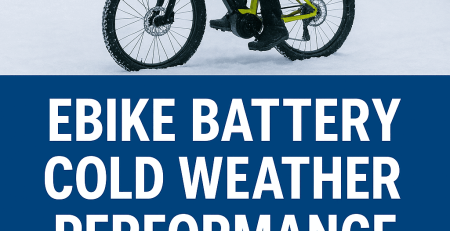
Cold temperatures increase internal resistance and can temporarily reduce available power and range. Compare performance again after the pack has returned to its normal operating temperature before concluding that permanent capacity has been lost.
How long do e-bikes last on a charge?
There is no reliable universal mileage per charge. Estimate range as usable watt-hours ÷ average Wh per mile. For example, 500 usable Wh at 15Wh/mile is about 33 miles before adding a reserve; actual consumption changes with speed, hills, wind, temperature, tyres, load and assist level.
Understanding how long do eBike battery packs last on one charge requires math. If you have a 500Wh battery and ride efficiently, you get more range. If you rely only on the throttle, the range per day decreases significantly.
Smooth acceleration and lower assist can reduce energy consumption, but there is no fixed percentage gain for every bike or route.
Expert Tips for Range & Longevity
- Pedal More: Use lower assist levels on flat ground.
- Smart Storage: For long term storage, keep the voltage at nominal (approx. 50%).
- Smooth Riding: Avoid “racing” from stoplights to reduce voltage sag.
Expert Battery Solutions from EM3ev
If your current battery has finally reached the end of its useful life, it’s important to choose a replacement that uses high-quality components. At EM3ev, we pride ourselves on building packs that prioritize safety and longevity over cheap pricing. We use precision-matched cells and robust BMS systems to ensure your ride stays powered for the long haul.

EM3ev 36V Compact Pack
An option for compatible urban e-bikes whose range, current and fit requirements match the pack.
- Ultra-Slim Design
- Internal Safety Fuses
- Quick-Release Mount
EM3ev 48V Performance Series
Our top choice for North American commuters—built for reliability and high cycle life.
- High-Grade Samsung/LG Cells
- Water-Resistant Casing
- 8A Charger Support
EM3ev 52V High-Torque Pack
Designed for mountain riders and cargo bikes that need consistent power on steep grades.
- Reinforced Internal Connections
- Confirm the continuous pack and BMS current ratings on the current product page
- Thermal Cutoff Sensors
Custom High-Power Solutions
For specialized builds requiring 72V. Engineered for extreme performance and safety.
- Bluetooth Enabled BMS
- Custom Configuration Options
- Professional Build Quality
When Should You Consider a Replacement Battery?
All lithium-ion cells eventually lose capacity. Consider replacement when repeatable testing shows the usable range no longer meets your needs, or when professional diagnosis confirms excessive sag, weak cells or an unsafe fault. Choose the next pack by documented cell model, current rating, BMS, charger, fit, warranty and support.
Frequently Asked Questions
1. Battery pack lifespan vs range per charge—what’s the difference?
Service life is the time or equivalent full cycles until capacity, sag or reliability no longer meets the rider’s needs. Range per charge is the distance available from the usable energy in one charge under current riding conditions.
2. What wears out an eBike battery pack fastest?
Heat is the primary killer. Whether it’s from sitting in the sun, charging too fast, or working too hard on steep hills, thermal stress damages the cells permanently.
3. Best way to store an eBike battery pack long term?
Follow the battery maker’s target storage charge, temperature and inspection interval. Many makers recommend partial charge in a cool, dry location. Avoid extended storage near empty because self-discharge can push cells below their permitted voltage.
4. How does cold weather affect an eBike battery pack?
Cold weather increases internal resistance, which temporarily reduces your range and power. It’s not permanent damage as long as you don’t charge it while frozen.
5. How long does a 52V battery last compared to 48V?
Voltage alone does not determine service life. A 48V or 52V pack can last well when the cells, BMS, current demand, charge rate and temperature are properly matched. Compare watt-hours and discharge capability rather than assuming that the higher nominal voltage will automatically last longer.
6. How many hours does an electric bike battery last on a single charge?
There is no reliable hour figure without knowing battery energy in watt-hours and the bike’s average power consumption. Estimate riding time by dividing usable watt-hours by average watts, then allow a reserve for hills, wind, temperature and battery age.
7. Should I wait for 0% before charging, or are partial charges better?
All lithium cells have no “memory effect.” Keeping your battery between 20% and 80% charge (partial charging) is actually much healthier than deep discharging to 0%.
8. Does fast charging reduce eBike pack life?
Higher charge current can create more heat and may increase cell stress, especially in warm conditions or on older packs. Use only a charge rate approved for the battery; a moderate rate is generally preferable when rapid charging is unnecessary.
Final Thoughts
Battery life depends on cell and pack design as well as temperature, charge rate, depth of discharge, storage and riding load. Use the approved charger, avoid charging outside the permitted temperature range, store as instructed and investigate abnormal heat, swelling, smell, noise or repeated cut-outs promptly.
For a practical charging and storage routine, read our eBike battery charging guide. If range has fallen substantially or the pack cuts out under load, compare replacement options in the eBike battery replacement guide.

LEAVE A COMMENT