




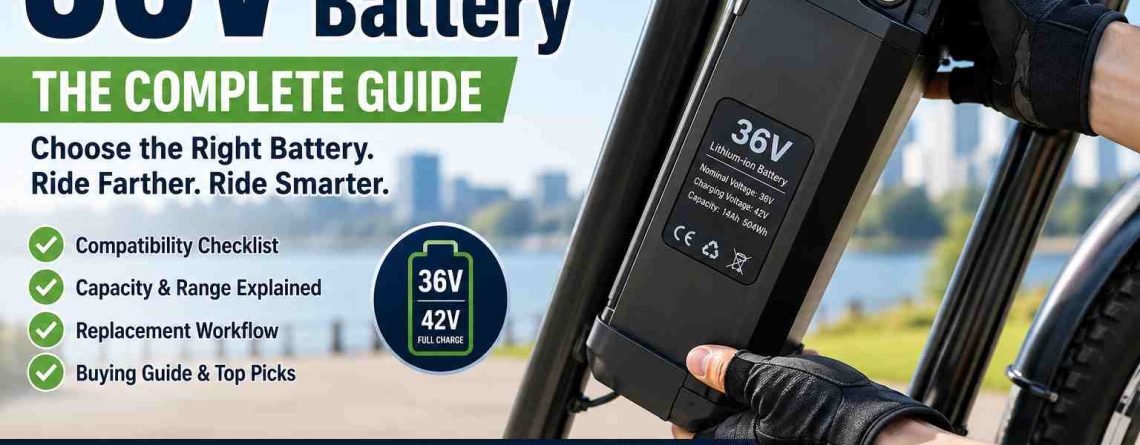
How to Choose Your Perfect Battery 36V Pack
A battery 36v eBike replacement is a specialized lithium power pack designed to drive 36V electric bike systems. Unlike generic 36 volt batteries, a true 36v electric bike battery must exactly match the bike’s motor controller, charger output, connector style, mounting bracket, and internal Battery Management System (BMS) requirements.
Quick Answer: Core Considerations
- 36v eBike battery pack compatibility: Voltage must match the controller limit exactly; you cannot blindly swap to 48V.
- Capacity (Ah/Wh): Determines your riding range—higher Ah means more distance.
- 36v eBike battery charger: Must be configured for lithium chemistry with a 42V maximum charge output.
- Form Factor: The mount (hailong, rear rack, integrated) and discharge connector must physically fit your bike.
- When to buy a 36v eBike replacement battery: When range drops significantly, the pack refuses to hold a charge, or physical damage occurs.
I distinctly remember staring at my commuter bike a few years ago when the original power pack finally gave out. The range had plummeted, and I was trying to replace the worn-out pack, but I was entirely unsure if a generic “36V lithium battery,” a “36V Li-ion battery,” and a dedicated “36V eBike battery” meant the exact same thing. Actually, a lot of riders fall into this trap, ending up with incompatible parts.

It turns out, the eBike ecosystem is incredibly specific. While 36 volt technology is everywhere, dropping the wrong type of pack onto your frame can fry your controller or leave you stranded. To be honest, finding the right replacement is less about matching a single number and more about aligning the whole electrical system.
Need to check your current setup?
Before buying a new pack, review your motor and controller specifications to ensure perfect compatibility.
What Is a 36V eBike Battery?
A 36v eBike battery is only suitable when the bike’s motor controller, charger, connector, physical mount, and battery management system are completely compatible.
When you are sourcing a 36v electric bike battery, you are not just buying a box of energy. You are integrating a smart component into a pre-existing electrical drivetrain. Unlike heavy deep cycle lead acid golf cart batteries or marine setups, these are lightweight, high-discharge packs built specifically for cycling demands.
36V lithium eBike battery vs 36V Li-ion eBike battery
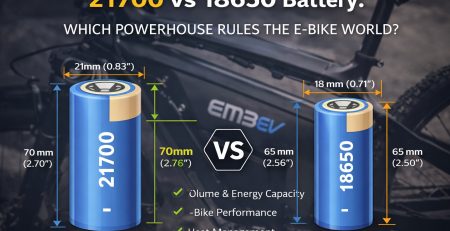
You will often see these terms used interchangeably. A 36v lithium eBike battery and a 36v lithium ion eBike battery generally refer to the same overarching chemistry class. However, it is crucial to note that within the “lithium” umbrella, eBikes typically use lightweight 18650 or 21700 Li-ion cells, which are entirely different from bulky lifepo4 battery packs used in solar storage or RVs.
Voltage, Ah, Wh, and range expectations
When comparing electric bike batteries 36v, you need to understand capacity. Voltage (36V) is the “push” of the power, while Amp-hours (Ah) or Watt-hours (Wh) measure the “gas tank” size. A higher Ah rating means a longer riding range. To guarantee 36v eBike battery pack compatibility, your voltage must stay fixed at 36V, but you can safely upgrade the Ah for longer trips.
Why 36V is common on lighter eBike systems
36V systems dominate the commuter and lightweight folding eBike market. They strike an excellent balance between providing adequate torque for mild hills and keeping the overall bike weight manageable.
Q: Can I use any 36V battery on an electric bike?
A: No. It must have a compatible continuous discharge rating (managed by the BMS) to handle your motor’s peak draw, and the physical mount must fit your frame.
Q: Is a 36V battery enough for an eBike?
A: Yes, for flat terrain and moderate commuting. It provides ample power for 250W to 500W motors.
Q: What charger does a 36V eBike battery need?
A: It requires a specific lithium charger with a 42V maximum output and a connector that matches the battery’s charge port.
36V eBike Battery Compatibility Checklist
Compatibility should be checked thoroughly before purchase, especially verifying voltage, charger output, connector, mount type, controller limit, and the BMS rating.
Do not guess when shopping for a 36v battery for electric bike models. Running an e-bike battery 36v checklist saves time and prevents electrical damage to your eBike 36v battery system.
- Nominal Voltage: Ensure the label states 36V (charging up to 42V).
- Discharge Connector: Verify if your bike uses XT60, Anderson, Bullet, or a proprietary plug.
- Physical Mount: Check if it is a Hailong down-tube, rear rack, or in-frame concealed style.
- BMS Current Rating: The Continuous Discharge current must be equal to or greater than your controller’s max draw.
- Charger Output: Confirm the new pack is compatible with your existing charger, or buy a matched set.
- Frame Clearance: Measure your triangle space to ensure the new case clears the top tube upon insertion.
36V eBike Battery Pack Comparison Table
36V packs should be compared primarily by their physical fit and specific use case, rather than just matching the voltage alone.
When choosing a 36v eBike replacement battery or a complete 36v battery and charger for eBike kits, use this matrix to align your priorities.
| Buyer Need | What to Check | Risk if Mismatched | Priority Level |
|---|---|---|---|
| System Compatibility | Controller Max Voltage | High risk of frying the controller | Critical |
| Motor Power | BMS Discharge Rate (Amps) | Battery shutting down under load | High |
| Riding Distance | Capacity (Ah or Wh) | Shorter range than expected | Medium |
| Frame Integration | Mount Style & Dimensions | Battery will not physically mount | Critical |
| Charging Safety | Charger Output (42V max) | Overcharging and fire hazard | High |

Experience-Based Verification Workflow
This specific workflow helps reliably confirm whether a 36V replacement pack is likely to fit your bike, focusing on direct observation without needing lab equipment.
In my case, figuring out the right 36v eBike battery charger and pack combination came down to a methodical visual check. Here is the field-tested workflow I use:
- Confirm Bike Voltage: Check the original battery label or the motor controller to verify it explicitly says 36V.
- Check Controller Label: Locate the “Max Current” rating (e.g., 15A or 20A) to ensure the new BMS can handle the draw.
- Check Charger Output: Look at your current 36v lithium eBike battery charger; the output must read exactly 42V for a 36V lithium system.
- Inspect Mount and Connector: Photograph your discharge port (the plug connecting to the motor) and the base plate on the frame.
- Compare Ah/Wh: Decide if you want the same capacity or an upgrade (if frame space allows).
- Decide Replacement Path: Based on the above, determine if you need just the pack, or a new base plate and charger as well.
How To Choose a 36V Replacement Battery for an Electric Bike
The best 36V replacement battery is ultimately the one that perfectly matches the bike’s electrical system, mount, charger, connector, and your daily riding range needs.
When selecting an electric bike battery 36v, real-world context matters. A rider tackling steep hills daily needs a pack with premium cells and a robust BMS, whereas a weekend path rider might prioritize a lighter pack. Upgrading a 36v eBike replacement battery is a great opportunity to increase your Ah for more range, provided you stick to the strict compatibility rules outlined earlier.
Decision Box: Smart Replacement Strategies
- Replace same-spec pack: The safest, most straightforward route.
- Upgrade capacity: Only if the larger physical case fits your frame clearance.
- Replace charger too: Highly recommended to ensure the plug and charging profile match the new BMS perfectly.
- Ask supplier before buying: If your connectors look proprietary, consult the manufacturer.
- Avoid non-eBike packs: Stay away from generic 36V scooter or marine batteries.
[Image: An array of 36V eBike batteries lined up next to their corresponding chargers]
Alt: battery 36v eBike replacement battery product options
Recommended 36V eBike Battery Buying Options
Commercial comparison is appropriate only after your specific voltage, BMS limits, charger, connector, and mount compatibility have been firmly confirmed.
If you have verified your specs, here are some reliable configurations when hunting for a 36v eBike battery or a complete 36v battery for electric bike setup, including bundles like a 36v battery and charger for eBike systems.

EM3ev 36V eBike battery (Standard Range)
Ideal for daily commuters needing a reliable, exact-fit replacement.
- Voltage: 36V (Nominal)
- Chemistry: High-grade Li-ion
- Mount: Hailong / Downtube
- Best Fit: 250W-500W standard commuter eBikes.
EM3ev replacement battery (High Capacity)
Built for riders who need extended range without altering system voltage.
- Voltage: 36V (Nominal)
- Capacity: Upgraded Ah options available
- BMS: High continuous discharge capable
- Best Fit: Long-distance touring on 36V systems.
FAQ
What does battery 36V mean for an eBike?
It means the electrical system is designed around a nominal voltage of 36 volts. The battery pack operates in a range, typically charging up to a maximum of 42V and safely cutting off around 30V to protect the cells.
Can I use a 36V lithium battery on any electric bike?
No, you cannot use it on just any bike. A 36v eBike battery pack compatibility relies on matching the motor controller’s voltage limits, the maximum current draw, the physical mount, and the discharge connector.
What charger do I need for a 36V eBike battery?
You specifically need a 36v eBike battery charger designed for lithium chemistry. It must output exactly 42V and have the correct plug tip to match your battery’s charge port.
Is a 36V eBike battery enough for commuting?
Yes, electric bike batteries 36v are the standard for city commuting and light paths. They provide an excellent balance of weight and power for typical 250W to 500W hub motors on relatively flat terrain.
Can I replace a 36V battery with a higher voltage pack?
No, upgrading to 48V or 52V will likely fry a 36V motor controller. You should only swap a 36v eBike replacement battery with another 36V pack unless you are replacing the entire electrical drivetrain.
What is the difference between Ah and Wh on a 36V eBike battery?
Ah (Amp-hours) measures the battery’s capacity to deliver current over time. Wh (Watt-hours) is the total energy stored, calculated by multiplying Voltage by Ah. Both metrics help you determine your estimated riding range.
How do I know if a 36V eBike battery fits my bike?
You must measure the physical dimensions of the space inside your frame, check the mounting bracket style (like Hailong or rear rack), and ensure the discharge connector matches your bike’s wiring harness.
When should I replace a 36V electric bike battery?
You should replace it when you notice a severe drop in riding range, if the pack refuses to charge fully to 42V, if it cuts out unexpectedly under load, or if the case shows physical damage.
Conclusion
A battery 36v replacement must be chosen strictly by matching the voltage, charger compatibility, BMS current rating, physical connector, frame mount, and your real riding range needs.
Replacing your eBike’s power source doesn’t have to be a guessing game. By strictly following the compatibility checks and avoiding generic power storage units, you ensure your bike runs safely and efficiently for years to come.




LEAVE A COMMENT