



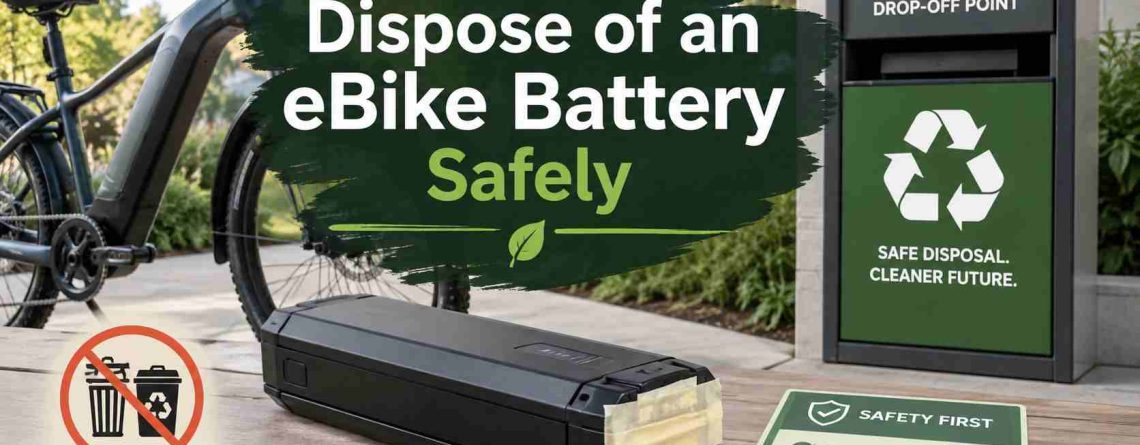
How to Dispose of an eBike Battery Safely
An old eBike battery should not go in household trash or a curbside recycling bin. Keep the pack intact, protect exposed terminals, and take it to a facility that confirms it accepts complete lithium-ion eBike batteries. Damaged, swollen, hot, or leaking packs need specialist instructions before transport.
Quick Answer
- Do not place an eBike battery in household trash.
- Do not put it in a standard curbside recycling bin.
- Cover exposed terminals with non-conductive tape.
- Confirm that the collection site accepts complete eBike packs.
You replace an aging battery and set the old pack beside your workbench. A few days pass. The charger is packed away, the battery no longer powers the bike well, and the nearest recycling bin starts to look like an easy solution.
That is where many riders get stuck. An eBike pack is larger and more complex than a loose household battery. The correct next step is not to open it, drain it, or hide it inside ordinary waste.
The safer path is simple. Stop using the pack, check its condition, protect it from short circuits, and find a collection service that accepts this type of battery.
Image placeholder
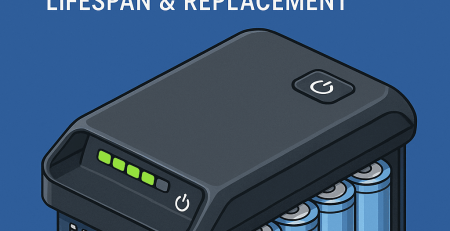
Suggested visual: an old eBike battery, protected terminals, and a verified recycling drop-off point.

Start With Safe Battery Isolation
Stop using the battery, disconnect it from the bike and charger, and keep it away from heat, water, and loose metal objects.
Place the battery in a dry and stable area where it cannot fall or be struck. Keep keys, tools, screws, and other metal items away from its terminals. Remove the battery key if the design allows it.
Look at the closed case. Do not open it. Check for cracks, swelling, leaks, unusual heat, strong odors, or damage caused by a crash. These warning signs affect how the battery should be handled.
Field note: A battery with reduced range is different from one that is swollen or warm. The condition of the pack should guide every later step.
Can you charge the pack again before recycling it?
Avoid repeated charging if the pack is damaged, swollen, hot, leaking, or behaving in an unusual way. For an old but intact battery, follow the manufacturer’s guidance and the receiving facility’s instructions.
Should you open the case and remove the cells?
No. Keep the enclosure intact. Opening, drilling, crushing, or puncturing it may expose live connections or damaged cells.
How to Dispose of an eBike Battery
Use a recycler, hazardous-waste program, eBike shop, or collection service that confirms it accepts complete eBike lithium-ion batteries.
eBike Battery Disposal Checklist
- Remove the battery from service.
- Disconnect it from the bike and charger.
- Inspect the closed case for visible damage.
- Cover exposed terminals with non-conductive tape.
- Keep the pack away from heat and metal objects.
- Contact the collection site before traveling.
- Follow its packing, transport, and drop-off rules.
eBike Battery Disposal by Battery Condition
| Battery condition | Recommended next step | Avoid |
|---|---|---|
| Old but intact | Confirm a suitable collection point | Household trash |
| No longer holds charge | Keep it isolated and arrange recycling | Repeated charging |
| Swollen or leaking | Ask a specialist for instructions | Opening or pressing the case |
| Crash-damaged | Describe the damage before transport | Moving it without guidance |
| Recalled | Follow the recall collection process | Reuse or resale |
Experience-Based Verification Process
Read the battery label and note its maker, voltage class, and visible condition. Search for a battery recycler, household hazardous-waste program, participating eBike shop, or manufacturer collection channel.
Contact the site before visiting. Ask whether it accepts complete eBike packs. Also ask about appointments, damaged batteries, packaging, and transport. Move the pack only after the receiver confirms the next step.
Field note: A collection point may accept small household batteries but refuse a complete eBike pack. A quick call can prevent a wasted journey and unsafe transport.
Can an eBike battery go in curbside recycling?
No. A standard curbside bin is not the right channel for a complete eBike battery. Use a program that clearly accepts this battery type.
Should you fully discharge the battery first?
Do not create your own discharge method. Follow the battery manufacturer’s guidance and the instructions given by the receiving facility.
Where to Recycle an eBike Battery
Check national directories like the Call2Recycle program, local hazardous-waste programs, participating eBike shops, and manufacturer collection channels near you.
Acceptance rules vary. A site may accept undamaged packs but require a different process for swollen, leaking, or crash-damaged batteries. Some services may also require an appointment.
Do not rely only on a directory listing. Visit the receiver’s current information page or contact its staff. Describe the battery as a complete lithium-ion eBike pack and explain any visible damage.
Can an eBike shop take an old battery?
Some shops participate in collection programs, while others do not. Contact the shop first and provide the battery type and condition.
Do all hazardous-waste programs accept eBike packs?
No. Acceptance depends on the local program and the battery’s condition. Confirm before transporting the pack.
Image placeholder
Suggested visual: separate paths for intact, weak, swollen, crash-damaged, and recalled batteries.
What to Do Based on Battery Condition
An intact old pack can follow a normal collection process, while damaged, swollen, hot, leaking, or recalled packs need special guidance.
Battery Condition Decision Box
- Old but intact: Stop using it, protect the terminals, and arrange a confirmed drop-off.
- Weak or no longer charging: Do not keep retrying the charger. Treat it as a complete pack for recycling.
- Swollen or leaking: Do not squeeze, open, or transport it without specialist instructions.
- Hot, smoking, or making unusual sounds: Leave the danger area and contact local emergency services.
- Recalled: Follow the manufacturer’s or official recall process first.
- Unknown condition: Keep it isolated and describe its symptoms to a qualified receiver.
Imagine that an old pack looks normal but has lost most of its useful range. You can protect the terminals and arrange a standard collection. Now imagine that another pack has expanded after a crash. That battery needs a different response. Do not treat both packs the same.
How should you prepare an intact pack for transport?
Keep the enclosure closed. Protect exposed terminals, prevent the pack from moving, and keep it away from loose metal objects. Follow the receiver’s packaging and vehicle instructions.
When should you avoid transporting it yourself?
Do not move a pack that is hot, smoking, badly swollen, leaking, or making unusual sounds unless emergency or specialist staff tell you what to do.
eBike Battery Disposal FAQ
Safe disposal keeps the battery out of household waste and sends it to a collection channel that accepts complete eBike packs.
Can I put an eBike battery in the trash?
No. Keep it out of household trash and use a suitable battery recycling or hazardous-waste collection channel.
Can I place it in a curbside recycling bin?
No. A complete eBike pack should go to a facility that confirms it can receive this type of battery.
Where can I recycle an eBike battery?
Check battery recyclers, hazardous-waste programs, participating eBike shops, and manufacturer collection channels. Confirm acceptance before traveling.
How should I store it before recycling?
Keep it in a dry, stable place away from heat, water, children, pets, and loose metal objects. Protect exposed terminals.
Can I transport a swollen eBike battery?
Do not transport it without specialist guidance. Contact a recycler, hazardous-waste program, manufacturer, or local emergency service as appropriate.
Should I discharge it before disposal?
Do not improvise a discharge process. Follow the instructions from the manufacturer and the receiving facility.
Can an eBike shop take my old battery?
Some shops may accept old packs, while others may not. Contact the shop first and describe the battery’s type and condition.
What should I do with a recalled battery?
Stop using it and follow the official recall or collection instructions. Do not resell it or return it to service.
Final Disposal Summary
Keep the pack intact, protect its terminals, confirm a suitable receiver, and seek specialist help for damaged batteries.
Knowing how to dispose of an eBike battery starts with one rule: do not place the pack in normal trash or curbside recycling. Check its condition, keep it stable, and confirm the receiving site before you travel.
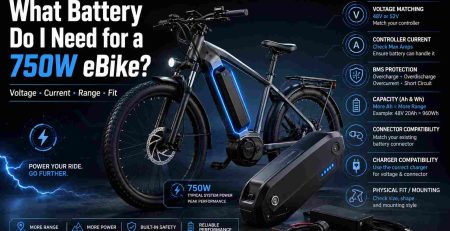
After the old battery has entered a safe collection process, you can review replacement packs that match your bike’s voltage, connector, BMS, current demand, and available frame space.
Review Replacement Battery Options
Compare suitable EM3ev battery options only after the old pack has been safely handed to a confirmed collection channel.







LEAVE A COMMENT