





How To Master Mid Drive Electric Bicycles For Pure Power
Mid-drive eBike battery packs are specialized power systems optimized for mid drive electric bicycles that face high peak current demands and significant voltage sag. Unlike hub motors, these systems require precise matching of BMS current limits, voltage platforms (36V/48V/52V), and cell quality to ensure stable power delivery during high-torque climbs or cold-weather riding.
Bafang BBSHD Kits
Ultimate 1000W performance.
TSDZ2 Torque Kits
Natural pedal feel & efficiency.
Custom Battery Packs
48V/52V packs for mid-drives.
Quick Answer: Essential Battery Guidelines
Mid-drives pull high peak current, which causes voltage sag and can trigger unexpected system shutdowns.
Selection should prioritize BMS continuous/peak current capability and Wh (energy) over basic voltage labels.
Cold weather significantly impacts internal resistance; treat riding, storing, and charging as unique thermal events.
Compatibility is defined by matching the voltage platform, physical connectors, and controller cutoff points.
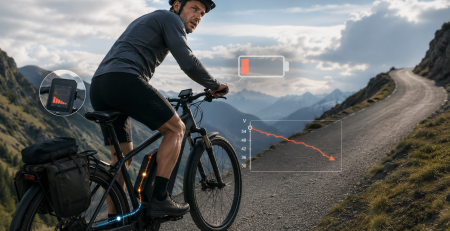
Actually, I’ll never forget the first time I pushed a mid-drive build through a high-altitude pass in late autumn. The display showed a 90% charge, but the moment the torque sensor kicked in for a steep hairpin, the entire bike went dark. To be honest, it felt like a mechanical failure. In reality, the cold had increased the battery’s internal resistance so much that the massive power draw from the mid-drive caused a voltage sag deep enough to trigger the BMS low-voltage cutoff. I had to wait for the battery to “recover” its resting voltage just to limp home.

Need a more resilient power source?
Explore high-current battery solutions engineered specifically for mid-drive performance and hill climbing.
Best Mid Drive Electric Bicycles for High Torque & Hill Climbing
When selecting the best mid drive electric bicycles, the focus shifts from flat-ground speed to raw high torque performance. Unlike hub motors, a mid-drive leverages the bike’s drivetrain, making it the superior choice for steep hill climbing. However, this mechanical advantage places immense strain on your ebike battery pack. To maintain consistent power on vertical grades, you must ensure your system supports high continuous discharge. A mismatched battery will sag, causing the motor to lose torque exactly when you need it most during a climb.
Mid-drive eBikes + battery packs: what changes and why it matters
Mid-drives pull significantly higher peak current on steep climbs, requiring battery packs with robust BMS current limits and precise cutoff matching to prevent nuisance tripping.
The mechanical efficiency of mid drive electric bicycles is a double-edged sword for your battery. While your gears keep the motor in its sweet spot, they also allow the controller to demand massive “bursts” of current. If your BMS isn’t rated to handle these spikes, the system will shut down to protect the cells, even if they aren’t actually empty.
eBike battery pack for mid-drive e-bikes
A true mid-drive pack uses high-discharge cells designed to keep internal resistance low. This ensures that when your motor asks for 30A on a hill, the voltage remains stable rather than dropping off a cliff and triggering a false “empty” signal.
replacement battery for mid-drive electric bicycles
When looking for a replacement, don’t just look for a matching case. Verify the continuous amp rating. Many generic packs are built for 15-20A hub motors; for a performance mid-drive, you should look for a BMS capable of 30A to 50A bursts.
Compatibility first: voltage platform, connectors, and cutoff
Always match your replacement pack to your motor’s specific voltage platform (36/48/52V) and ensure the BMS current limits exceed the motor’s peak draw.
48V eBike battery pack for mid-drive motor systems
The 48V (13S) platform is the gold standard for most mid-drive systems. However, even within 48V systems, the low-voltage cutoff on your controller must align with your pack’s discharge profile to maximize usable range.
52V eBike battery pack compatibility for mid-drive e-bikes
Upgrading to 52V (14S) is popular for reducing sag and increasing top-end power. Just remember to confirm your controller can handle the 58.8V peak voltage of a fully charged 52V pack before switching.
Mid-drive eBike battery pack matching: BMS, cutoff, voltage
| Voltage Platform | Energy (Wh) | BMS Limit | Controller Cutoff | Common Risk | Recommended Action |
|---|---|---|---|---|---|
| 36V | Low-Med | 20A-25A | ~30V | Overheating | Med |
| 48V | Medium | 30A-40A | ~39V | Voltage Sag | High |
| 52V | High | 30A-50A | ~41V | Incompatibility | High |
The Symbiosis of Current and Torque When a motor delivers peak torque on a vertical climb, it creates a massive localized heat load and a sudden surge in current draw. For mid drive electric bicycles, this means the battery isn’t just a fuel tank; it’s a high-speed energy regulator. If the cells have high internal resistance, the energy that should be moving you forward is instead lost as heat within the pack. This is why professional builds prioritize low-resistance cells that can sustain “burst” outputs without tripping the low-voltage cutoff.
.
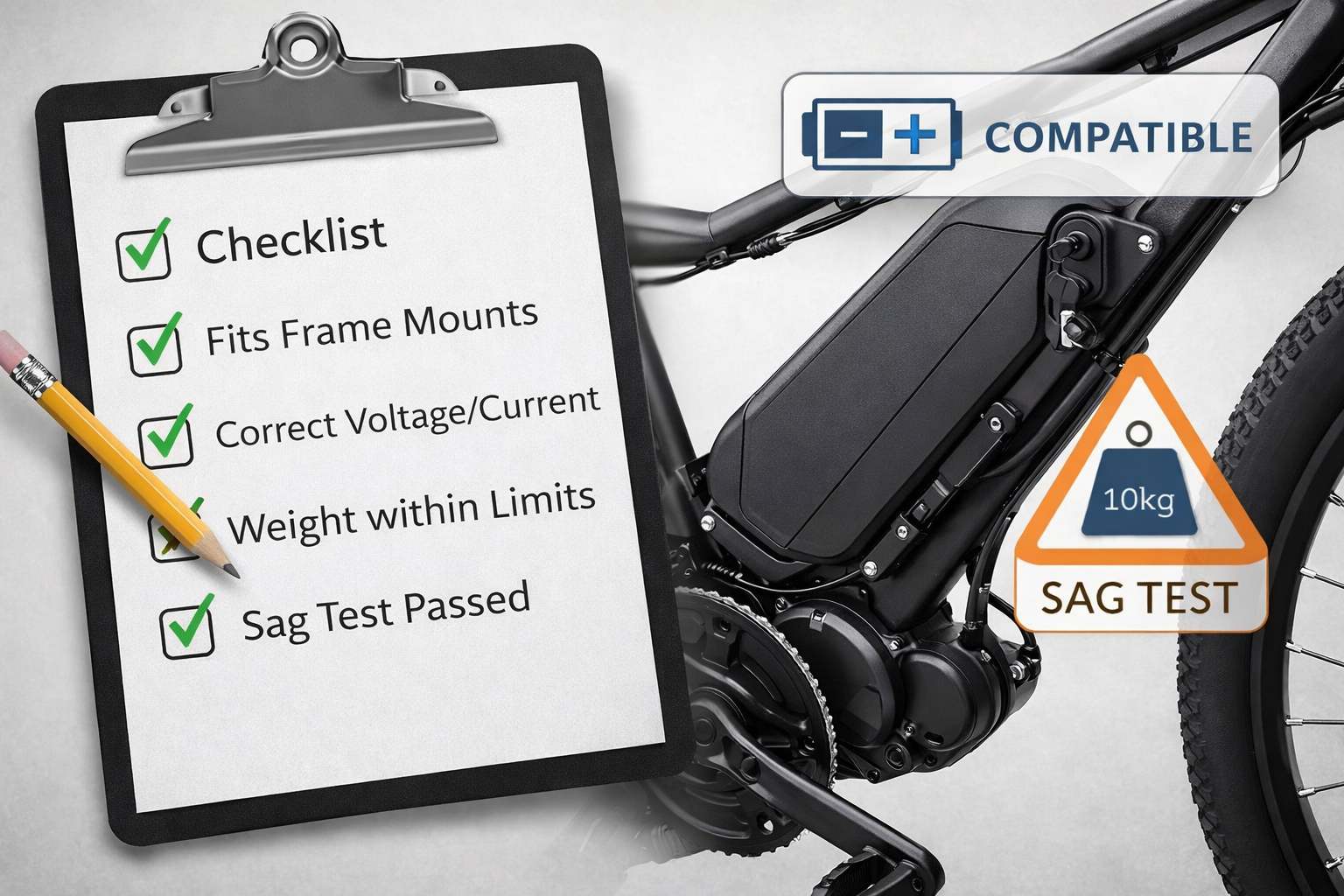
Experience Validation Workflow
Use this methodology to verify if your battery is truly matched to your mid-drive motor:
- Baseline Observation: Test the bike at room temperature with a full charge. Monitor the voltage display at rest versus light assist.
- Stress Test: Attempt a hard acceleration on a significant incline. A voltage drop of more than 4V under load often indicates the pack is under-specced for the motor’s demand.
- Cold-Weather Comparison: Repeat the test after the bike has sat in cold weather for several hours. If the system cuts out significantly earlier, the pack’s internal resistance is too high for winter performance.
- System Control: Confirm mechanical health (chain lube and tire pressure). If sag persists despite a smooth drivetrain, the issue is a BMS/cell mismatch.
Precision Control and System Response Most modern pedal assist sensors on mid-drive systems are designed to mirror your leg power with millisecond precision. While this creates a natural riding feel, it also means every hard pedal stroke translates into a rapid power spike from the battery. To protect your system, it is vital to use a BMS that can distinguish between a brief “torque peak” and a genuine short circuit, ensuring you get the assist you need exactly when you need it without system failure.
Cold weather & storage (ride vs store vs charge)
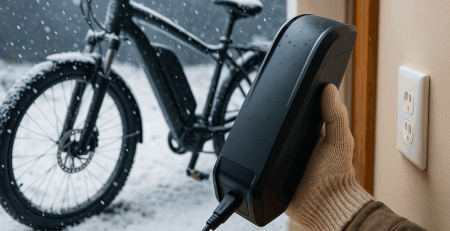
Cold temperatures increase internal resistance and voltage sag; avoid heavy discharge when the pack is chilled and never charge a frozen battery.
storing a mid-drive eBike battery pack in winter
A “cold-soaked” battery—one that has sat in freezing temps—will exhibit much higher sag. Whenever possible, store your battery indoors and only install it on the bike right before your ride.
BMS behavior and voltage sag
Q: Why does my range drop so much in the winter?
A: Internal resistance wastes energy as heat inside the pack rather than sending it to the motor. To reduce this, start your ride with a battery that was stored at room temperature.
Engineered for Endurance and Range For those planning longer rides through remote areas or varied terrain, energy density is only half the story. The true test of a mid-drive battery is its ability to maintain a flat discharge curve, providing consistent power from the first mile to the last. By selecting high-capacity cells paired with an advanced thermal management case, riders can minimize the efficiency losses that typically occur as the battery heats up, ensuring that mid drive electric bicycles remain reliable even on the most demanding expeditions.
Decision Box: Selecting Your Mid-Drive Battery
Secure your voltage and physical fitment first, then choose your capacity based on Wh and your power needs based on the BMS current rating.
- Step 1: Confirm your Motor Voltage and Connector Type.
- Step 2: Evaluate your Peak Current requirements (Hilly terrain = 30A+ BMS).
- Step 3: Size your Wh capacity based on range needs (500Wh+ for mid-range).
- Step 4: Opt for high-performance cells, such as those used in EM3ev builds.
In my case, upgrading to a high-current EM3ev battery completely changed my riding experience. I no longer had to “nurse” the throttle on steep grades to avoid a shutdown. For mid drive electric bicycles, having that extra electrical headroom is the difference between a reliable tool and a source of frustration.
Recommended EM3ev Battery Options

EM3ev 52V SuperCore
The ultimate choice for BBSHD and high-torque mid-drives.
- 50A Peak BMS
- High-Discharge Cells
- Excellent Heat Dissipation
EM3ev 48V Commuter
Reliable power for standard 48V mid-drive conversion kits.
- 40A Continuous BMS
- Durable Hard Case
- Universal Connector Options
Frequently Asked Questions
This is typically caused by voltage sag. When your motor demands high torque performance on a steep hill, it pulls massive current. If your battery pack’s internal resistance is high, the voltage drops below the BMS cutoff threshold, causing a sudden shutdown.
Mid-drive conversion kits often score higher in performance reviews because they offer superior customization. By choosing your own high-spec mid drive electric bicycles battery, you can often exceed the range and peak power limits found in standard off-the-shelf electric bikes.
Always prioritize the continuous BMS amp rating over just Ah capacity. For performance systems like the Bafang BBSHD, look for a pack rated for at least 30A-50A continuous discharge to handle high torque demands safely.
Quick Review: Mid-Drive eBike Battery Choice
Short tips to help you avoid power cutouts on hills.
✅ Pros
- Fast to read.
- Easy steps you can use today.
- Helps stop shutdowns on climbs.
⚠️ Cons
- No single “best” battery for all bikes.
- You still need to match volts and plugs.
- Cold weather can still cut range.
Summary: Mid-drive motors can pull a lot of power on hills. That can drop battery voltage. Pick the right voltage, and choose a pack with enough amp support. Keep batteries warm, and charge indoors.


LEAVE A COMMENT