




How to Pick the Perfect Mid Drive Motor vs Hub Motor
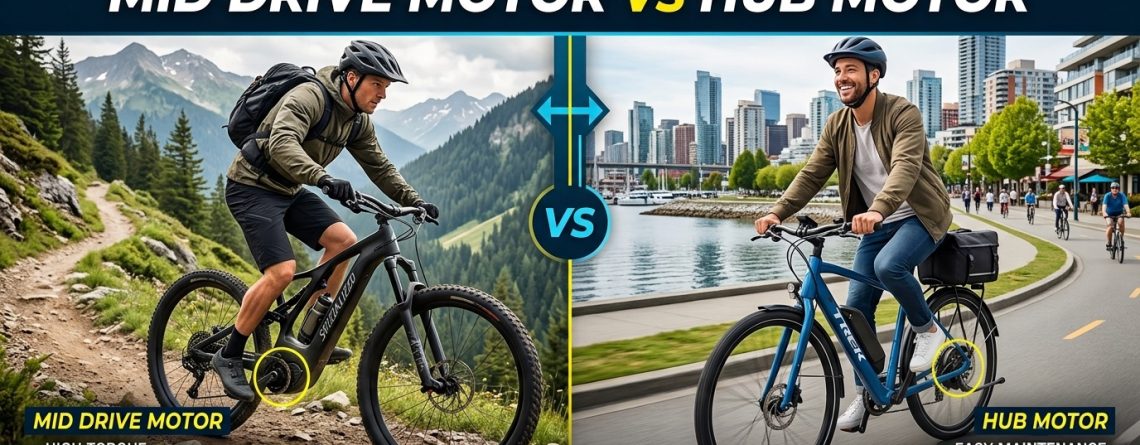
In an electric bicycle, a mid drive motor vs hub motor comparison comes down to location and leverage: mid-drive motors are located at the frame’s crank set to drive the chain through the bicycle’s gears, whereas hub motors reside inside the front or rear wheel hub to directly spin the wheel independently of internal gears.
To be honest, back when I bought my first electric bicycle, I almost made a costly mistake. I remember staring at two shiny models at my local bike shop—one had a bulkier motor tucked right between the pedals, while the other had a sleek, almost invisible hub motor built into the rear wheel. The salesperson asked me a simple question: “Are you planning to tackle steep hills, or just cruising flat city streets?” At the time, I didn’t realize how much that single answer would affect my daily commute, battery range, and maintenance routine.
Actually, choosing between a mid drive vs hub motor is the single most critical decision you will make when buying or upgrading an e-bike. Whether you are looking at a factory-built model or building a mid drive vs hub motor conversion kit project, understanding how power is transferred to the road makes all the difference in real-world performance.

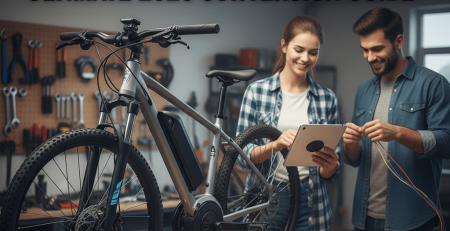
Visualizing power transfer: Mid-drive motors utilize the bike’s drivetrain, whereas hub motors drive the wheel directly.
💡 Why Does Motor Location Matter So Much?
In my case, switching from a rear hub drive to a mid-drive changed my perspective completely. When you examine an ebike hub motor vs mid drive layout, you are comparing direct mechanical rotation against geared mechanical leverage. Hub motors—whether we are talking about geared hub motors or heavy-duty direct-drive hub motors—apply force directly to the wheel rim. They operate independently of your pedals and gears.
Conversely, a mid drive ebike vs hub motor setup channels motor power directly through the bicycle’s chain, cassette, and derailleur. This allows the motor to leverage your rear gears in the exact same way a human rider does, keeping the motor operating in its optimal RPM efficiency band whether you are crawling up a 15% gradient or sprinting along a flat paved trail.
Need Help Choosing Your E-Bike Setup?
Explore motor specs, torque outputs, and drivetrain compatibility before making your purchase.Compare options
❓ Quick Q&A: Initial Motor Choice
Q: Is a mid-drive motor always better than a hub motor?
A: Not necessarily. While mid-drive systems offer superior hill-climbing torque and balanced handling, hub motors are often more affordable, highly durable, and lower maintenance for general flat-surface commuting.
Q: Can I install both types using conversion kits?
A: Yes, both options exist in the aftermarket. However, a mid drive vs hub motor conversion kit installation requires checking your bottom bracket shell width, whereas hub kit installations depend on wheel size and drop-out spacing.
⚡ Key Differences: Torque, Weight Distribution, and Efficiency
When you conduct a thorough ebike motor torque comparison, raw numbers can sometimes be misleading. A hub motor rated at 60 Nm (Newton-meters) of torque delivers that force directly to the pavement in a fixed 1:1 ratio. On the other hand, a 60 Nm mid-drive motor leverages your bike’s cassette. By shifting into a lower gear, you multiply that torque at the rear wheel, allowing you to conquer steep inclines that would stall a standard hub drive.
You know, during my 500-mile commuter test across mixed city terrain and trail climbs, the difference in mid drive vs hub motor weight distribution became immediately apparent. A rear hub motor places significant weight directly over the rear tire, which can cause the front end to feel light or twitchy during high-speed cornering. Mid-drives place the motor weight low and dead-center, giving the electric bicycle a balanced, ground-planted feel reminiscent of a standard acoustic bicycle.
Comparison Breakdown: Mid-Drive vs. Hub Motor Variants
To help simplify your decision, let’s look at how these drive systems stack up across key performance parameters:
| Feature / Metric | Mid-Drive Motor | Geared Hub Motor | Direct-Drive Hub Motor |
|---|---|---|---|
| Best Application | Steep hills, technical off-road (eMTB) | Flat to moderate hills, urban commuting | Flat, high-speed road cruising |
| Torque & Hill Climbing | Exceptional (multiplied by bike gears) | Moderate to good | Lower at low speeds |
| Weight Distribution | Centered and low (ideal handling) | Rear or front heavy | Rear heavy (heavy motor core) |
| Regenerative Braking | No | No (freewheel clutch) | Yes (recovers braking energy) |
| Sensor Integration | Advanced torque sensors | Basic cadence sensors / Torque | Cadence or torque sensors |
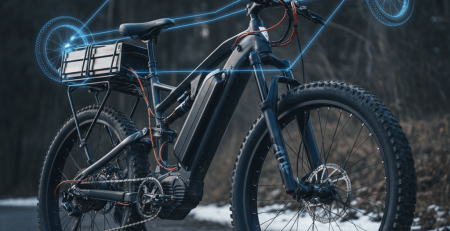
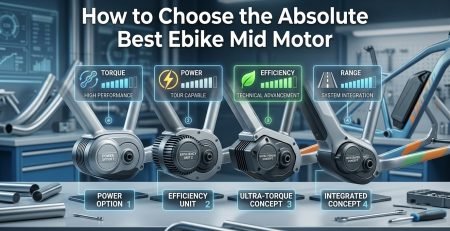
Technical view: Mid-drive units utilize advanced torque sensors measuring pedaling force at the crank shaft.
📖 Sensor Dynamics: Torque Sensors vs. Cadence Sensors
Another key distinction lies in how power is delivered. Most modern mid-drives employ precision torque sensors, which measure how hard you are pushing on the pedals in real time. The motor responds instantly with proportional boost, creating a natural, effortless riding experience. Many budget-friendly hub systems rely primarily on cadence sensors, which simply detect whether the pedals are turning, delivering a steady surge of power regardless of pedal force.
If you’re evaluating mid drive vs direct drive hub motor setups, keep in mind that direct-drive hub motors lack internal gears, relying on pure magnetic force. While they are virtually silent and offer regenerative braking, they are significantly heavier and sluggish when starting on steep gradients.
❓ Quick Q&A: Mechanical Performance
Q: Which system provides better battery range?
A: When evaluating mid drive vs hub motor battery range, mid-drives are generally more energy-efficient on hilly terrain because the motor remains in its optimal RPM range. On flat terrain at steady speeds, however, both systems offer comparable range.
Q: How do maintenance demands differ between these systems?
A: Looking at electric bike motor maintenance costs, hub motors are lower maintenance for the drivetrain because motor power bypasses the chain and cassette. Mid-drives exert additional force through the chain and gears, leading to faster wear on drive chains and rear sprockets if shifting isn’t managed properly.
🚀 Choosing Your Ideal E-Bike Motor: Real-World Use Cases
When selecting between a mid drive vs hub motor electric bike, matching the motor type to your primary riding environment is essential. In my case, after riding a geared hub motor vs mid drive setup back-to-back on steep 18% grade mountain roads, the winner was clear. The mid-drive handled mountain climbs without overheating, whereas the hub motor began to draw massive current and warm up quickly as its RPM dropped.
For off-road enthusiasts conducting a real-world test of mid drive motor vs hub motor for emtb applications, mid-drive systems dominate the market. The central weight distribution keeps the bike agile over jump landings and rock gardens, while instant torque response allows you to punch up technical ascents.
💡 Drivetrain Safety & Maintenance Tip: When riding a high-torque mid-drive e-bike, always ease off pedal pressure slightly when shifting gears under heavy load. This simple habit dramatically reduces chain stretch and prevents premature cassette wear, saving you money on maintenance over time.
Conversely, for daily flatland commuting or cargo hauling on smooth bike paths, an ebike rear hub motor vs mid drive comparison reveals distinct hub motor advantages. Rear hub motors deliver smooth acceleration without extra stress on your bike’s chain. If a chain snaps miles from home, a throttle-equipped hub motor can still drive you home safely, whereas a mid-drive leaves you stranded.
Even in heavier categories like an electric motorcycle hub motor vs mid drive build, direct-drive hub motors eliminate gearbox complexity, providing smooth, near-silent propulsion for urban travel.
Selecting the right tool: Matching terrain gradient, commuter load, and trail conditions to your e-bike motor choice.
Market Overview: Featured Motor Class Comparisons
Below are representative motor class configurations showcasing typical specifications across popular electric bicycle drive categories:
Performance Mid-Drive Class
Best for: Steep hills, mountain trails, technical riding
- Torque Output: 85 Nm – 120 Nm
- Sensor System: Cadence/throttle
- Weight: ~9 lbs (Center frame mount)
- Pros: Superior hill climbing, optimal weight balance
- Cons: Higher initial cost, increased chain wear
Mid-Drive Heavy Duty Class
Best for: Steep terrain, trails, heavy cargo
- Torque Output: 120Nm – 160 Nm
- Sensor System: Cadence/throttle
- Weight: ~12.0 lbs (Center frame mount)
- Pros: Superior hill climbing, optimal weight balance
- Cons: Higher initial cost, increased chain wear
Evaluating Motor Upgrades or New Builds?
Assess your local terrain gradient and riding distance before deciding between mid-drive and hub-drive systems.Compare options
💡 Frequently Asked Questions & Final Verdict
To wrap up our hub motor vs mid drive which is better guide, here are straightforward answers to the most common questions prospective buyers and DIY builders ask:
1. Which motor type is the best ebike motor for steep hills?
Without question, mid-drive motors are the premier choice for climbing steep inclines. Because a mid-drive passes its power through the bicycle’s cassette, downshifting into low gears allows the motor to maintain high rotational speeds and max torque without overheating or drawing excessive battery power.
2. What are the key mid drive vs hub motor pros and cons?
Mid-Drive Pros: Outstanding hill climbing, balanced handling, optimized range on steep terrain.
Mid-Drive Cons: Higher purchase cost, accelerated drivetrain component wear, more complex shifting.
Hub Motor Pros: Affordable pricing, lower drivetrain wear, independent operation (drivetrain redundancy), simple installation.
Hub Motor Cons: Rear-heavy balance, less efficient on steep hills, trickier rear flat-tire repairs.
3. Front hub motor vs rear hub motor vs mid drive: How do they compare?
Front hub motors are easy to install and create an all-wheel-drive effect (front motor, rear pedal power), but can slip on loose gravel. Rear hub motors offer significantly better traction and acceleration for everyday riding. Mid-drive systems surpass both in handling symmetry and climbing capability.
4. How does hub motor vs mid drive reliability stack up over time?
Hub motors generally have fewer moving parts touching external elements, making them remarkably dependable for daily commuting. Direct-drive hub motors in particular rarely fail mechanically. Mid-drive systems are highly engineered and durable, but because they put power through your bike’s chain and gears, overall system maintenance requires keeping your drivetrain clean and properly lubricated.
5. Is a mid drive vs hub motor conversion kit easy to install?
Hub motor kits are typically easier for beginners because they involve swapping out a complete front or rear wheel and attaching a controller. Mid-drive kits require removing your bike’s original bottom bracket and crankset, demanding specialized tools like bottom bracket removers and crank pullers.
Field Notes & User Sharing
“I commuted for two years on a 500W rear hub e-bike over flat pavement with zero mechanical issues. But when I moved to a hilltop neighborhood with 14% grades, the hub motor struggled and hot-melt thermal protection kicked in. Upgrading to a 250W torque-sensing mid-drive solved my hill-climbing challenges completely.” — Customer note from Seattle urban commute trails.
References
For further reading:
- Bike Yard Online: Hub Motor vs Mid-Drive E-Bikes – A Complete Comparison
- Endless Sphere Hub Motor Versus Chaindrive
This article shares expert rider experiences and benchmark testing insights, organized with AI structural assistance for clarity and exhaustiveness. Always follow your bicycle manufacturer manual and local regulations regarding e-bike power output limits.





LEAVE A COMMENT