




Replacement eBike Battery Guide: Diagnose, Match and Choose
Choosing a replacement ebike battery starts with two questions: is the battery causing the problem, and which pack will work with your bike? Reduced range, charging problems, and sudden cutoffs need different checks before you order.
This guide helps you assess the symptoms, review repair or replacement options, check compatibility, and compare the complete cost. Use the linked guides for detailed troubleshooting, then return here to choose your next step.
Already know your battery requirements?
Compare EM3ev battery options after confirming your system voltage, current requirements, mounting, and electrical connections.
Not sure what fits? Start with the compatibility checklist.
Quick Answer: How Do You Choose a Replacement eBike Battery?
Confirm the fault first, then choose a pack approved for your system or verified against its complete requirements. Matching the voltage label alone is not enough.
- Check the symptoms: Separate battery problems from charger, connection, and bike-side faults.
- Review the options: Ask whether the issue can be serviced or whether the pack needs replacement.
- Confirm compatibility: Check voltage, current capability, communication, mounting, connectors, polarity, and charger requirements.
- Compare the full cost: Include the battery, required accessories, installation, delivery, and old-pack disposal.
Battery capacity changes with age and use, but there is no fixed replacement age that applies to every pack. Base the decision on its condition, measured performance, and manufacturer guidance.

Does Your eBike Battery Actually Need Replacing?
These symptoms call for checks, but they do not all prove that the battery has failed. Start with the problem that best matches what you see.
| What you notice | What to check next |
|---|---|
| Shorter range than before | Compare similar routes, temperatures, loads, tire pressures, and assist settings. If the loss persists, ask whether a controlled capacity test is appropriate. |
| The battery shows full, but the bike will not run | Follow the checks for a fully charged battery that is not working. |
| Power cuts out during acceleration or climbing | Review the possible causes of a battery cutting out under load. |
| Charge drops while the bike is parked | Check display changes, standby loads, and the pattern of battery drain when not in use. |
| Charging behavior has changed | Check the approved charger, battery temperature, connections, and error information using our eBike battery charging guide. |
| Swelling, leakage, or visible damage | Stop using and charging the pack. Follow the guidance on battery swelling and safe handling. |
If a voltage check is appropriate for your battery, our multimeter testing guide explains its limits. A voltage reading alone does not establish usable capacity or prove that the battery is healthy.
Repair, Rebuild, or Replace?
The right option depends on the confirmed fault and the manufacturer’s service policy. A problem with an approved charger or an external connection may not require a new battery.
A professional rebuild involves work inside the pack. It is not available or approved for every battery system. Ask the manufacturer or an authorized service provider about permitted options, testing, and warranty coverage before agreeing to the work.
Replacement may be appropriate when the pack is unsuitable for continued use, an approved repair is unavailable, or its confirmed usable capacity no longer meets your needs. Compare complete quotes and compatibility before deciding.
Replacement Options: Comparing 36V, 48V, and 52V
Use the voltage specified for your existing system unless a complete system review confirms another option. The battery label alone does not establish compatibility or riding range.
| Battery label | Compatibility check | Range check |
|---|---|---|
| 36V | Approved battery, electrical interface, charger, and mount for the exact system. | Compare usable watt-hours and route conditions. |
| 48V | Full-charge voltage, current capability, connectors, and any communication requirements. | Voltage alone does not predict miles per charge. |
| 52V | Explicit support for full-charge voltage across the controller and all connected electronics. | More voltage does not guarantee more range, torque, or efficiency. |
Replacement eBike Battery Compatibility Checklist
Have your existing battery label, bike model, controller details, and mounting measurements ready. Check each item before ordering.
- System voltage: Confirm the specified voltage and the full-charge voltage supported by the controller and connected electronics.
- Current capability: Match the complete pack’s rated continuous output to the controller’s battery-current demand. Do not substitute a peak rating or BMS cutoff threshold.
- System communication: Check whether the bike requires a specific battery interface, firmware, or electronic authentication.
- Case and mounting: Compare dimensions, mounting points, rail design, and the space needed to insert and remove the pack.
- Connectors and polarity: Confirm the electrical pinout and current rating. A plug that physically fits does not prove compatibility.
- Charger: Use a charger approved for the replacement pack’s chemistry, charging voltage, current, connector, and polarity.
A higher-Ah battery at the same voltage may offer more usable energy, but it still needs all of these checks. For proprietary systems, choose a replacement approved for the exact system and generation.
DIY vs. Professional Replacement
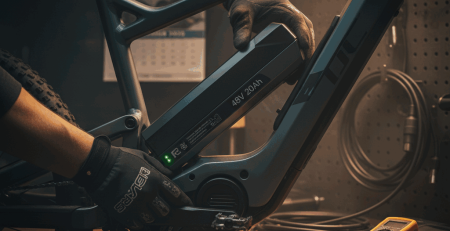
Once you’ve chosen a battery, you need to decide how to install it. A DIY ebike battery replacement can save money, but it comes with risks. Installation requirements depend on the battery and bike. A user-removable replacement approved for the exact system may follow a simple documented procedure. Changes to wiring, mounting, or system communication need further assessment.
Safety First: Lithium-ion batteries store a massive amount of energy. Mishandling them can lead to short circuits, fire, or injury. If you are not confident in your technical skills, professional installation is the safest choice.
- DIY Replacement: Use the documented replacement procedure for your exact bike and battery. Ask a qualified technician to handle uncertain compatibility or wiring changes. Check the applicable warranty terms before modification; professional installation does not by itself establish compatibility or warranty coverage.
- Professional Replacement: Professional Replacement: Use an authorized dealer or a qualified technician familiar with your exact system when compatibility is uncertain or installation requires more than the documented user procedure. Ask them to confirm fit, electrical requirements, required setup, and post-installation checks. A professional can verify ebike battery compatibility, ensure all connections are secure, and properly test the system. This is highly recommended for complex installations or internal frame batteries.
Cost Breakdown: Battery Pack, Labor, and Fees
Request a total quote for the exact replacement. The battery price is only one part of the cost.
| Cost item | What to confirm |
|---|---|
| Battery | Exact model, cell option, capacity, and current price. |
| Accessories | Whether an approved charger, matching rail, or other installation parts are needed. |
| Labor | An itemized local quote for diagnosis and installation. |
| Delivery and taxes | Charges and availability for your destination and selected product. |
| Old battery disposal | Local acceptance rules and any applicable fee, especially for damaged packs. |
For a closer look at the items to include in your quote, see our electric bike battery replacement cost guide. Compare options for the same system and intended use, including any required charger, mounting hardware, and installation.
Choose a Replacement Route That Fits Your System
Start with system compatibility, then compare suitable products. Batteries from different suppliers are not interchangeable just because their voltage labels match.
- Proprietary systems: For Bosch and other systems with model-specific battery requirements, confirm the approved replacement through the manufacturer or an authorized dealer.
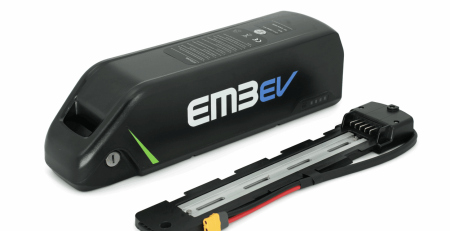
- Conversion builds and compatible third-party systems: EM3ev packs may be an option when the electrical requirements, mounting, connectors, and charger have been verified.
The packs below are options to evaluate after completing the compatibility checklist. They are not universal replacements for every eBike.

EM3ev 48V Jumbo Shark E-Bike Battery
A 48V option for conversion builds or replacements with confirmed pack compatibility.
Check before ordering: Compare the selected cell option’s capacity and discharge current with the controller requirements. Verify the rail, dimensions, connector, polarity, and charger.
Compatibility: Not a direct replacement for Bosch batteries. Use a replacement approved for your exact Bosch system.
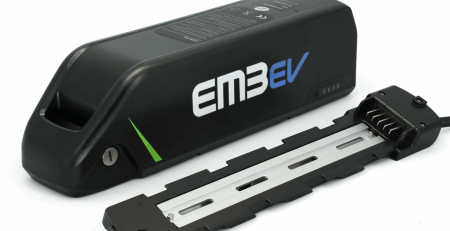
EM3ev 52V Super Shark E-Bike Battery
A 52V option for builds confirmed to support the exact pack’s full-charge voltage and electrical interface.
Check before ordering: Compare the selected cell option’s capacity and recommended discharge current with the controller’s battery-current limit. Verify the case, rail, connector, and charger.
FAQ Section
How do I know if my e-bike battery needs replacing?
A confirmed battery fault or persistent capacity loss under comparable conditions may justify replacement. Range loss, charging changes, and cutoffs need diagnosis because other faults can cause similar symptoms. Stop using and charging a damaged or swollen pack.
Can I replace my e-bike battery myself?
You may be able to replace a user-removable battery when the replacement is approved for your exact system and the manual provides a user procedure. Ask an authorized dealer or qualified technician to handle fixed batteries, uncertain compatibility, wiring changes, or required system setup. Check the applicable warranty terms before making modifications.
How much does a new e-bike battery cost?
The cost depends on the exact pack, capacity, required accessories, installation, and destination. Check current product pricing and request a total quote rather than relying on a universal replacement price range.
Is upgrading to 52V worth it?
It depends on your goal and the complete system’s ratings. Verify the new pack’s full-charge voltage across the controller, display, and other connected electronics, as well as charger compatibility. For range alone, first compare higher-capacity options at the existing voltage. Speed and torque gains are not guaranteed.
Can I use a different brand of replacement battery?
Sometimes, but only after confirming the complete system requirements. Check voltage, current capability, mounting, connectors, polarity, charger, and any communication or authentication requirements. Proprietary systems may require a specific approved battery.
Can I replace my battery with a higher-Ah pack?
A higher-Ah pack at the same nominal voltage may provide more usable energy. It must still meet the system’s electrical requirements and fit the mount with enough removal clearance. More capacity does not guarantee a particular range because riding conditions also affect energy use.
Disclaimer: Battery replacement involves risk. Lithium-ion batteries can be dangerous if mishandled. Always follow the manufacturer’s guidelines and safety instructions. If you are uncertain, consult a qualified e-bike technician. Ensure proper electric bike battery recycling of your old unit.
Replacing the pack also means planning what happens to the old one. Read our guide to disposing of an eBike battery safely, and confirm acceptance with the receiving facility before transport. Damaged or swollen packs need specialist handling instructions.


LEAVE A COMMENT