





The Ultimate 36v Battery Charger for Electric Bike
What is a 36v battery charger for electric bike? It is a power adapter specifically designed to charge a lithium-ion battery with a nominal voltage of 36V. While often labeled “36V,” the actual output must be 42V to fully charge the pack. Ensuring compatibility requires matching this voltage, the connector shape, and the polarity to prevent damage to your expensive ebike battery charger 36v system.
To be honest, the first time I needed a replacement charger, I nearly ruined my battery. I bought a cheap unit online that looked right, plugged it in, and within minutes, the connector felt hot to the touch. It turned out the polarity was reversed—positive and negative were flipped compared to my port.
That experience taught me that buying a charger isn’t just about finding a plug that fits. If you are here because your current charger is dead, lost, or you just need a backup for the office, you need to get the specs right to avoid damaging your expensive battery pack.

Quick Check: Before You Buy
- Match Voltage: A 36V nominal battery requires a charger with 42V output. Do not use a 48V (54.6V output) charger.
- Check Connector & Polarity: Even if the plug fits (e.g., XLR, DC5521), the wiring (+/-) must match your battery port.
- Safe Current (Amps): Stick to 2A or 3A for most standard packs. Higher amps generate more heat.
- Plug-in Order: Plug the charger into the battery first, then the wall outlet, to reduce sparking (unless the manual says otherwise).
How to choose the right 36 volt battery charger for an eBike battery pack
To choose the correct charger, you must match four critical specs: the 42V output voltage, the specific connector shape, the positive/negative polarity, and an amperage rating (usually 2A–4A) that your battery’s BMS can handle.
Many riders get confused because the battery says “36V” but the charger label often says “42V.” This is normal. A 36V lithium battery is “empty” at around 30V and “full” at 42V. If you accidentally buy a charger labeled “36V output” (which is rare for Li-ion), it might actually be a lead-acid charger or simply underpowered, failing to charge your pack completely.
Connector & polarity check (charger electric bicycle)
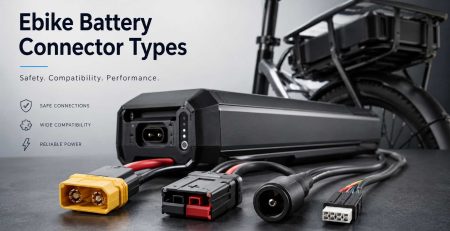
The physical plug is where most mistakes happen. Just because a plug fits into the hole doesn’t mean it’s safe. Connectors like the 3-pin XLR or the round DC barrel (5.5mm x 2.1mm) are standard, but manufacturers sometimes wire them differently.
- Standard Polarity: Usually, Pin 1 is positive (+) on XLR, or the center pin is positive on DC barrels.
- Reverse Polarity: Some brands flip this. Plugging a standard charger into a reverse-wired port will cause a spark and blow the fuse immediately.
Choosing charger amperage (36v charger)
Current, measured in Amps (A), determines speed. While a 5A fast charger sounds great, it can overheat smaller battery cells. A safe rule of thumb is to stick to 2A or 3A unless you know your battery cells are high-discharge rated.
36v battery charger for electric bike (compatibility & safety)
| Checklist Item | Standard Spec | Connector Compatibility |
|---|---|---|
| Nominal Voltage | 36V (37V) Li-ion | Fits most 10S lithium packs. |
| Charger Output | 42V DC Max | Crucial for 36V battery safety. |
| Plug Types | XLR, DC5.5, RCA | Universal & Brand-specific options. |
| Safe Amperage | 2A (Slow) / 4A (Fast) | Match your BMS current limit. |
Experience-based validation process (Methodology)
Since we cannot trust random marketing claims, you need a validation workflow to ensure a new charger is safe. I use this process whenever I test a new unit, and you can do it too without fancy tools:
- The Label Audit: Before plugging anything in, hold the old charger and new charger side-by-side. Confirm the “Output” line reads exactly 42V (or very close, like 41.8V).
- The Fit Test: Gently insert the connector into the battery port without the charger plugged into the wall. It should slide in smoothly without forcing. If it’s loose or tight, stop.
- The “Sniff” Test: Plug the charger into the wall (LED usually turns green), then connect to the battery (LED turns red). Monitor it for the first 15 minutes. Place your hand near the connector and the brick. It should get warm, but never too hot to touch. If you smell plastic or ozone, disconnect immediately.
- The Cutoff Verification: Once the light turns green, unplug and check your bike’s display. It should read 100% or full voltage (approx 41.5V–42V). If it stops at 80%, the charger voltage might be too low.
Safety & common problems when charging 36V eBike battery packs
Most charging failures are caused by using the wrong voltage charger (e.g., 48V on a 36V pack), damaged charging ports, or charging frozen batteries in winter.
36v lithium battery charger (for eBike battery packs) — when it matters
Lithium batteries are sensitive. Using a lead-acid charger on a lithium pack is dangerous because lead-acid chargers use a “pulse” method that can confuse the lithium BMS. Always ensure your charger explicitly states “Li-ion” or “Lithium” compatibility.
❓ Why won’t my battery charge even with a new charger?
Usually, this means the battery voltage has dropped too low (deep discharge) and the BMS has locked it for safety, or the fuse inside the battery charge port has blown. It is rarely the charger’s fault in this case.
❓ Why is the charger getting hot?
It is normal for a charger to reach roughly 40°C–50°C (warm to hot) during the bulk charging phase. However, if it burns your skin or melts the plastic label, the current (Amps) is likely too high for the unit’s cooling capacity.
ebike battery 36v (charging compatibility & cutoff)
A healthy 36V charger should cut off power completely when the battery reaches 42V. If you notice your charger light stays red indefinitely and the battery gets hot, the “cutoff” logic may have failed. This is a fire risk. Reliable chargers have a backup timer or strict voltage ceiling to prevent this.
36v battery and charger (for eBike battery packs) — storage & daily use
If you aren’t riding for a few weeks, don’t leave the charger connected. Trickle charging isn’t necessary for lithium packs and can degrade them. Charge to about 60–80%, unplug, and store the bike in a temperate room.
Real-World Scenario: The “Universal” Charger Trap
I once helped a neighbor who bought a “Universal eBike Charger” from a marketplace. It came with five different adapter tips. He set it to the wrong voltage toggle switch (48V instead of 36V) and fried his BMS within seconds. The lesson here is simple: dedicated chargers are safer than universal ones with manual switches. Human error is the biggest enemy of battery safety.

48V “Shark” Battery (Long Range)
The standard upgrade for Bafang motors and DIY conversions.
- Voltage: 48V (13S Configuration)
- Cells: Genuine Samsung 21700
- Feature: 40A BMS, USB Port, Key Lock
Fast Charger (4A)
For high-capacity batteries (>15Ah) only.
- Output: 42V / 4A
- Plug: Selectable (RCA/XLR)
- Feature: Rapid charge, Active cooling
Decision Box: Which Charger Do You Need?
- If you have the old charger: Look at the “Output” label. Does it say 42.0V? Does the plug look like a microphone jack (XLR) or a laptop plug (DC)? Match these exactly.
- If you lost the charger: Check the battery label. If it says “36V Li-ion,” you need a 42V charger. You will then need to measure the charging port diameter to confirm the connector type.
- If you are unsure: Do not guess. Contact the bike manufacturer (e.g., EM3ev, Rad Power, etc.) for the specific model number.
Ready to Charge Safely?
Ensure your battery lasts for years by using a verified, spec-matched charger.
Frequently Asked Questions
Can I use a 42V charger on a 36V eBike battery pack?
Yes, absolutely. A “42V output” charger is the correct standard for a “36V nominal” lithium-ion battery. They are effectively the same thing described differently (nominal vs. peak voltage).
What charger amperage is safe for a 36V eBike battery pack?
For most standard eBike batteries (10Ah–15Ah), a 2 Amp (2A) or 3 Amp (3A) charger is ideal. It charges at a safe speed without overheating the cells. Only use 4A or 5A chargers if your battery manufacturer explicitly allows fast charging.
How do I confirm charger polarity and connector compatibility?
Look for a diagram on your old charger’s label showing a circle with a plus (+) and minus (-) sign. Compare this to the new charger. Also, visually inspect the plug tip (male/female) to ensure it matches your battery port.
Should I charge a cold eBike battery pack in winter?
No. Never charge a lithium battery if the temperature is below freezing (0°C / 32°F). Doing so can permanently damage the anode and cause plating. Bring the battery inside and let it warm up to room temperature for two hours before plugging it in.
Why does the charger stay green / never turn green?
If it stays green instantly, the fuse might be blown, or the connection is poor (the charger thinks the battery is full or disconnected). If it never turns green, the battery might have a bad cell bank preventing it from reaching full voltage.
Is it OK to leave the 36V charger plugged in?
It is generally safe for short periods (overnight), but not recommended for days or weeks. Once the light turns green, the BMS should stop the current, but unplugging it removes the risk of a surge or BMS failure.
Pro Tip: How long to charge a 36v battery?
To calculate your charging time, divide your battery’s Ah capacity by the charger’s Amp rating. For example, a 10Ah battery with a standard 2A 36v ebike battery charger will take approximately 5 hours to reach 100%. Always disconnect once the LED turns green to maximize lifespan.
Conclusion: Choosing the right 36v battery charger for your electric bike comes down to a simple workflow: match the 42V output, verify the connector shape and polarity, and stick to a safe amperage. Don’t risk your expensive battery on a mismatch—take a moment to read the label and validate the fit.




LEAVE A COMMENT