





How to Unlock Powerful E Bike Speed Safely
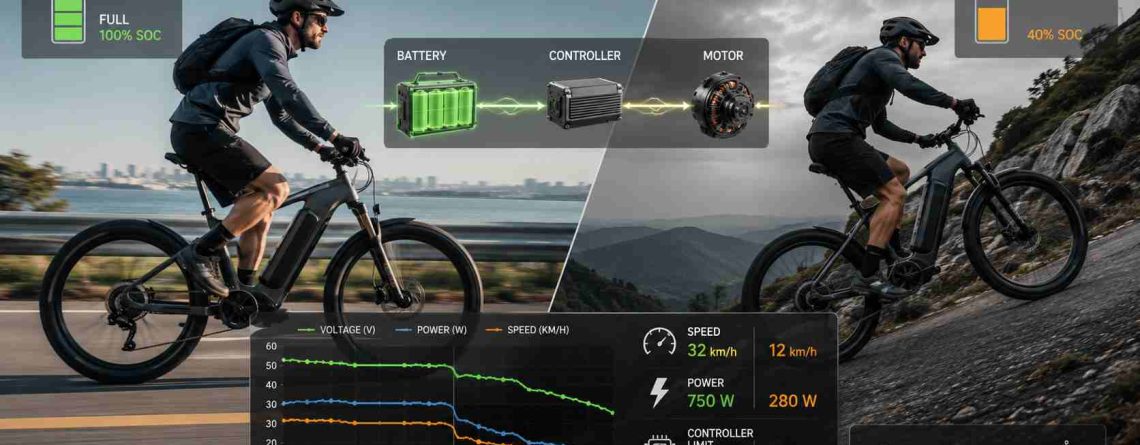
Overall e bike speed depends on your motor, controller, battery voltage, current, load, and system limits. More voltage gives the motor a stronger push. However, a new battery will not increase speed unless your controller and motor are built to handle the extra power safely.
Quick Answer: What Controls Your Pace?
- Higher battery voltage helps a motor spin faster only when your controller matches.
- Battery Ah ratings change your riding range, not your top speed.
- Low battery charge, voltage sag, or BMS limits will slow you down on hills.
- Controller rules and motor design restrict speed more often than the battery does.
Imagine riding to work on a sunny morning. Your bike feels fast and lively on flat roads. But halfway there, you hit a steep hill. Suddenly, your bicycle feels sluggish and heavy. The motor loses its punch.
Many riders think the motor is breaking down. In truth, you are seeing how stored energy, load, and safety rules work together. Your top pace is a live balance between battery push and controller limits.

Want to Check Your Electrical System?
Check electrical compatibility before buying new parts. Proper matching keeps your ride safe and reliable.
How eBike Battery Voltage Affects Speed
Battery voltage can influence motor speed, but only when the motor, controller, BMS, and wiring are designed to support that voltage.
Think of voltage as water pressure in a pipe. More pressure pushes energy faster. In an electric bike, higher voltage pushes the motor harder. This helps the wheels spin faster. But extra voltage can overheat parts if they are too small.
The Relationship Between eBike Battery Voltage and Top Speed
Every motor has a kV rating. This number tells you how fast the motor spins for each volt it gets. So, there is a direct link between eBike battery voltage and top speed. More voltage makes the motor spin faster. But you only get this speed if the controller allows it.
Why Controller Voltage Ratings Define Compatibility Limits
You cannot just plug a huge battery into any bike. Motor controllers have sensitive parts with strict voltage limits. If your battery pushes too much voltage, these parts will fail. The controller is the true gatekeeper of your speed ceiling.
Nominal Voltage, Full-Charge Voltage, and Actual Riding Voltage
Battery numbers can be confusing. A standard 48V battery does not stay at 48 volts. Fully charged, it sits near 54.6 volts. As you ride, it drops to around 48 volts. Near empty, it drops to 39 volts. Because speed tracks live voltage, your bike slows down as the battery drains.
Does higher voltage always make an eBike faster?
No. If your controller has a speed limit, extra voltage will not help. It may even damage your parts.
Can a 52V battery be used with a 48V controller?
Sometimes. The controller parts must support up to 58.8 volts at full charge. If not, the system will fail.
Why eBike Speed Drops Under Load
Speed commonly drops under load when battery voltage sags or the BMS and controller limit current to protect the electrical system.
Bikes ride differently on flat roads compared to steep hills. Flat roads require very little power. But climbing hills or carrying heavy cargo demands a huge gulp of energy. Why eBike speed drops under load comes down to how your setup handles stress.
eBike Battery Voltage Sag at High Speed During Climbing and Acceleration
Pulling heavy current causes internal resistance in the battery. This causes a quick drop in power, known as voltage sag. Watch your screen during a climb, and you will see the voltage drop. This eBike battery voltage sag at high speed reduces power to the motor, slowing you down.
eBike BMS Current Limit and Top Speed Protection
The Battery Management System (BMS) is the safety brain inside your pack. It watches power flow and heat. Every BMS has a set current limit. If a steep hill pushes demand too high, the eBike BMS current limit and top speed protection rules step in. It reduces power to prevent overheating.
Aging Cells, Cold Temperatures, and Connector Resistance
Weather and age also affect your pace. Old lithium cells have higher resistance, making voltage sag worse. Freezing winter weather slows down battery chemistry, which limits power. Even dirty or loose wire connectors block energy flow when you need it most.
How to Distinguish a Battery Problem from Insufficient Motor Power
You can spot the difference easily. If your speed drops on a hill but your voltage stays steady, your motor lacks climbing torque. If your voltage drops fast under load and jumps back up when you stop pedaling, your battery is struggling to supply current.
Checklist: Why an eBike Feels Slower Under Load
- Compare performance at full charge and lower charge levels: Notice if slow speed happens only when half empty.
- Reproduce the issue on the same route and under the same load: Ride the same hill with the same weight.
- Observe whether the displayed voltage falls rapidly: Watch your screen when speeding up to check for sag.
- Check whether the system loses power or restarts: Sudden shutoffs mean a safety switch tripped.
- Inspect connectors, cables, and controller settings: Make sure all plugs are clean and tight.
- Verify battery, BMS, and controller compatibility: Check that your battery can deliver the current your controller needs.
| Factor | Possible Speed Effect | Typical Sign | What to Check |
|---|---|---|---|
| Battery voltage | High | Overall speed ceiling changes | Controller and motor compatibility |
| State of charge | Med | Speed falls as charge decreases | Voltage while riding |
| Voltage sag | High | Slower climbing or acceleration | Voltage change under load |
| BMS current limit | High | Sudden power reduction or cutoff | BMS and controller current requirements |
| Battery capacity | Low | Primarily affects range | Ah and Wh specifications |
| Temperature | Med | Reduced power in cold conditions | Whether the pack is cold-soaked |
Alt text: e bike speed affected by battery voltage sag and BMS limits
Experience Verification Process
To test your battery, use a simple and repeatable method. Use the same bike, route, rider weight, and tire pressure for two test runs. Keep controller settings and weather the same.
Start the first ride at 100% charge. Ride up a test hill and check the voltage drop under throttle. Do the second ride on the same hill at 30% charge. Compare the voltage drops and check if the BMS cuts power. This shows if battery sag or safety limits are slowing you down.
48V vs 52V Battery: What Changes and What Does Not
A 52V pack may provide stronger voltage support than a 48V pack, but it cannot safely increase speed unless every electrical component is compatible.
Many riders want to upgrade from 48V to 52V for extra speed. While the 48V vs 52V eBike battery speed difference is real on matching bikes, upgrading without checking parts can cause damage.
How 48V and 52V Packs Affect Available System Voltage
A 52V battery gives you higher starting pressure. A 48V pack charges to 54.6 volts, while a 52V pack reaches 58.8 volts. This extra starting pressure means your live voltage stays higher for longer. It helps matching motors run efficiently deeper into your ride.
Why Higher Ah Usually Increases Range Rather Than Top Speed
Do not confuse electrical pressure with energy storage size. When checking specs, remember eBike battery capacity vs speed are different things. Amp-hour (Ah) and Watt-hour (Wh) numbers tell you the size of your fuel tank. More Ah lets you ride farther, but it does not raise top motor speed.
Compatibility Requirements for the Controller, Motor, Display, and Charger
Before upgrading, check every part of your bike. Your controller capacitors must support over 60 volts. Your display screen must be set to read a 52V battery curve. If not, the battery gauge will read full until the bike dies. You also need a dedicated 52V charger.
Heat and Component Stress Associated with Higher Voltage
Pushing extra voltage through standard wires creates extra heat. If you change your eBike battery and controller compatibility for speed setup without proper cooling, parts will run hot. Over time, this heat can melt wire plugs and damage controller electronics.
Does a 52V eBike battery increase speed?
It can help a matching motor spin slightly faster on hills. But your controller and display must support the higher voltage safely.
Is battery capacity or voltage more important for speed?
Voltage is much more important for top speed. Battery capacity (Ah/Wh) simply decides how many miles you can ride at that pace.
How to Identify What Is Limiting Performance
Before replacing the battery, determine whether the limiting factor is voltage delivery, controller programming, motor design, rider load, terrain, or a legal speed setting.
When your bike feels slow, buying a new battery is often a costly mistake. Often, software speed limits or simple wiring faults are the real cause. Use a step-by-step check to find the true problem without wasting money.
Decision Guide: Pinpointing Performance Bottlenecks
- Slow on flat roads and hills: Check controller speed settings and motor RPM limits before checking the battery.
- Normal at full charge but slower at low charge: Check for voltage sag. This is normal battery draining behavior or aging cells.
- Power cuts out during acceleration or climbing: Check BMS current limits, wire plugs, and controller power demand.
- Still slow after installing a higher-voltage battery: Check controller software limits and motor kV ratings. These cap your speed.
- Normal speed but limited range: Check Wh ratings and cell health. Asking can a weak eBike battery reduce top speed depends on cell resistance, not storage size.
Getting great performance means matching your battery to your riding needs. If you ride up steep hills, choose a battery with quality cells and a strong BMS. Understanding how eBike battery temperature and speed performance interact also helps you adjust for cold winter rides.
Need Professional Guidance on Battery Systems?
Choosing the right battery requires balancing voltage, current, and size. Explore technical resources to build a reliable setup.
Visit the official EM3ev website for guides, or browse the EM3ev battery category for matching details.
Frequently Asked Questions
Does a higher-voltage battery make an eBike faster?
Sometimes. Higher voltage increases the top spinning speed of the motor on flat roads. However, this only works if your motor controller, display screen, and wiring are built to handle the higher electrical pressure safely.
Will a 52V battery make a 48V eBike faster?
It depends. Putting a 52V pack on a 48V bike can add slight speed and climbing power if controller capacitors support up to 58.8V. Incompatible parts will show error codes or suffer electrical failure.
Does low battery charge reduce eBike speed?
Yes. As your battery drains, its active voltage drops. Because motor speed is directly tied to live voltage, your cruising speed naturally drops as you ride. This slowdown is most noticeable below half charge.
Why does an eBike slow down when climbing?
Sometimes, climbing hills pulls heavy current from the battery, causing temporary voltage sag. If the power demand gets too high, the battery management system or controller will actively reduce power to prevent system overheating.
Does battery Ah affect eBike top speed?
No. Amp-hour (Ah) ratings decide energy storage size and riding range, not motor speed. While a larger Ah battery has slightly less voltage sag on hills, it does not directly increase top bicycle velocity.
Can an eBike BMS limit speed?
Yes. The battery management system monitors continuous and peak current draw. If heavy climbing demands more amperage than the safety board allows, the BMS will restrict power output or shut down completely to protect cells.
Can cold weather reduce eBike speed?
Yes. Freezing winter weather slows down chemical reactions inside lithium cells. This increases internal resistance and causes heavy voltage sag under load, resulting in sluggish acceleration and much lower cruising speeds during cold rides.
How can I tell whether the battery or controller is limiting speed?
It depends on your screen readout. Watch your voltage screen while riding. If voltage drops deeply under load and jumps back up when stopped, the battery is sagging. If voltage stays steady, the controller is limiting you.
While battery voltage provides the basic push for motor rotation, it is only one part of your bike setup. Real performance depends on a clean match between voltage delivery, current limits, controller software, and motor design. Before buying a replacement battery, check voltage sag and wiring plugs. For technical guides and matching data, check resources from trusted providers like EM3ev.


LEAVE A COMMENT