





Unlock Better Commuting eBike Battery Life
A commuting ebike battery pack gives you the daily range, voltage, and Watt-hours (Wh) you need for city trips. A good pack makes charging safe. It uses strong BMS protection. It matches your bike perfectly. This stops range anxiety and gives steady power for your whole ride.
Quick Answer: Commuter Battery Essentials
- Pick the right Watt-hours (Wh) for your full round trip, plus extra power for hills and wind.
- Make sure your new battery voltage matches your bike controller exactly.
- Charge your battery safely at home or work using only the correct charger.
- Plan to buy a replacement before your old battery stops holding a charge for your route.
- Check that your Battery Management System (BMS) can handle your motor safely every day.
Getting ready for a busy Monday is hard enough. The last thing you want to worry about is your bike. You might wonder, “Will commuting by ebike leave me stranded halfway home today?” I know this feeling very well. I rely heavily on my setup for a daily ebike commute. My route is not easy. I have to tackle steep hills. I have to haul a very heavy work bag. I am constantly stopping and starting at traffic lights. All of this drains power fast.
Knowing my battery pack has enough Watt-hours to handle the round trip changes everything. It completely stops my range anxiety. Actually, it is entirely about trusting your gear. You need to know it will support your daily commutes, no matter the weather. When I first started, I used a small, weak battery. It was a huge mistake. I had to pedal very hard on the way back. I arrived home tired, sweaty, and stressed. That is not how a commute should feel at all.
Now, I use a proper battery that fits my needs. It makes the ride smooth and easy. I can enjoy the fresh air in the morning. I do not worry about the power meter dropping too fast. I just ride. A good battery turns a stressful trip into a fun part of the day. You just plug it in, let it charge, and you are ready for tomorrow. Finding that peace of mind is what this guide is all about. You deserve a bike that works hard for you.

Need to make your daily ride go further?
Learning about your battery details is the first step to a stress-free trip to work.
What Makes a Good Battery Pack for a Commuting eBike
A good commuter battery gives you enough range for your daily trip. It must be safe to charge. It has to match your bike’s voltage perfectly. It should also be easy to use every day.
To be honest, the heart of a good city bike is the power source. If the battery is bad, the whole bike feels bad. Let us look closely at what makes a battery great for riding to work every day. We will keep it simple. You do not need to be an engineer to understand this.
Daily range and Wh planning
Your daily commutes decide how much power you need. Do not just trust the maximum range written on the box. That number is often tested on flat roads with light riders. Real life is different. You have hills. You have wind. You carry a heavy bag. You need to plan using Watt-hours (Wh). Think of Wh as the size of the gas tank. A larger gas tank takes you further. You need to pick a size that easily covers your trip there and back. You never want to run empty.
Voltage compatibility: 36V, 48V, 52V, 60V, and 72V
Voltage acts like water pressure in a pipe. It pushes power to your motor. A 36V or 48V system is normal for an ebike for city commute duties. This gives you good power for flat roads. It helps with normal hills. But 52V packs offer a bit more punch. They keep you moving fast even when the battery gets low. You must match the voltage to your bike’s controller. This is very important. If you put a 52V battery on a 36V bike, you will break the bike. Always check your manual.
Ah vs Wh for commuting range
You will see two numbers on batteries: Ah and Wh. Ah stands for Amp-hours. Wh stands for Watt-hours. Ah is only half the story. Wh gives you the true picture of total energy. To get Wh, you multiply the voltage by the Ah. When you look at different batteries, always compare the Wh. This tells you how far your ebike commuter bike can travel. It is the best way to know if you will make it home on a single charge.
BMS protection and charging safety
The Battery Management System (BMS) is the brain inside the battery pack. It has a very big job. It stops the battery from getting too full when charging. It stops the battery from going completely dead when riding. It also keeps the battery from getting too hot. Good BMS protection keeps you safe. While a good BMS does the heavy lifting, following official ebike fire safety guidelines and ensuring safe charging is the most important part of owning an ebike.
Weight, mounting position, and ride feel
Batteries are very heavy. Where you put that weight changes how the bike feels. A battery on the bottom tube makes the bike feel stable. It keeps the weight low to the ground. This is great for an urban commuting ebike. It makes it easy to turn corners. But a battery on a rear rack puts the weight up high and in the back. This can make the bike feel strange. It might wobble a bit when you ride slow in tight city traffic. Keep the weight low if you can.
Commuter eBike Battery Range Checklist
You must pick a battery based on your total trip distance. You also need to think about hills, how much you pedal, your bike weight, and where you can charge.
Before you buy a new battery or change your bike, stop and think. Ask yourself exactly what you need for your ebike commute. Follow this simple list to get it right. It will save you money and trouble.
- Confirm daily round-trip mileage: Measure exactly how far you travel to work and back home. Use a map app. Do not guess. You need to know this exact number. You must complete this on a single charge.
- Add margin for hills, wind, cargo, and cold weather: Cold air makes batteries weak. Hills drain power fast. A heavy backpack makes the motor work harder. Add at least 30 percent more capacity just for these tough days.
- Match voltage to controller and motor system: Look at your old battery. Look at the sticker on your bike controller. Is it a mid drive system? The voltage must match perfectly. Do not guess this part.
- Compare Wh instead of Ah alone: Remember, the total energy is what matters. Always check the Watt-hours. Higher Wh means a longer ride. It is the most honest number on the box.
- Check charger compatibility: A new battery might need a new charger. Make sure your old charger is safe to use. If not, you must buy the matching charger. Using the wrong charger is very dangerous.
- Review mounting space and connector type: Get a ruler. Measure the space on your bike frame. A huge battery is useless if it does not fit. Also, look at the plug wires. Make sure they click together easily.
- Plan safe charging at home or work: Think about where you will plug it in. Can you take the battery inside? Is there a safe plug by your desk? Make a solid daily plan for keeping it full.
Battery Needs by Commuting eBike Type
Different commuter bikes need different batteries. A light city bike needs a small battery. A fast class 3 bike needs a much bigger, stronger battery to keep up the speed.
Not all bikes are the same. Not all trips are the same. Your city commuter needs to match your lifestyle. If you carry your bike up stairs to an apartment, weight matters a lot. If you ride 20 miles on a busy road, speed and range matter more. Let us look at what battery fits what bike. We want to find the perfect match for you.
| Commuter Type | Battery Priority | Best Fit |
|---|---|---|
| city commuter ebike | Good balance of power and weight. Needs to handle lots of stop signs. | Medium Wh battery. Mounts on the lower frame tube. |
| urban commuter ebike | Needs to be tough. Must survive bumps, rain, and bad roads. | Strong hard plastic case. Very high-quality BMS brain. |
| lightweight commuter ebike | Keeping the bike very light. Small size is better than huge range. | Lower Ah battery. Often hidden inside the bike frame. |
| class 2 commuter ebike | Steady power. Needs to handle you using the throttle without pedaling. | High continuous discharge BMS. Handles heat very well. |
| class 3 commuter ebike | High power for fast top speeds. Needs to keep up with fast traffic. | Large Wh size. Usually needs 48V or 52V systems. |
| long-distance commuter ebike | Huge amount of power. Needs to stay cool on very long rides. | Biggest capacity that fits on the bike frame. Very large size. |
How to Choose a Replacement Battery for a Commuting eBike
A replacement battery must perfectly match your bike controller voltage. It must fit the space. It needs the correct plug. The charger and BMS must also match safely.
Eventually, all batteries get old. They stop holding a charge. When this happens, you need a new electric commuter bike battery pack. Buying a replacement is tricky. You cannot just pick any battery from a store. It requires careful checking to ensure safety. You also want your bike to work just like it did when it was brand new. Let us walk through exactly what you need to do.
Confirm voltage and controller compatibility
This is the golden rule. Never guess the voltage. Never supply a 52V battery to a strict 36V controller. You might think it will make the bike faster. It will not. It will instantly destroy the internal electronics. It will cost you a lot of money to fix. Always buy a battery that matches the voltage your bike was built to handle.
Check enclosure size and mounting style
Take out a tape measure. Measure the physical space on your bike frame. Measure twice. A massive capacity upgrade sounds great. But it is totally useless if the new case hits your bike’s top tube. It is also useless if it doesn’t lock tightly onto the base plate. A loose battery is very dangerous when riding.
Match connector and charge port
Look at the wires coming out of your old battery. Look at the metal plugs. You must identify your discharge connector. It might be called an XT60, an Anderson, or a bullet plug. Also look at where you plug the charger in. Adapters can cause problems. They can get hot. Matching the exact native connector is always safer for an electric commuter bike battery pack.
Choose enough Wh for daily commuting
Now is the time to decide if you want more range. Select a pack that comfortably covers your daily route. But do not stop there. Always add an extra 20 to 30 percent reserve power. Why? Because batteries lose capacity as they get older. If you buy exactly what you need today, it will not be enough in two years. Buy a little extra now.
Avoid unknown or poorly documented packs
Do not buy the cheapest battery you can find online. Stick to clear and honest specifications. Some sellers hide what brand of cells they use inside. They do not tell you the BMS ratings. They lie about the exact size. These unknown packs carry huge safety risks. They might catch fire. They might break quickly. It is not worth the risk.
Experience validation workflow:
- Write down the original pack voltage, Ah, Wh, plug type, charger output, and how it attaches. Do this on paper.
- Look at your controller. Confirm the voltage range and how much current it asks for.
- Take a tape measure. Find out exactly how much free space you have on your frame or rear rack.
- Guess your daily commute energy demand. Think about distance, steep hills, your weight, the cargo bag, and your pedal assist level.
- Pick a new replacement pack that matches all your notes. Make sure the charger and BMS are safe before you plug it in for the first time.
Which Commuting eBike Battery Setup Fits Your Ride
The best battery setup depends entirely on your daily trip. You must look at your speed, your local hills, your bike weight, and where you plug in.
In my case, upgrading to a higher Wh pack was the best choice I ever made. It completely eliminated my worry on windy days. Before, a strong headwind meant I might have to push the bike home. Now, I just turn up the power and smile. Your specific daily ride should drive your purchase. Do not buy what someone else needs. Buy what you need. Think about your route. Think about where you park. Think about how you like to ride.
- Short city commute: If you only ride a few miles, keep it simple. Pick a small, safe battery. A light commuter ebike setup is easy to carry inside your office.
- Longer daily commute: If you ride more than 10 miles each way, you need power. Choose a high Wh battery. You need steady voltage so the bike stays fast the whole way.
- Class 2 commuter eBike: If you use a throttle instead of pedaling, you drain power fast. You need a battery that balances good range with the ability to handle that heavy power draw.
- Class 3 commuter eBike: If you ride fast at 28 mph, the motor works very hard. You must have high continuous output. You need a battery that stays cool at high speeds.
- Replacement battery buyer: If you are fixing an old bike, do not just look for the biggest battery. You must make sure it fits and works safely with your old parts. Compatibility is key.
Commuting eBike Product Selection Support
When you buy a new battery, start by checking if it fits your bike perfectly. Do not just look at the nice style or the huge range they promise.
Safety and fit must always come first. If you are looking for an affordable commuter ebike battery replacement, you must be smart. Professional sellers focus on high-quality parts. They use good cell brands. They build custom BMS boards to keep you safe. This ensures your money gives you a reliable bike for daily miles. A cheap battery is never cheap if it breaks after one month. A good battery lasts for years. It is an investment in your daily peace of mind.

EM3ev 36V Commuter Replacement Battery Packs
These are great direct replacements for most normal commuter bikes. They fit well.
- Exact voltage matching for safety
- High-quality BMS protection included
- Multiple mounting shapes available
EM3ev 48V Commuter eBike Battery Packs
Built for higher performance. These keep your speed up even on long rides.
- Enhanced power delivery to the motor
- Maintains top speeds for a longer time
- Strong cooling and thermal management
EM3ev 52V Higher-Capacity Packs
Maximum Wh for very long trips. Get to work and back without charging.
- Huge extended range margin
- Fewer charging cycles makes it last longer
- Perfect if you carry heavy cargo bags
EM3ev 72V High-Power Packs
Maximum power for extreme city routes. Maintain top speeds without voltage sag.
- Ultimate voltage for high-speed demands
- Robust cooling prevents system overheating
- Advanced safety for heavy payloads
FAQ
What battery size is good for a commuting ebike?
A good size depends totally on how far you ride every day. For a normal ebike for city commute use, a 400Wh to 600Wh pack is a very safe choice. This size usually covers 20 to 40 miles if you help by pedaling. This gives you plenty of power for most round trips to work.
Is a 48V battery enough for a commuter eBike?
Yes, absolutely. A 48V system is excellent for a daily ride. It gives a great mix of strong power and good battery life. It works very well for an urban commuting ebike. A 48V battery easily handles normal city hills, starting fast from red lights, and carrying your work bags.
How much Wh do I need for daily eBike commuting?
A simple way to guess is to plan on using 15 to 20 Wh for every single mile you ride. If your ebike commute is 15 miles total, you need at least 300Wh. But it is always best to buy a 500Wh battery instead. That extra power helps on windy days or when the battery gets old.
What is better for commuting, a lightweight commuter ebike or a long-range commuter ebike?
It depends on your daily life. If you have to carry your bike up stairs to your desk, a lightweight bike is much better. It saves your back. But if you ride more than 15 miles, or if you carry heavy groceries, you should pick a long-range setup with a big battery.
Can I replace my commuting eBike battery with a higher-capacity pack?
Yes, you can do this. But you must be careful. The new battery must have the exact same voltage as your controller. It also needs to physically fit on your bike frame. Always check the plug wires and make sure the new electric commuter bike battery pack is safe for your motor.
What is the difference between class 2 and class 3 commuter eBike battery needs?
These bikes ride differently. A class 2 commuter ebike has a throttle. You use power without pedaling. This drains the battery steadily. A class 3 commuter ebike goes very fast, up to 28 mph. Riding fast takes huge amounts of power. A class 3 needs a much bigger, stronger battery that does not get too hot.
How should I charge a commuter eBike battery for daily use?
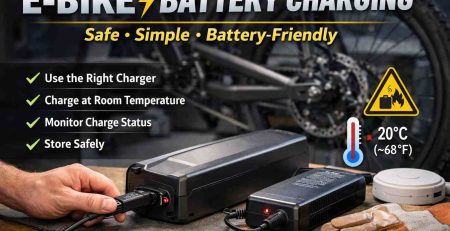
Always use the charger that came with the battery. Plug it in inside a dry room that is not too hot and not too cold. To make the battery last for years, do not leave it completely empty. Do not leave it plugged in for weeks. Charge it before you ride, then unplug it when it is full.
What should I check before buying a replacement commuter eBike battery?
You must check many things to be safe. Check that the voltage matches perfectly. Use a ruler to see if it fits your bike frame. Check how it locks onto the bike. Look at the metal plug to see if it matches. Make sure the battery brain (BMS) is strong enough, and make sure the charger fits.
Conclusion
Finding the perfect commuting ebike battery pack is all about knowing your own daily routine. You need to plan your Wh so you never run out of power on the way home. You must make sure the voltage matches your bike safely. You need to trust the BMS brain to protect you while riding and charging. If you need a replacement battery, measure carefully and follow strict rules. Do not just guess. If you take the time to choose the right parts, you will guarantee a smooth, fun, and stress-free ride for every single city commute.



LEAVE A COMMENT