






Safe Charger for Electric Bike: The Ultimate Guide
A charger for electric bike is a dedicated power supply designed to convert AC wall power into DC voltage that matches a specific eBike battery pack’s chemistry. When selecting a replacement, understanding the compatibility technical specifications is critical to prevent Battery Management System (BMS) errors or cell degradation.
Actually, most riders don’t think about their charger until it vanishes or stops working. I remember the panic I felt when I left my original charger at a coffee shop three towns over. I grabbed a random “universal” adapter from a local hardware store, thinking it would work because the plug fit. Spoiler alert: it didn’t.
The connector fit perfectly, but the voltage was off by just enough to confuse my battery’s BMS (Battery Management System). The result? A battery that refused to charge and a wasted afternoon. That’s when I learned that “close enough” in voltage is actually dangerous.

Quick Compatibility Checklist
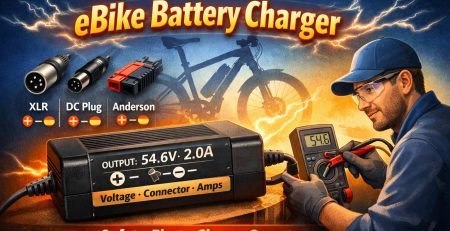
- Voltage Match: 42V charger output for 36V packs; 54.6V output for 48V packs.
- Connector Fit: Must match shape (XLR, DC barrel, RCA) and polarity.
- Current (Amps): 2A–3A is standard; high amps require BMS support.
- Chemistry: Li-ion chargers only for Li-ion packs.
Finding the right replacement isn’t just about the plug shape. It involves a specific triad: voltage family, connector type, and safe amperage. Get one wrong, and you risk damaging expensive cells or, worse, causing a fire hazard.
Need the perfect fit? Choose EM3ev
Visit EM3ev to select the suitable product that matches your voltage and connector requirements safely.
How to choose a charger for an electric bike
Choose a charger that matches your eBike battery pack voltage family, connector, and safe charge current for your BMS to ensure safety.

Standard 2A Chargers
Best for daily overnight charging.
- Voltage: 36V, 48V, or 52V options
- Cooling: Passive (Silent)
- Pros: Extends battery life
Fast 4A+ Chargers
For heavy commuters needing speed.
- Voltage: 48V/52V typically
- Cooling: Active Fan (Whirring noise)
- Pros: 50% faster charge time
When you are staring at a marketplace full of black plastic bricks, the confusion is real. To be honest, most people look for the brand name first, but the technical specs on the sticker are what actually matter. Here is the hierarchy of safety you need to follow.
Step-by-Step Selection Checklist
- Identify Pack Voltage Family: Look at your battery label. Is it 36V, 48V, or 52V? Note that a “48V battery” actually needs a charger that outputs 54.6V when full.
- Match Output Voltage Exactly: Never use a “close enough” voltage. A 48V charger (54.6V output) will overcharge and potentially ignite a 36V battery.
- Confirm Connector/Plug: Common types include the standard 3-pin connector (XLR style), DC barrel (round), or proprietary plugs like Bosch or Shimano.
- Pick Charge Current: Standard chargers are usually 2A to 3A. A rapid charger (or high-amp model) might offer 4A or 5A, but you must verify your battery’s BMS can handle the heat.
- Sanity Check: Always supervise the first charge cycle completely to monitor for excessive heat or odd LED behavior.
Common Questions
Can I use a higher-amp charger?
Yes, if your battery’s BMS supports it. However, you must avoid using a diy electric bike charger or uncertified adapters. These custom solutions often lack precision current regulation, significantly increasing the risk of overheating or fire in lithium-ion packs.
What does a ‘smart charger’ do?
A smart charger communicates with the battery or follows a multi-stage profile (Constant Current/Constant Voltage) to cut off power precisely when full, preventing the “trickle charge” overstress that kills lithium cells.
36V vs 48V chargers: compatibility rules
Never mix voltage families; a 48V charger outputting 54.6V is dangerously high for a 36V system and will trip safety protections or cause damage.
In my experience helping friends troubleshoot “dead” batteries, 30% of the time it was simply using a spouse’s charger on the wrong bike. Voltage families are distinct. Here is how the actual output numbers align with the marketing terms.
Electric bike charger voltage matching table (36V/48V/52V)
| Battery Label (Nominal) | Charger Output (Max Voltage) | Compatibility Status |
|---|---|---|
| 36V Pack | 42.0V | ✅ Correct Match |
| 48V Pack | 54.6V | ✅ Correct Match |
| 52V Pack | 58.8V | ✅ Correct Match |
| 36V Pack | 54.6V (48V Charger) | ❌ DANGER: Fire Risk |
| 48V Pack | 42.0V (36V Charger) | ❌ Won’t Charge (Under-voltage) |
Experience Verification Process: How to Test Safely
We don’t rely on random Amazon descriptions. When verifying a new charger, follow this methodology:
- Label Verification: Read the “Output” line on the charger brick. Does it match the “Max Voltage” of your pack?
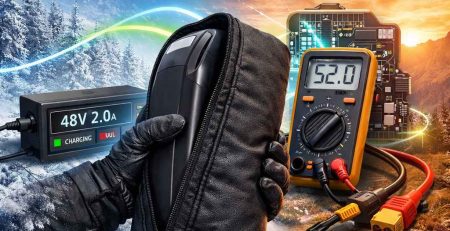
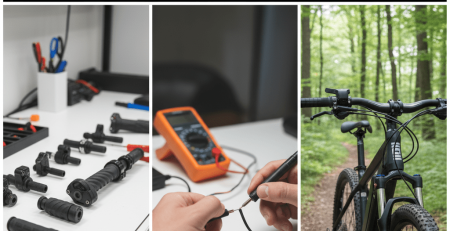
- Pin Polarity Test: If you have a multimeter, check the connector pins. Some brands flip positive (+) and negative (-) pins on standard XLR plugs.
- Heat Monitoring: During the first hour of charging, touch the charger case and battery connector. Warm is okay; hot to the touch indicates resistance or overload.
- Stop Criteria: If the charger LED stays red for 12+ hours or smells like ozone, unplug immediately and recycle it.
Portable, fast, and solar chargers
Specialized chargers like portable or solar units offer flexibility but require strict attention to amperage limits and weatherproofing.
Portable Travel Chargers
I once tried carrying my standard brick on a bikepacking trip. It rattled around and eventually the casing cracked. A dedicated compact travel unit is usually smaller, fanless (silent), and more rugged. However, they often charge slower (1.5A–2A) to keep heat down inside a pannier bag.
High-Speed Fast Chargers
If you commute daily, waiting 6 hours for a charge is painful. A rapid model (4A–5A) can cut that time in half. But be honest about your battery’s health—pushing high amps into an old or small (under 10Ah) battery stresses the cells. I only use fast charging when I absolutely need a quick turnaround.
Solar Power Solutions
This is for the off-grid adventurers. A direct solar panel connection rarely works well because clouds cause voltage drops that reset the charging cycle. The reliable setup involves a solar generator (MPPT controller) buffering energy into a portable power station, which then powers your standard AC charger. It’s heavy, but it works.
Which charger should I buy?
If you charge overnight, stick to a standard 2A-3A charger—it’s cheaper and kinder to your battery cells. Only buy a fast charger if you frequently ride twice a day and need a mid-day boost. Always verify the connector photo before clicking buy!
Ready to power up?
Don’t guess with voltage. Select your specific battery type to see compatible safe chargers.
Frequently Asked Questions
Can I use a 48V charger on a 36V eBike battery pack?
No, this is dangerous. A 48V charger outputs 54.6V, which is far above the 42V maximum limit of a 36V battery. Connecting it can trip the BMS protection, permanently damage cells, or cause a fire.
How do I choose between a 36V and 48V replacement?
Check the label on your battery pack or the old unit. If the battery says “36V”, you need a charger with 42V output. If it says “48V”, you need 54.6V output. Never guess based on bike speed or size.
Is a fast charger safe for my eBike battery pack?
It depends on your battery’s BMS and cell quality. Most modern batteries can handle 4A, but small batteries (under 10Ah) or older units may overheat. Check your battery manual for the “Max Charge Current” rating.
How do I identify my 3-pin connector type?
“3-pin” can mean XLR, IEC, or a specialized proprietary plug. Compare the pin layout (round vs flat) and the notch position visually against your battery port. Also, check the polarity (+/-) with a multimeter if unsure.
Can I charge my e-bike directly with a solar panel?
Yes, but you usually need an MPPT solar controller to boost panel voltage to the 42V or 54.6V required. A direct connection to a solar panel will not work effectively due to voltage fluctuation.
Why does the light turn green before the battery is full?
This often indicates the battery is unbalanced (some cells are full while others aren’t) or the battery has reached the end of its life and capacity is diminished. It could also mean the charger voltage is set slightly too low.
Is it safe to leave the charger plugged in overnight?
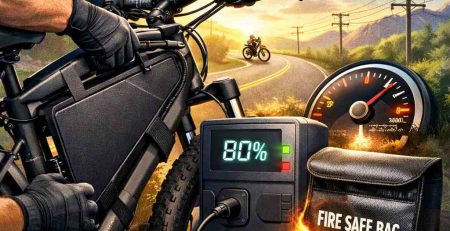
While most quality chargers have auto-shutoff, it is safer to unplug once the light turns green. Leaving it plugged in for days can stress the BMS and, in rare failure cases, lead to thermal runaway.
Conclusion
Getting the right ebike charger setups isn’t just about keeping the wheels turning; it’s about safety. By verifying the voltage family (36V vs 48V), checking the connector type, and sticking to reputable charging methods, you protect your ride and your home. Always prioritize compatibility over speed or price.
Review: Charger for Electric Bike (Voltage-Matched Ebike Battery Charger)
Pros
- Clear voltage-family guidance (36V/48V/52V) to avoid BMS errors and fire risk
- Highlights connector types and polarity checks (XLR / DC barrel / RCA)
- Explains safe charge current (2A–3A typical) and when fast charging is OK
Cons
- Not all brands use the same connector standard (may need an adapter)
- High-amp chargers require confirming your battery BMS rating first
- “Universal” chargers can be misleading if voltage is even slightly off
Summary
A charger for electric bike should match your battery’s voltage family, connector type, and safe charge current. If you match these three correctly, you’ll get reliable charging and reduce overheating risk. When switching to a higher-amp charger, verify BMS support and monitor the first full cycle.




LEAVE A COMMENT