




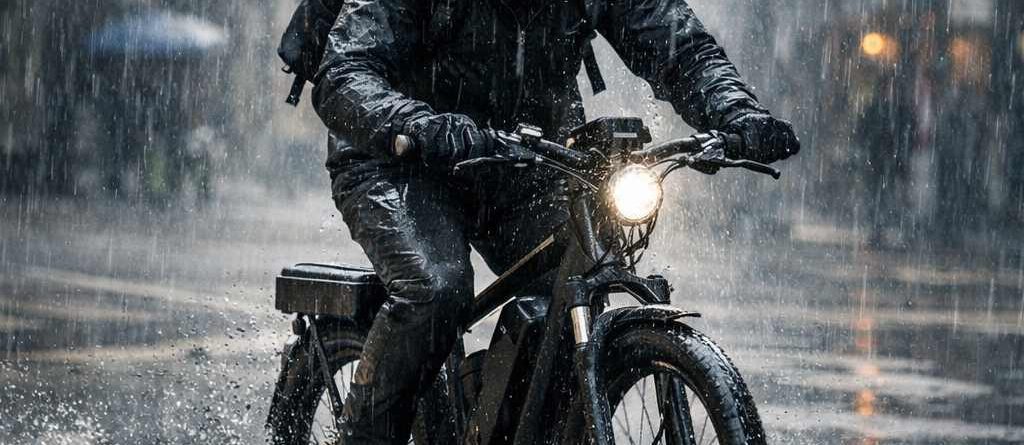
Can You Ride an Electric Bike in the Rain? Expert Secrets
Can you ride an electric bike in the rain? Yes, most e-bikes can handle light or steady rain well. They are not fully waterproof, though. You should avoid deep water and high-pressure sprays. This protects your battery and motor from water damage.
I still remember my first rainy commute. The sky opened up when I was miles from home. Every pedal felt like I was in a car wash. My clothes were soaked, but I only thought about one thing: my battery. Is it safe? Does it matter if water hits the metal pins or the charger port? Let’s look at how to keep your ride safe when it gets wet.
Quick Verdict: Can You Ride an e-Bike in the Rain?
Yes, most high-quality e-bikes (including EM3ev builds) are designed for IPX4 or IPX5 water resistance, making them safe for light to steady rain. However, you must avoid deep puddles, never submerge the motor, and ensure the battery charging port is 100% dry before plugging in.

Quick Answer: Battery Rain Safety
- You can ride an e-bike in rain if the battery is locked tight and seals are good.
- Heavy rain and deep puddles are risky. They can force water into ports.
- If your battery gets very wet, turn it off. Dry it well before using it again.
- Always wipe the battery dry after your ride. Check that all covers are closed.
Can you ride an electric bike in the rain without harming the battery pack?
Yes, you can. Ensure the battery is locked in place and the port covers are shut. Avoid deep puddles that could soak the battery terminals.
are eBike battery packs waterproof or water-resistant
Most e-bike batteries are water-resistant. This means they can handle rain from the sky. They are usually rated IPX4 or IPX5. However, “water-resistant” is not the same as “waterproof.” They cannot be dunked in a pool. Also, high-pressure washers can force water inside.
Understanding Water Resistance: IPX Ratings for e-Bikes
| Rating | Protection Level | e-Bike Riding Scenario |
|---|---|---|
| IPX4 | Splashing water from any direction. | Light rain or damp roads. Safe for most commutes. |
| IPX5 | Water jets (low pressure) from any angle. | Steady rain and road spray. Standard for quality batteries. |
| IPX6 | Powerful water jets. | Heavy storms. Rare in e-bikes; usually requires custom sealing. |
| IP0 | No protection. | Danger: Internal components will short-circuit immediately. |
Note: EM3ev packs prioritize high-quality gaskets to meet or exceed IPX5 standards for real-world reliability.
how to protect an eBike battery pack from rain and splashes
Start with a quick check. Make sure the battery latch is locked. This keeps the seals tight. You can also use a cover made of neoprene for extra safety. This helps keep water away from the ports and metal pins.
As a global OEM and ODM supplier, we at EM3ev see many battery failures caused by poor sealing. That is why we focus on the assembly process. We use extra sealants and high-quality gaskets for riders who live in wet climates. Choosing a battery built with these standards is your best defense against the rain.
Professional Verification Process (EM3ev Standard)
Follow these steps to keep your battery safe after a wet ride:
- Check Seals: Make sure the port flaps are closed tight before you go.
- Check for Water: After riding, remove the battery. Look for water on the metal pins.
- Dry Properly: Use a dry cloth. Then, let the battery air-dry with the pins facing down.
- Short Test: Once dry, put the battery back. Try a short ride to make sure it works fine.
- The EM3ev Inspection: If you see green powder on the pins, it is a sign of corrosion. We recommend using dielectric grease on terminals to stop this before it starts.
Is your battery damaged by water?
If your battery was submerged or is showing signs of failure, it may be time for a professional replacement. Explore our range of high-performance battery packs designed for real-world conditions.
Technical Insights: Voltage Safety and Cell Protection in Wet Conditions
When riding an electric bike in the rain, the primary risk isn’t just a “wet battery,” but electrolysis and short-circuiting at the terminals. High-voltage systems (48V, 52V, or 72V) can bridge small gaps if water is present, leading to pin corrosion.
At EM3ev, we focus on Cell-Level Defense. Even if moisture enters the outer casing, the internal 18650 or 21700 cells must be isolated. Using high-grade sealants and Smart BMS (Battery Management Systems) allows the pack to shut down power instantly if an internal leak is detected, preventing thermal runaway.
Pro Tip: Check your BMS status via the app after a heavy storm. If the voltage readings fluctuate, it’s a sign that moisture might be affecting the sensor wires.
What if the eBike battery pack gets wet—what to do immediately?
Power off your e-bike first. Take the battery to a dry area and wipe it down with a clean towel.
what to do if an eBike battery pack gets soaked
If the battery is very wet, act fast. Turn off the power. Remove the battery when you reach a dry spot. Do not leave a wet battery on the bike. Use a soft cloth to soak up all water. Avoid using rice, as the dust can damage the ports.
eBike battery pack water ingress signs and safety checks
Look for fogging inside the lights or screen. Check the pins for green or white crust. This is corrosion. If the battery feels hot while it is just sitting there, it is a sign of trouble. Move it to a safe spot outside and call for help.
Can you charge an eBike battery pack after riding in the rain?
No. Wait until the battery and the charging port are 100% dry. Charging a damp port is dangerous.
how to dry an eBike battery pack safely after rain exposure
Use room air and patience. Do not use a hair dryer or an oven. High heat can damage the battery cells. A small fan can help move the air around the ports to speed up drying.
I once ignored a wet battery rail after a beach ride. I thought it would just “dry out.” A few days later, my bike wouldn’t turn on. The pins were covered in green rust. Don’t make that mistake. A few minutes of drying today saves you from buying a new battery tomorrow.
Decision Box — Is it safe to keep riding / using this battery pack?
Check how much water hit your bike. Small splashes are fine, but a deep soak needs careful drying.
The Safety Stoplight
🟢 GREEN: Light rain. No water on pins. Action: Wipe it dry and keep going.
🟡 YELLOW: Heavy storm or big splashes. Action: Dry for 24 hours. Check pins before riding again.
🔴 RED: Submerged in water or smells burning. Action: STOP. Do not charge. Talk to a pro.
FAQ: Rain & e-Bike Battery Safety
Yes. As long as the battery casing is intact and you dry the metal pins/contacts after the ride, your pack remains perfectly safe. The shell is designed to shed water during operation.
Always remove the battery. Washing forces water into areas where the seals might not be as tight as they are during a normal rain shower, especially near the rail connections.
Avoid any water deep enough to reach the motor hub or mid-drive casing. While rain-resistant, motors are not designed for submersion, which can lead to internal rust on the gears or sensor failure.
Yes. Fenders (mudguards) are one of the best upgrades for rain-ready commuting. They block the constant “pressure spray” from the wheels, keeping water away from sensitive seals and ports.
No. Wait until the charging port is 100% dry. Charging a damp port can cause a short circuit. If the bike was very wet, let it air-dry for at least 2 hours before plugging in.
Verdict: Safe in rain with proper sealing + drying habits. Avoid deep water and never charge a damp port.
★★★★★4.9/5
Based on 1 editorial review
Pros
- Clear “yes you can” guidance for light/steady rain with good seals.
- Practical checklist: wipe pins, air-dry, short test before normal riding.
- Strong safety rule: wait until ports are 100% dry before charging.
- Helps riders avoid common corrosion mistakes (green/white crust on pins).
Cons
- Rain ratings (IPX4/IPX5) vary by brand—users should still confirm their own model.
- Deep puddles / submersion advice is strict (as it should be), but may feel limiting to some commuters.
- Doesn’t replace manufacturer service guidance for a truly soaked or overheating battery.
Summary
- Dry it: Always wipe your battery dry after a rainy ride.
- Check seals: Keep your port covers closed.
- Wait to charge: Let the port dry for 24 hours if it got very wet.
- Safety first: If it smells or gets hot, stop using it.


LEAVE A COMMENT