




The Ultimate Guide to Batteries for Electric Bicycles (2025)
Quick Summary: What You Need to Know
- Safety is paramount. Always use the correct, certified charger and follow best practices for charging and storage to ensure a long and safe battery life.
- Watt-hours (Wh) is the best metric for range. It’s calculated by multiplying Volts (V) and Amp-hours (Ah). More Wh means more range.
- Voltage (V) equals power. Higher voltage (like 48V or 52V) provides faster acceleration and better hill climbing.
- Amp-hours (Ah) is the fuel tank. Higher Ah means the battery can deliver power for a longer time.
- Downtube batteries offer the best handling. Their low, central position keeps the bike balanced and stable.
A Beginner’s Guide to Choosing the Best Batteries for Electric Bicycles
Choosing the right battery for your electric bicycle can feel complicated, but it comes down to three key numbers: Voltage (V), Amp-hours (Ah), and Watt-hours (Wh). These metrics define your bike’s power, range, and overall performance. Understanding them is the first step toward finding the perfect battery, whether you’re a daily commuter or a weekend trail rider.
What Do E-Bike Battery Specs Like Volts, Ah, and Wh Mean?
Think of it like this: Voltage (V) is the “power,” influencing speed and climbing. Amp-hours (Ah) is the “fuel tank size,” dictating how long you can ride. And Watt-hours (Wh), the most important number for range, is the total energy capacity (Volts x Amp-hours).
Table: E-Bike Battery Metrics at a Glance
| Metric | What It Measures | Real-World Impact |
|---|---|---|
| Voltage (V) | Electrical potential or “pressure.” Common types are 36V, 48V, and 52V. | Higher voltage generally means more power, faster acceleration, and better performance on steep inclines. A 48 volt electric bicycle battery offers a noticeable upgrade over a 36V system. |
| Amp-Hours (Ah) | The battery’s capacity to deliver a current over time. A measure of its “fuel tank” size. | More Amp-hours directly translates to a longer range. A 15Ah battery will last longer on a single charge than a 10Ah battery of the same voltage. |
| Watt-Hours (Wh) | Total energy capacity (Volts × Amp-Hours). | This is the most reliable number for comparing a battery’s total potential range. For example, a 48V 10Ah battery (480Wh) holds less total energy than a 36V 15Ah battery (540Wh). |
Most modern e-bikes use Lithium-ion (Li-ion) cells for their high energy density and long lifespan. The quality of these internal cells, often from brands like Samsung or Panasonic, is critical for the battery pack’s safety and performance, a fact emphasized by experts at resources like Battery University.

🔋 What’s the Difference Between a 48V and a 52V E-Bike Battery?
For many riders, the choice comes down to a 48v electric bike battery or a 52 volt ebike battery.
- 48V Batteries: This is the industry standard. A 48v battery for electric bike systems provides an excellent balance of strong performance and efficiency, making it ideal for everything from city commuting to trail riding.
- 52V Batteries: This is a performance upgrade. A 52V battery operates at a slightly higher voltage, which can deliver a noticeable boost in torque and top speed. However, it’s crucial to confirm that your e-bike’s motor and controller are rated to handle the extra voltage to prevent damage.
Key Takeaway: For most riders, a 48V system is the perfect choice for reliable power. For enthusiasts seeking maximum performance, a 52V system offers an edge, but compatibility must be verified first.
Is Your E-Bike Compatible?
Before you upgrade or replace your battery, check your bike’s motor and controller specifications. Our detailed compatibility guides can help.
Ultimately, choosing between a 48v electric bike battery and a 52V one depends on your goals. For reliable, everyday performance, 48V is an excellent and widely supported choice. For enthusiasts seeking to maximize their bike’s power output, a 52V system can offer that extra edge, provided the components can handle it.
⚙️ Which E-Bike Battery Style is Best? (Downtube vs. Rear Rack)
The physical shape and mounting style of a battery dramatically affect your bike’s handling and balance. At the core of every battery are individual cells (like the popular 21700 format) managed by a critical safety component called the Battery Management System (BMS). These parts are housed in a case, with the three most common styles being:
- Downtube Batteries: This is the most popular and best-performing style. Mounting the battery on the downtube creates a low and central center of gravity, making the bike feel stable and natural to ride.
- Rear Rack Batteries: These are easy to install and remove but place the weight high and to the back, which can negatively affect the bike’s handling.
- Seat Tube Batteries: This style keeps weight centered but is less common and can interfere with accessories like dropper posts.
Our Recommendation: For the best riding experience, always choose a downtube-mounted battery. It preserves the bike’s intended balance and makes it feel more like a traditional bicycle.
Anatomy of a Modern Battery: Cells and Cases
At the heart of every high-quality e-bike battery are cylindrical cells, most commonly the 18650 or 21700 formats. The 21700 cell is newer and larger, offering higher energy density, which means more capacity (and thus, range) in a similar-sized package. Leading manufacturers use cells from reputable brands like Samsung, LG, and Panasonic to ensure reliability and longevity. As explained by experts at Battery University, the quality and consistency of these individual cells are paramount for the pack’s overall safety and lifespan. The cells are bundled together and managed by a sophisticated Battery Management System (BMS), which protects against over-charging, over-discharging, and overheating.
The external casing, or form factor, determines how the battery mounts to your bike. The three most common styles are:
- Downtube: This is the most popular style. The battery mounts on or is integrated into the bike’s downtube. This placement provides a low and central center of gravity, leading to excellent handling and stability.
- Rear Rack: Mounted on a rack above the rear wheel, these batteries are easy to install and remove. However, they can make the bike feel top-heavy and affect handling, especially on smaller frames.
- Seat Tube: A less common style where a vertical battery pack sits behind the seat tube. This keeps the weight centered but can interfere with accessories like dropper posts or rear suspension.
Key Takeaway: For the best riding experience, a downtube-mounted battery is usually the superior choice. It preserves the bike’s natural balance and handling characteristics, making it feel more like a traditional bicycle.
Now let’s explore some specific options that exemplify these designs and specifications.

Product Spotlight: 36V 13.6Ah Super Shark Battery Pack
Price: $329
Voltage: 36V
Chemistry: Li-NMC
Compatibility: Most 36V hub/mid drive motors
Use case: Daily commuting, light trail
Product Spotlight: King Shark 48V 19.6Ah Battery Pack
Price: $379
Voltage: 48V Capacity 19.6Ah (917Wh)
Chemistry: Li-NCA
Compatibility: High-power 48V e-MTBs
Use Case: Off-road, long-distance touring
Safety and Disclaimer
Our Evaluation Process
Methodology / How We Test: Our battery recommendations are based on a combination of lab-tested data and real-world analysis. We benchmark each battery for consistent voltage output under load, verify capacity claims using specialized equipment, and analyze the quality of internal components like the BMS and cell construction. We also consider factors like durability, weather resistance, and ease of mounting.
Image Caption: The placement of the battery (downtube vs. rear rack) dramatically affects the bike’s balance.
Field Notes: “I upgraded from a 10Ah rear rack battery to the WorkHorse 48V 17.5Ah downtube model. The difference in handling was immediate. The bike feels planted and stable now, and my range anxiety is completely gone. I can easily do a 50-mile trip with plenty of charge to spare.” – Mark T., Verified Customer.
🔌 How to Safely Charge and Maintain Your E-Bike Battery
Proper care is essential for maximizing your battery’s lifespan and ensuring safety. How you charge and store your battery directly impacts its long-term health.
Why is a Quality E-Bike Charger So Important?
Your bike battery charger is a vital piece of safety equipment. A high-quality charger for e bike systems communicates with the battery’s BMS to prevent overcharging. Using a cheap, uncertified, or incorrect charger is a significant fire risk. Always use the charger supplied with your battery or a certified replacement from a reputable source, and look for safety certifications like UL or CE.
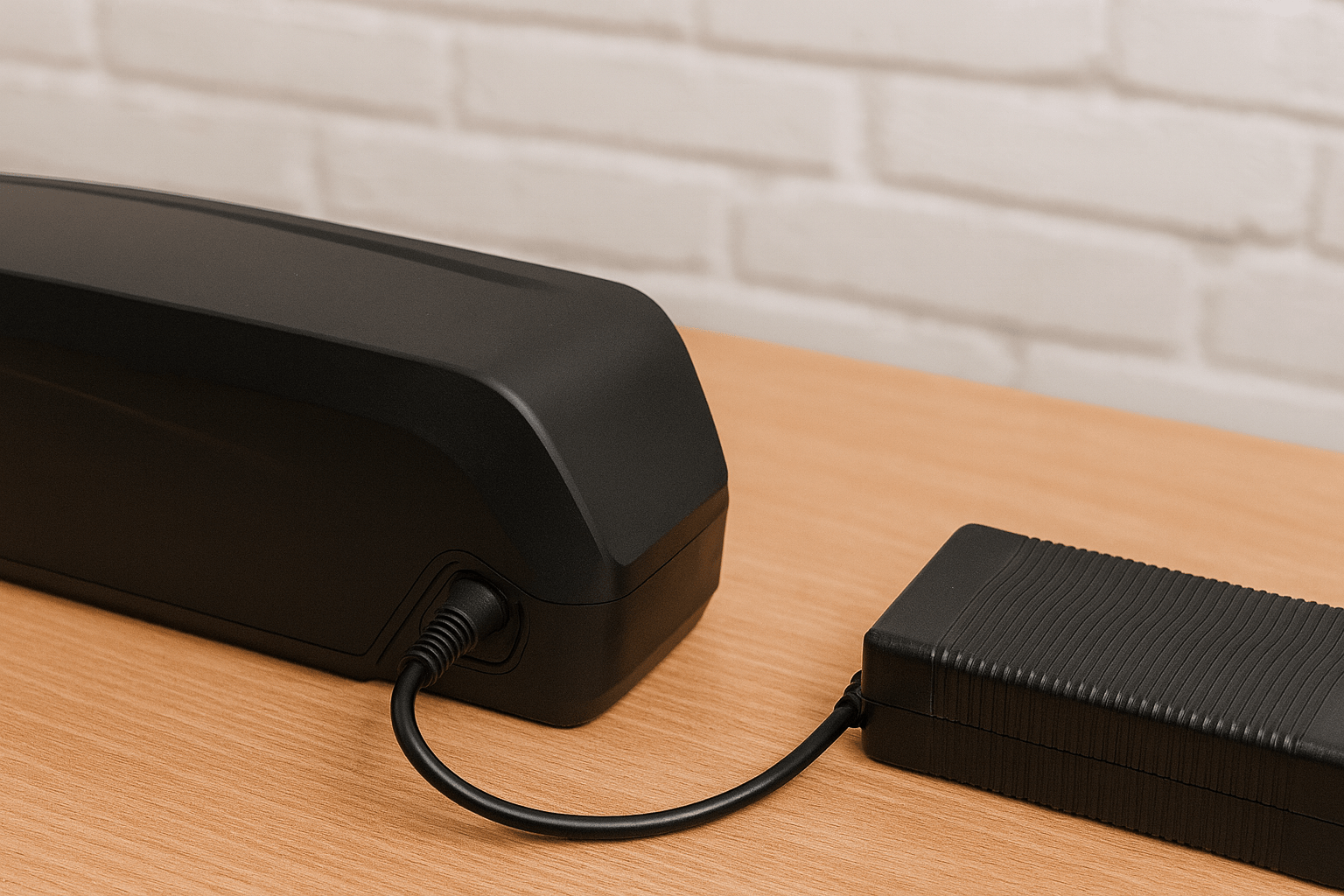
Using the correct, certified charger is crucial for battery health and safety.
Best Practices for Charging and Daily Use
To maximize the cycle life of your battery, adopt these simple habits:
- Charge at Room Temperature: Avoid charging a hot battery right after a ride or a frozen battery from the cold. Let it return to a moderate temperature first.
- Follow the 80/20 Rule: For daily use, keeping the charge between 20% and 80-90% reduces stress on the cells and can significantly extend the battery’s lifespan. Only charge to 100% when you need maximum range.
- Never Store Empty: Storing a battery at 0% charge can cause irreversible damage. For long-term storage (like over winter), aim for a 40-60% charge level.
- Charge in a Safe Space: Always charge your battery on a hard, non-flammable surface, away from flammable materials, and avoid leaving it to charge overnight unattended.
Pro Tip: Storing your battery for the winter? Aim for a 40-60% state of charge. According to cycle-life experts, this is the most stable state for long-term storage, minimizing capacity loss over time.
48V 17Ah Jumbo Shark
The 48V All-Round battery
52V 19.6Ah King Shark
Maximum Performance and maximum range
Safety and Disclaimer: Always follow your e-bike and battery manufacturer’s manuals for specific charging and handling instructions. Electrical systems require care and respect. Modifying your battery or charger can be dangerous and will void your warranty. Adhere to all local regulations regarding e-bike use and battery disposal.
🤔 Common Questions & Troubleshooting Your E-Bike Battery
Even with the best battery technology, questions and issues can arise. Understanding the signs of a healthy (or aging) battery and knowing how to estimate its performance can save you from getting stranded. This final section addresses some of the most common queries we receive about batteries for electric bicycles, helping you make informed decisions throughout the life of your e-bike.
How far can I really go on a single charge?
This is the most asked question, and the honest answer is: it depends. While Watt-hours (Wh) provide a solid baseline for comparison, real-world range is affected by numerous factors:
- Terrain: Riding up steep hills consumes significantly more power than cruising on flat ground.
- Rider Weight & Cargo: The heavier the load, the more energy the motor needs to expend.
- Assist Level: Using a higher pedal-assist level or relying heavily on the throttle will drain the battery much faster.
- Tire Pressure: Properly inflated tires have lower rolling resistance, which can modestly improve your range.
- Wind and Temperature: Riding into a strong headwind forces the motor to work harder. Cold temperatures can also temporarily reduce a battery’s effective capacity.
As a rough estimate, you can divide the Watt-hours by a factor of 20-25 for an average range in miles (e.g., a 500Wh battery might offer 20-25 miles of range under mixed conditions). For a more accurate prediction, consider your specific riding style and conditions.
When should I replace my electric bicycle battery?
A quality lithium-ion battery is typically rated for 500-800 full charge cycles before its capacity degrades significantly. For most riders, this translates to several years of reliable use. You’ll know it’s time for a replacement when you notice a significant drop in your maximum range—for example, if a ride that used to consume 50% of your battery now uses 75%. This phenomenon, known as capacity fade, is a natural part of the battery aging process. When the diminished range no longer meets your needs, it’s time to invest in a new power pack. Always recycle your old battery responsibly at a designated facility.
Find the Right Battery for Your Ride
Ready to upgrade or replace your battery? Browse our curated selection of high-performance batteries and chargers to find the perfect fit for your e-bike.
❓ Frequently Asked Questions (FAQ)
- Question: Can I use a 52V battery on a 48V e-bike?
- Answer: Possibly, but it is risky. Many 48V controllers can handle the voltage of a 52V battery, but it is not guaranteed. You must confirm your controller’s maximum voltage rating before upgrading to avoid damaging your e-bike’s components.
- Question: Are e-bike batteries waterproof?
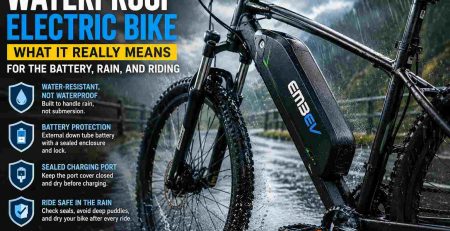
- Answer: No. Most batteries are water-resistant, meaning they can handle rain and splashes. They should never be submerged in water. Avoid using a pressure washer to clean your bike, as it can force water past the seals.
- Question: Why is my new battery not giving me the expected range?
- Answer: A new battery may need 3-5 full charge and discharge cycles to “break in” and reach its full capacity. If the range is still low after this period, consider factors like terrain, assist level, rider weight, and tire pressure, which all impact real-world range.
- Question: Can I use any charger with my battery?
- Answer: Absolutely not. You must use a charger that specifically matches your battery’s voltage and chemistry (e.g., a 48V Lithium-ion charger for a 48v battery ebike). Using the wrong charger is extremely dangerous and a major fire hazard.





LEAVE A COMMENT