




Exact BBSHD Bottom Bracket Size Made Simple
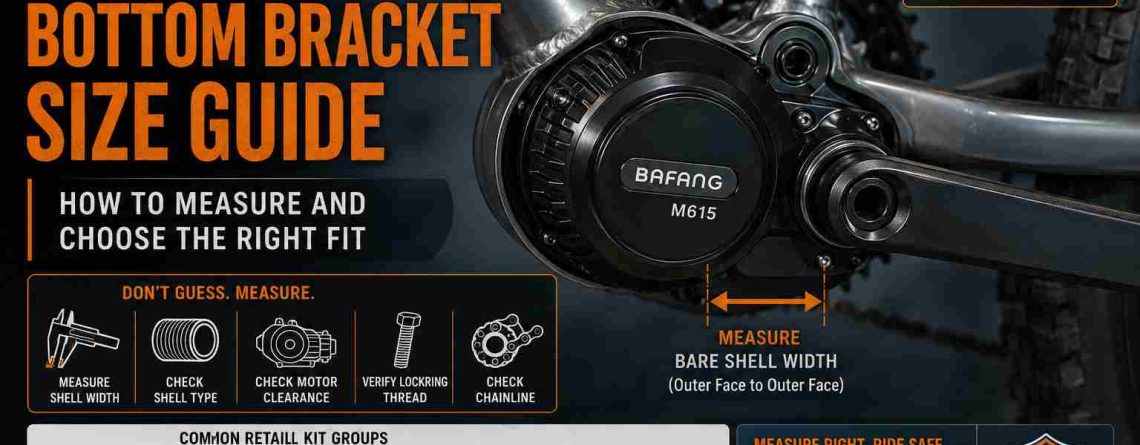
Quick answer: Measure the bare bottom bracket shell from one outer face to the other. Bafang’s official M615/MM G320 dimension table lists 68, 73, 83, 90, 100, 110, and 120 mm shell-width configurations. However, many aftermarket BBSHD kits are stocked in three broad retail groups: 68–73 mm, 100 mm, and 120 mm. Do not select a motor from tire width or bike type alone. Confirm the shell width, shell standard, motor-housing clearance, left-side lockring thread, and chainline before ordering.
How this guide was prepared: Motor dimensions come from Bafang’s M615 data. Shell dimensions come from published bicycle standards. Retail fitment notes are labeled because kit hardware varies.
In this guide
- Official dimensions vs retail kit sizes
- BBSHD bottom bracket size table
- How to measure your frame
- Where BBSHD spacers go
- Key fitment checks
- Common installation problems
- Frequently asked questions
Official Bafang Dimensions vs Common Retail Kit Sizes
BBSHD is the common aftermarket name for Bafang’s M615, also identified as the MM G320. Bafang’s OEM table lists shell-width values of 68, 73, 83, 90, 100, 110, and 120 mm, with different overall dimensions for several configurations. It is therefore inaccurate to say that Bafang recognizes only three shell widths.
Retail availability is different. Many sellers stock 68–73, 100, and 120 mm kit groups. An 83, 90, or 110 mm frame may need a seller-confirmed version and spacer plan. Do not assume that every OEM-listed width is a stocked retail SKU, or that the next longer kit will fit safely.
Best practice: Treat the Bafang dimension table as the official fitment reference and the seller’s product page as the source for the exact motor, spindle length, spacers, bolts, and lockrings that will arrive in your kit.
BBSHD Bottom Bracket Size Table
| Bare shell width | Bafang OEM table | Common aftermarket approach | Main point to check |
|---|---|---|---|
| 68 mm | Listed | Common 68–73 mm retail kit | Motor housing and chainstay clearance |
| 73 mm | Listed | Common 68–73 mm retail kit with 73 mm mounting hardware | Limited non-drive-side lockring thread |
| 83 mm | Listed | Availability varies; confirm the exact seller-supplied version | Spacer plan, fixing plate position, and chainline |
| 90 mm | Listed | Availability varies; some sellers may specify a longer kit with spacers | Do not choose a 100 mm kit without seller confirmation |
| 100 mm | Listed | Common 100 mm fat-bike retail kit | Wide chainstays and front chainring offset |
| 110 mm | Listed | Availability varies; a seller may specify a longer kit and spacers | Confirm hardware and exposed lockring thread |
| 120 mm | Listed | Common 120 mm extra-wide retail kit | Chainline, pedal stance, and frame clearance |
This table is not a substitute for a motor drawing. Frames with the same shell width can have different chainstays, welds, guides, and clearance.
How to Measure a Bottom Bracket for a BBSHD
1. Find the bottom bracket shell
The bottom bracket shell is the frame tube that holds the crank bearings. It sits at the lowest part of the main frame triangle. The BBSHD mounting section passes through this shell after the original crank and bottom bracket have been removed.
2. Measure the bare shell width
Use a metric caliper from one outer shell face to the other. Exclude cups, adapters, covers, lockrings, guides, and spacers. Keep the caliper square and take more than one reading.
Do not measure between the crank arms. Do not use spindle length. Do not choose the motor because the bike has fat tires. The shell width is the frame measurement that matters.

3. Identify the shell standard
The most direct candidates use an English-threaded shell, also called BSA, BSC, ISO, British, or Euro. It uses 1.37-inch by 24-TPI threads and has an internal diameter of about 33.7 mm. Bafang separately lists a JIS shaft standard; JIS is not another name for the frame’s BSA thread standard.
Check the full internal passage after removing the original bottom bracket. Paint, rust, burrs, welds, guides, or an out-of-round shell can block the motor. Do not force it through.
4. Check for a press-fit shell
A press-fit frame is not a direct fit. It needs an adapter for the exact standard, diameter, and width. Because the adapter changes effective width, select the motor and adapter as one fitment system.
5. Check the shape around the shell
Compare a motor drawing with the frame. Check flared chainstays, welds, kickstand plates, pivots, and cable guides. The gear housing must rotate into position without pressing against the frame.
BBSHD Spacers: Three Locations with Different Jobs
The word “spacer” can describe several different parts. Mixing them up can create poor chainline or an insecure fixing plate.
| Spacer location | Purpose | Effect to watch |
|---|---|---|
| Drive side, between motor housing and frame | Creates clearance for a chainstay, weld, or frame feature | Moves the motor and chainring outward and reduces left-side thread |
| Between motor mounting lugs and triangular fixing plate | Lets the fixing plate sit correctly on some 73 mm installations | Requires the correct longer M6 bolts and adequate bolt engagement |
| Non-drive side as part of a longer-motor fitment plan | Takes up unused width when an approved longer version is used | Must follow the seller’s hardware layout and keep the plate square |
Use the thinnest drive-side stack that gives clearance. Added thickness shifts the chainring outward and leaves less thread for the fixing plate and lockrings.
Special Note for a 73 mm Bottom Bracket
A common 68–73 mm kit is sold for both shell widths. A 73 mm shell leaves less thread on the non-drive side. Many 73 mm hardware kits use longer M6 bolts and spacers between the motor lugs and triangular fixing plate so the serrated plate can sit flat.
Do not remove fixing-plate spacers as a universal rule. Follow the supplied hardware layout. Avoid drive-side spacers unless clearance requires them. On some 73 mm installs, the outer aluminum cover may not fit. The inner steel lockring is the main structural fastener and needs safe engagement.
Six Checks That Decide Whether the Motor Really Fits
- Shell width: Match the bare frame measurement to a seller-confirmed motor configuration.
- Shell type: Confirm English/BSA threaded or identify the exact press-fit adapter system.
- Motor housing clearance: The housing must not press on a chainstay, weld, cable guide, or pivot.
- Lockring engagement: The main steel lockring needs enough clean thread to secure the unit.
- Chainline: The chainring should align well enough with the rear cassette for the intended gears.
- Frame condition: Do not fit the motor to a cracked, badly corroded, distorted, or poorly repaired shell.
Why chainline matters
Drive-side spacers and wide frames move the chainring outward. Poor chainline can cause noise, wear, chain drops, and limited use of large rear sprockets. A different-offset chainring may help if it clears the motor and frame.
Why the fixing plate matters
The serrated plate helps resist motor movement. It should sit flat with the correct bolts and spacers. A loose motor can rotate and damage the shell. Stop riding if it moves.
Safety warning: The M615 is a high-torque drive system. Do not grind the motor housing, remove structural frame material, force the unit through a tight shell, or accept weak lockring engagement. Where fitment is uncertain, have a qualified bicycle or e-bike technician inspect the frame and supplied kit.
Common BBSHD Fitment Problems
The motor passes through the shell but will not rotate into place
The gear housing is likely touching a chainstay, weld, cable guide, or frame plate. A thin drive-side spacer may help. However, stop if the needed spacing causes poor chainline or leaves too little thread for the main lockring.
The outer lockring will not thread on
This can happen on some 73 mm installations. First confirm that no unnecessary drive-side spacers were added. The inner steel lockring must have secure engagement. Do not treat the decorative outer cover as a substitute for a correctly installed inner lockring.
The motor is long enough, but the chainline is poor
Spindle length and chainline are separate. Check spacers, chainring offset, cassette position, and frame shape. A longer motor is not automatically better for a narrow shell.
The bike has an 83, 90, or 110 mm shell
Bafang lists these widths, but retail stock varies. Ask the seller to confirm the motor, spacers, fixing-plate hardware, and exposed thread. Never build a spacer plan from a product photo alone.
The bike has a press-fit shell
Identify the exact standard before buying an adapter. Press-fit is a family, not one size. The adapter and motor must match the shell diameter, shell width, and combined installation width.
Information to Record Before Ordering
- Bare shell width in millimeters
- Threaded or press-fit shell standard
- Clear internal passage and any internal obstruction
- Photos from the drive side, non-drive side, and below
- Chainstay shape next to the shell
- Rear cassette or freewheel type
- Current chainring size and desired gearing
- Bike model, frame size, and frame material
After confirming motor fit, choose a battery that matches the motor voltage, controller current, load, and range target. See our BBS02 vs BBSHD battery requirements guide for that separate decision.
BBSHD Bottom Bracket Size FAQ
What bottom bracket widths does Bafang list for the M615?
Bafang’s current MM G320 dimension table lists 68, 73, 83, 90, 100, 110, and 120 mm values for dimension C. Retail sellers may stock fewer broad kit groups, so confirm the exact product before ordering.
Will a standard BBSHD fit a 73 mm bottom bracket?
A common aftermarket 68–73 mm kit is sold for both widths. A 73 mm shell leaves less exposed thread on the non-drive side. Use the correct 73 mm bolts and fixing-plate spacers supplied or approved by the seller, and avoid unnecessary drive-side spacers.
Can I use a 100 mm BBSHD on a 68 mm frame?
A purpose-made spacer system may make some long-motor installations possible, but this is not the preferred choice for a normal 68 mm shell. The shortest correctly fitting motor usually gives a cleaner installation, fewer parts, and a narrower pedal stance.
Can spacers make a motor with a short mounting section fit a wider shell?
No. Spacers can take up extra length on a longer motor or create local frame clearance. They cannot extend a mounting section that is too short to pass through the shell and accept the fixing hardware.
Is a BSA shell the same as a JIS shaft?
No. BSA or English describes the frame’s threaded bottom bracket shell. JIS describes a shaft or crank-interface standard. They refer to different parts of the system.
Does a 33.7 mm internal diameter prove the frame will fit?
No. About 33.7 mm is typical for a clean English/BSA threaded shell, but the full passage must be clear and round. Shell width, frame shape, motor housing clearance, lockring thread, and chainline must also be checked.
Should I buy the longest BBSHD and use spacers?
No. Use the shortest seller-confirmed motor that fits the shell and clears the frame. Excess length can increase pedal stance and complicate the fixing hardware without improving performance.
Final Recommendation
Start with bare shell width, then verify the standard, clear passage, frame shape, lockring thread, fixing plate, and chainline. Keep Bafang’s official dimensions separate from a seller’s retail kit options. For 83, 90, or 110 mm shells, get a written recommendation for the exact kit and hardware. Careful measurement prevents a motor that passes through the shell but cannot be secured or aligned safely.












LEAVE A COMMENT