




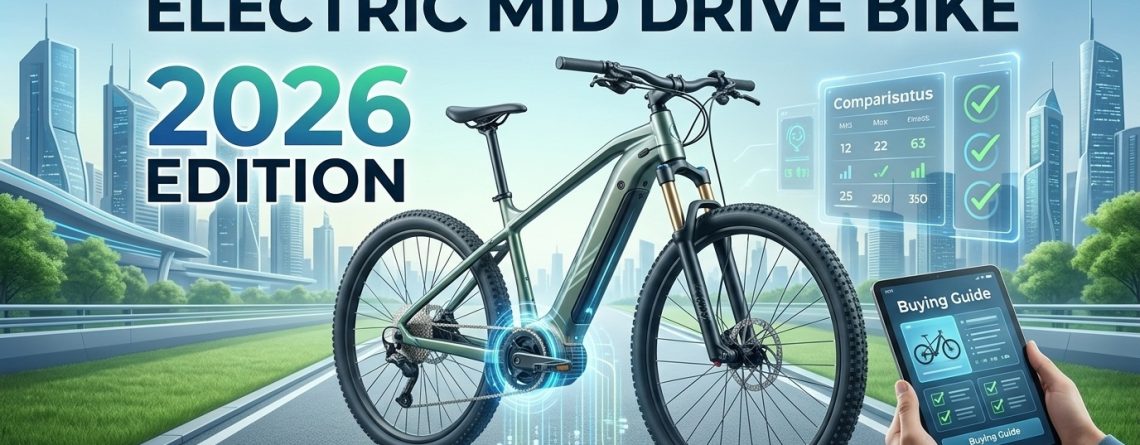
How to Choose Your Electric Mid Drive Bike
An electric mid drive bike uses a motor mounted near the bottom bracket, close to the pedals, instead of placing the motor inside the front or rear wheel. This central motor position helps the bike use the existing chain, gears, and cassette to deliver power more efficiently, especially when climbing hills, carrying cargo, or riding off-road.
For many riders, a mid-drive eBike feels more natural than a hub-drive bike because the motor power works through the same drivetrain as your legs. Instead of simply pushing the wheel, the system adds power where you pedal. This can improve balance, climbing ability, and control, but it also means battery choice, gear use, and drivetrain maintenance matter more.
This guide explains how electric mid drive bikes work, when they make sense, how they compare with hub motors, and what battery setup you should consider before buying a complete bike or building a conversion.
Quick Answer: Is an Electric Mid Drive Bike Worth It?
An electric mid drive bike is worth it if you ride hills, trails, long distances, cargo routes, or want a more natural pedaling feel. Compared with a hub motor, a mid-drive system usually offers better climbing torque, better weight balance, and more efficient use of gears. However, it can cost more, place more wear on the chain and cassette, and require more careful battery and drivetrain setup.
Planning a custom build or need a replacement battery that handles heavy climbing loads? Explore our [Verified Mid-Drive Battery Solutions & Conversion Packs] matched for 48V/52V high-performance systems.

What Is an Electric Mid Drive Bike?
An electric mid drive bike is an eBike with the motor installed in the center of the frame, usually around the bottom bracket area. The motor drives the crank, chain, and rear cassette, so it works through the bicycle’s normal gear system.
This is different from a hub motor eBike, where the motor sits inside the front or rear wheel and drives the wheel directly. A hub motor is usually simpler and cheaper, while a mid-drive motor is designed to work with the bike’s gears.
Because the motor sits low and central, the bike often feels more balanced. This is one reason mid-drive systems are common on electric mountain bikes, cargo eBikes, touring eBikes, and higher-performance conversion builds.
How Does a Mid Drive eBike Motor Work?
A mid drive eBike motor adds power through the crankset. When you pedal, sensors detect your movement or pedaling force. The controller then sends power from the battery to the motor. The motor turns the crank, which moves the chain and rear wheel.
Most mid-drive systems use one of two sensor types:
- Cadence sensor: Detects whether you are pedaling. It is simple and common on many conversion kits.
- Torque sensor: Measures how hard you are pedaling. It usually feels smoother and more natural.
The key advantage is that the motor can use the bike’s gears. On a hill, you can shift into a lower gear so the motor spins more efficiently. On flat roads, you can shift into a higher gear for speed. This is similar to how a car engine works with a transmission.
Electric Mid Drive Bike vs Hub Motor eBike
Both mid-drive and hub motor eBikes can work well, but they are better for different riders. The right choice depends on terrain, budget, riding style, and maintenance preference.
| Feature | Electric Mid Drive Bike | Hub Motor eBike |
|---|---|---|
| Motor position | Center of bike, near pedals | Inside front or rear wheel |
| Climbing ability | Usually better because it uses bike gears | Good on mild hills, weaker on steep climbs unless high power |
| Weight balance | More centered and natural | Can feel rear-heavy or front-heavy |
| Ride feel | More like strong pedaling assistance | More like being pushed or pulled by the wheel |
| Maintenance | More chain and cassette wear | Less drivetrain wear |
| Wheel service | Usually easier because the motor is not in the wheel | Rear wheel removal can be heavier and more difficult |
| Best for | Hills, trails, cargo, touring, performance riding | Flat commuting, simple builds, lower-cost eBikes |
When Should You Choose a Mid Drive Electric Bike?
A mid drive electric bike is usually the better choice when the ride requires torque, balance, or efficiency. It is especially useful when the motor needs to work under changing loads.
1. You Ride Hills Often
If your route includes steep roads, long climbs, or technical trails, a mid-drive motor can be a strong choice. Because the motor uses the bike’s gears, it can stay in a more efficient speed range instead of struggling at low wheel speed.
2. You Carry Cargo or a Heavy Rider Load
Cargo eBikes, touring bikes, and heavier riders place more demand on the motor and battery. A mid-drive setup can use lower gears to move heavier loads more smoothly, especially from a stop or on hills.
3. You Want Better Handling
Since the motor is mounted low and central, the bike often feels more balanced than a rear-hub motor bike. This matters for mountain biking, off-road riding, and any situation where weight distribution affects control.
4. You Want a Natural Pedaling Feel
A good mid-drive system, especially one with a torque sensor, can feel like your own legs are stronger rather than like a motor is pushing the bike. This is one reason many premium eBikes use mid-drive motors.
When Is a Hub Motor Still Better?
A mid-drive is not always the best answer. A hub motor may be better if you ride mostly flat roads, want a lower-cost system, or prefer simple maintenance.
Hub motors also do not send motor power through the chain and cassette. This means the drivetrain may last longer compared with a powerful mid-drive setup. For casual city riding, light commuting, or budget builds, a hub-drive eBike can still be a very practical choice.
Battery Choice for an Electric Mid Drive Bike
The battery is one of the most important parts of an electric mid drive bike. A strong motor will not perform well if the battery cannot supply enough current, fit securely on the frame, or provide enough watt-hours for your riding distance.
When choosing a battery, do not look only at voltage or amp-hours. You should also consider watt-hours, discharge capability, BMS rating, cell quality, mounting position, charger compatibility, and connector type.
Key Battery Specs to Check
| Spec | Why It Matters |
|---|---|
| Voltage | Must match the motor controller range. Common systems include 36V, 48V, 52V, and higher-voltage performance setups. |
| Amp-hours | Helps estimate capacity, but should be considered together with voltage. |
| Watt-hours | The best simple number for comparing range. Wh = Voltage × Ah. |
| BMS current rating | Must support the current demand of the motor and controller. |
| Cell quality | Affects voltage sag, cycle life, safety, and long-term reliability. |
| Mounting style | Must fit the frame safely without interfering with pedaling, suspension, or cables. |
For many mid-drive conversion riders, a quality 48V eBike battery or 52V eBike battery offers a practical balance of power, range, and compatibility. Riders using more demanding motors or carrying heavier loads should pay close attention to the continuous discharge rating and the BMS, not just the advertised capacity.

52V SuperShark eBike Battery Pack
Engineered to deliver high continuous output for demanding mid-drive builds, preventing voltage sag or power cutoffs during steep climbs.
- Grade-A Cells: Built with premium Samsung or LG cells for exceptional safety, reliable capacity, and extended cycle life.
- Smart BMS: High-current protection board safely manages steady power output under heavy cargo or off-road riding loads.
- Secure Mounting: Hard-shell downtube case features a reinforced locking base designed to withstand intense terrain and trail vibrations.
Bafang Mid-Drive Conversion Kit
Engineered to transform a standard frame into a powerful hill-climbing eBike, utilizing your bicycle gears for maximum riding efficiency.
- System Synergy: Controller and battery BMS are perfectly paired to deliver smooth, consistent torque without unexpected shutoffs.
- Proper Chainline: Includes optimized chainring profiles designed to reduce shifting noise, prevent chain drops, and minimize drivetrain wear.
- Plug-and-Play: Includes complete waterproof wiring harnesses, quick-response brake cutoff sensors, and an intuitive handlebar display unit.
How Much Range Can a Mid Drive eBike Get?
Range depends on battery capacity, motor power, rider weight, terrain, assist level, tire type, wind, temperature, and how often you shift correctly. A mid-drive motor can be efficient because it uses gears, but poor gear use can waste energy and create heat.
As a rough guide, many riders estimate range using watt-hours. A moderate eBike may use around 15 to 25Wh per mile in normal riding. Heavy riders, steep hills, soft tires, high assist levels, and cold weather can increase energy use.
| Battery Example | Approx. Capacity | Typical Use Case | Estimated Range |
|---|---|---|---|
| 48V 14Ah | About 672Wh | Commuting, mixed city riding | About 25–40 miles |
| 52V 14Ah | About 728Wh | Stronger commuter or light trail setup | About 28–45 miles |
| 52V 20Ah | About 1040Wh | Longer rides, heavier riders, hills | About 40–65 miles |
These are only planning ranges. Real-world results can be lower or higher. If your riding includes steep climbs or high assist levels, choose a larger battery and a pack that can handle higher continuous current safely.
Best Uses for an Electric Mid Drive Bike
Commuting
A mid-drive commuter eBike is useful if your daily route includes hills, bridges, stop-and-go traffic, or long distances. The centered motor position also helps keep the bike balanced when adding racks, panniers, or a larger battery.
Mountain Biking and Trail Riding
Mid-drive systems are popular on electric mountain bikes because they provide strong climbing torque and better handling on technical terrain. The ability to shift into a lower gear helps the motor climb without demanding excessive wheel torque at low speed.
Cargo and Utility Riding
Cargo bikes benefit from mid-drive motors because heavy loads require controlled torque. A mid-drive setup can help move cargo more smoothly, especially when starting from a stop or climbing hills.
DIY eBike Conversions
A mid-drive conversion kit can be a good option if you already own a suitable bicycle frame. Many riders choose this path because it allows them to keep a familiar frame while upgrading the bike with motor assistance.
However, conversion builds require careful checking of bottom bracket size, chainline, battery mounting space, brake sensors, display wiring, and controller compatibility. A poor installation can cause chain drop, drivetrain wear, or unsafe battery mounting.
Electric Mid Drive Bike Conversion Kit: What to Check Before Buying
If you are building your own electric mid drive bike, the motor kit is only part of the decision. The frame, battery, drivetrain, brakes, and riding purpose all affect whether the final bike works well.
1. Bottom Bracket Compatibility
Most mid-drive conversion motors install through the bottom bracket shell. Before buying, check the bottom bracket width and type. Many common kits are designed for standard threaded bottom brackets, but not every frame will fit without adapters or modification.
2. Chainline and Gear Range
Because the motor drives the chain, chainline matters. A poor chainline can cause noisy shifting, chain drop, or faster wear. A wide-range cassette can help climbing, but the drivetrain must be strong enough for motor torque.
3. Battery Mounting Space
Check whether the frame has enough space for a downtube, triangle, or rear-rack battery. The battery should be secured firmly and positioned where it does not interfere with knees, cables, suspension, or bottle mounts.
4. Brake Performance
A faster, heavier eBike needs reliable brakes. Hydraulic disc brakes are often preferred for heavier or higher-power builds. Brake sensors can also help cut motor power when braking.
5. Controller and Battery Compatibility
The battery voltage must match the controller. The BMS must also support the controller’s current demand. If the motor draws more current than the battery can safely provide, you may experience voltage sag, cutoffs, overheating, or reduced battery life.
If you are planning a conversion, you can compare motor and battery options through EM3ev’s eBike battery and conversion kit categories before choosing a final setup.
Common Mistakes When Choosing a Mid Drive eBike
Choosing Wattage Only
Many riders focus only on motor wattage. Wattage matters, but torque, controller tuning, gearing, and battery current capability are just as important. A well-matched 750W mid-drive can feel better than a poorly matched higher-wattage system.
Ignoring the Battery BMS
A battery may have enough capacity on paper but still fail to support high current demand. Always check the BMS rating and the quality of the cells, especially for high-power mid-drive motors.
Using the Wrong Gear
Mid-drive motors work best when you shift correctly. Starting in a high gear or climbing without downshifting can strain the motor, chain, cassette, and battery.
Underestimating Drivetrain Wear
Because motor power goes through the chain and cassette, a mid-drive bike can wear drivetrain parts faster than a hub motor bike. This is normal, but it should be planned for.
Buying a Battery That Does Not Fit the Frame
Battery fit is not only about voltage and capacity. The pack must physically fit the frame and remain secure during riding. This is especially important for off-road bikes and high-vibration riding.
Maintenance Tips for Mid Drive eBike Owners
A mid-drive eBike can be very reliable if maintained properly. The most important areas are the chain, cassette, chainring, motor mounting bolts, battery contacts, and wiring.
- Clean and lubricate the chain regularly.
- Check chain stretch more often than on a normal bicycle.
- Shift before steep climbs instead of forcing the motor in a high gear.
- Inspect motor mounting bolts and battery mounts after rough rides.
- Keep connectors dry and clean.
- Use the correct charger for your battery voltage and chemistry.
- Store the battery in a cool, dry place when not in use.
Who Should Buy an Electric Mid Drive Bike?
An electric mid drive bike is a strong choice for riders who care about climbing ability, balanced handling, and efficient power delivery. It is especially suitable for:
- Riders who live in hilly areas
- Mountain bike and trail riders
- Commuters with long or mixed-terrain routes
- Cargo eBike users
- Riders who want a more natural pedal-assist feel
- DIY builders who understand drivetrain and battery compatibility
A hub motor eBike may still be better for riders who want a simple, lower-cost, low-maintenance setup for flat city riding.
Final Buying Checklist
Before buying or building an electric mid drive bike, check these points:
- Does the motor match your terrain and riding load?
- Is the battery voltage compatible with the controller?
- Can the battery supply enough continuous current?
- Does the battery physically fit the frame?
- Is the drivetrain strong enough for motor torque?
- Are the brakes suitable for the added speed and weight?
- Can you maintain the chain, cassette, and chainring regularly?
- Does the bike comply with your local eBike regulations?
If you are building a conversion, it is usually better to plan the motor and battery together instead of choosing them separately. A strong motor with a weak battery will not perform well, and a large battery that does not fit safely can create handling and reliability problems.
Conclusion
An electric mid drive bike is one of the best choices for riders who need climbing power, balanced handling, and efficient use of gears. It can feel more natural than a hub motor eBike and perform better on hills, trails, cargo routes, and longer rides.
The main tradeoffs are cost, drivetrain wear, and the need for better component matching. To get the best result, choose the motor, battery, BMS, charger, gearing, and frame fit as one complete system.
For riders planning a reliable build, the battery should not be an afterthought. Start with the motor requirements, estimate your range needs, then choose a quality eBike battery that matches the voltage, current demand, and frame space of your electric mid drive bike.
Ready to Build or Upgrade Your Mid-Drive eBike?
Don’t let a poorly matched battery limit your motor’s true climbing potential. Whether you need a custom-engineered 52V pack with a high-current smart BMS or a complete plug-and-play conversion system, we have verified solutions ready for your frame.
- Verified Compatibility: Zero voltage sag under heavy technical trail loads.
- Grade-A Cells Only: Premium Samsung & LG cells tailored for maximum lifespan.
- Custom & Bulk Support: Engineering support tailored for DIY builds and OEM projects.
FAQ: Electric Mid Drive Bike
Is an electric mid drive bike better than a hub motor eBike?
An electric mid drive bike is usually better for hills, trails, cargo, and riders who want a natural pedaling feel. A hub motor eBike is often simpler, cheaper, and easier for flat commuting.
Do mid drive eBikes use more battery?
Not always. A mid-drive motor can be efficient because it uses the bike’s gears. However, high assist levels, steep hills, heavy loads, and poor shifting can increase battery use.
What battery is best for a mid drive eBike?
The best battery depends on the motor voltage, controller current, riding distance, and frame space. Many riders use 48V or 52V batteries for a balance of power and range, but the BMS and cell quality are just as important as voltage.
Are mid drive eBikes good for hills?
Yes. Mid-drive eBikes are usually very good for hills because the motor can use the bicycle’s gears. Shifting into a lower gear helps the motor climb more efficiently.
Do mid drive eBikes need more maintenance?
Yes, usually. Since the motor sends power through the chain and cassette, these parts may wear faster than on a hub motor eBike. Regular chain cleaning, lubrication, and replacement are important.
Can I convert a normal bike into a mid drive eBike?
Yes, many bicycles can be converted with a mid-drive kit, but you must check bottom bracket compatibility, battery mounting space, chainline, brakes, and controller compatibility before starting.
Is a 48V or 52V battery better for a mid drive eBike?
A 48V battery is common and works well for many standard systems. A 52V battery can provide slightly higher voltage and stronger performance if the controller supports it. Always confirm compatibility before using a different voltage.




LEAVE A COMMENT