




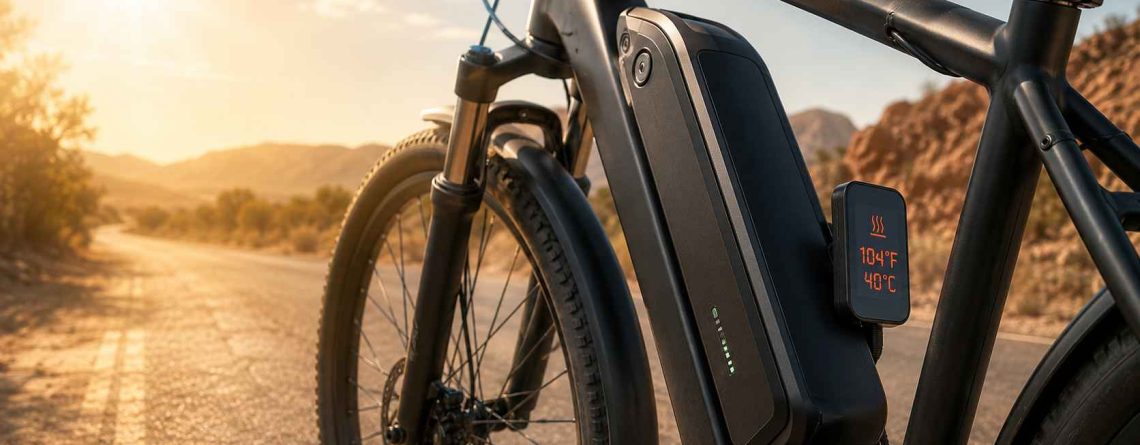
Expert Guide: How Hot Is Too Hot for an eBike Battery?
How hot is too hot for an eBike battery? As summer temperatures climb, extreme heat can noticeably reduce battery performance and speed up cell aging. The risk becomes much more serious when high ambient temperatures are combined with steep hills, heavy cargo, high assist levels, direct sunlight, or charging immediately after a demanding ride.
For many eBike batteries, an ambient temperature above 104°F (40°C) is too hot for charging. It is also a useful caution point for riding and storage. Some batteries can discharge at higher temperatures, but the exact limit depends on the battery cells, BMS, controller, and manufacturer.
Always follow the operating and charging limits listed in your battery manual.
Quick Answer
For many eBike systems, 104°F (40°C) is the upper charging limit. Do not charge a battery that is still hot after riding.
Move the battery to a dry, shaded, ventilated area and allow it to cool naturally. Stop using the battery if it becomes unusually hot, swollen, damaged, or produces smoke, hissing, or a chemical smell.

eBike Battery Temperature Chart
The following ranges provide a general summer guide. Your battery manufacturer’s instructions should always take priority.
| Temperature | Risk Level | Recommended Action |
|---|---|---|
| Below 86°F / 30°C | Normal | Ride normally and park the bike in the shade. |
| 86–95°F / 30–35°C | Warm | Watch for unusual heat during long climbs or high-power riding. |
| 95–104°F / 35–40°C | High-heat caution | Avoid direct sun, heavy loads, and charging immediately after riding. |
| Above 104°F / 40°C | Too hot for charging on many systems | Move the battery to a cooler location and wait before charging. |
| Near or above 122°F / 50°C | Serious operating concern | Stop riding and allow the battery to cool. |
| Battery surface near 140°F / 60°C | Severe heat warning | Stop using the battery and arrange a professional inspection. |
A weather app only shows the surrounding air temperature. The cells inside the battery can become much hotter than the air around the bike.
Air Temperature Is Not the Same as Battery Temperature
An eBike battery produces heat while supplying current. The more current the controller requests, the more heat the battery may generate.
Battery temperature can rise faster during:
- Steep hill climbing
- Full-throttle acceleration
- Heavy cargo riding
- High pedal-assist levels
- Long rides at high speed
- Use with a high-current controller
- Operation with old or damaged cells
Direct sunlight also adds heat. A dark battery case may absorb sunlight, while a parked car, closed garage, or storage box can trap hot air around the pack.
Starting a ride with an already hot battery leaves less temperature margin for hills, acceleration, and heavy loads.
Is It Normal for an eBike Battery to Feel Warm?
A small increase in temperature after riding or charging can be normal. The battery is transferring energy, and some of that energy becomes heat.
However, the battery should not suddenly become much hotter than usual or become too hot to touch comfortably.
Stop riding or charging if the battery:
- Becomes extremely hot
- Causes the bike to shut down repeatedly
- Produces an unusual chemical smell
- Makes a hissing or crackling sound
- Shows swelling or case distortion
- Leaks fluid
- Produces smoke
- Has a melted or discolored connector
Do not open the battery case to inspect the cells. Internal battery diagnosis and repair should only be completed by a qualified lithium-ion battery technician.
Why Does an eBike Battery Overheat?
1. High current demand
The controller draws more current during acceleration, hill climbing, and heavy-load riding. If the cells or BMS cannot support that demand, the battery may heat up or enter protection mode.
Battery cells, BMS current limits, wiring, and connectors should all be matched to the controller’s continuous and peak current.
2. Old or weak battery cells
Battery cells develop higher internal resistance as they age. Higher resistance produces more heat when current passes through the battery.
Common signs of aging cells include:
- Shorter riding range
- Large voltage drops during acceleration
- Power loss on hills
- Early low-battery warnings
- Cutoffs under heavy load
- More heat than the battery produced when new
3. Loose or damaged connectors
A loose battery terminal or undersized connector creates electrical resistance. That resistance can produce concentrated heat at the connection point.
Inspect external connectors for:
- Dark or burned marks
- Melted plastic
- Loose pins
- Corrosion
- Damaged insulation
- A burnt smell
Do not continue riding with an overheating battery terminal or connector.
4. Direct sunlight
A battery can become hot even when the bike is not running. Direct sunlight may heat the cells before the ride begins.
Avoid leaving the bike or battery in full sun for long periods, especially before a demanding ride.
5. Charging immediately after riding
A battery may still be hot inside after a long climb or high-power ride. Charging adds more heat before the cells have returned to a normal temperature.
There is no universal waiting time. Wait until the battery has returned to the charging range stated by its manufacturer.
Can You Charge an eBike Battery When It Is Hot?
Do not charge an eBike battery above the temperature range listed in its manual. For many systems, the upper charging limit is approximately 104°F (40°C).
After a demanding summer ride, place the battery in a dry, shaded, ventilated area and allow it to cool naturally.
Do not cool the battery with:
- Ice
- Cold water
- A freezer
- A refrigerator
- Wet towels
- Compressed refrigerant
Rapid cooling may create condensation inside the battery case or electrical connectors.
Use only a charger that matches the battery voltage, charging profile, connector, and polarity. A connector that physically fits is not proof of compatibility.
What to Do If Your eBike Battery Gets Too Hot
- Stop riding or charging. Turn off the bike and disconnect the charger.
- Move away from direct sunlight. Place the bike or battery in a dry, shaded, ventilated location.
- Do not restart it at full power. Repeated testing may create additional heat.
- Allow the battery to cool naturally. Do not cover it or place it inside a sealed container.
- Inspect the battery exterior. Look for swelling, cracks, damaged terminals, melted plastic, or moisture.
- Check the mount and connector. Local heat may indicate a loose or damaged electrical connection.
- Do not recharge a damaged battery. A swollen, leaking, smoking, or strongly smelling pack should be removed from use.
- Contact the manufacturer or a qualified technician. Repeated overheating requires proper diagnosis.
If the battery is smoking, hissing, rapidly heating, or showing signs of fire, move away and contact emergency services immediately, as recommended by FEMA’s lithium-ion battery safety guidance. Do not place yourself at risk to move the battery.
How to Keep an eBike Battery Cool in Summer
Park in the shade
Avoid leaving the bike in direct sunlight. Take a removable battery indoors when the bike will be parked for a long period.
Ride during cooler hours
Morning and evening rides reduce the starting temperature of the battery, motor, and controller.
Use a lower assist level
Lower assistance reduces current demand. Add more pedal effort during long climbs instead of using maximum assist continuously.
Take breaks on long hills
A short stop in the shade allows heat to leave the battery, motor, and controller.
Maintain correct tire pressure
Low tire pressure increases rolling resistance. The motor then needs more power to maintain the same speed.
Keep connectors clean and secure
Clean and secure electrical connections reduce resistance and local heating.
Match the battery to the controller
The battery cells, BMS, wiring, and connector must support the controller’s continuous and peak current.
EM3ev offers multiple battery configurations using name-brand cells and Smart BMS protection. However, voltage, current rating, connector, charger, and physical fit must still be checked for each bike.
Why Does an eBike Battery Cut Out in Hot Weather?
An eBike that shuts down in hot weather does not always have a permanently failed battery. The BMS or controller may temporarily stop power output to protect the electrical system.
Possible causes include:
- Battery temperature protection
- Controller thermal protection
- High current demand
- Cell voltage dropping under load
- An aging or unbalanced cell group
- A loose or overheated connector
- A battery that is undersized for the controller
If the bike works again after cooling, do not assume the problem is solved. Repeated thermal cutoffs may indicate an aged battery, a current mismatch, a damaged connection, or another electrical fault.
Frequently Asked Questions
Is 100°F too hot for an eBike battery?
An ambient temperature of 100°F is close to the upper charging limit used by many eBike systems. Riding may still be allowed by the manufacturer, but direct sun, steep hills, high assist, and heavy cargo can raise the internal battery temperature further.
What temperature is too hot to charge an eBike battery?
For many eBike batteries, charging above 104°F or 40°C is not recommended. Always check the exact charging range in the battery manual.
How long should an eBike battery cool before charging?
There is no universal waiting time. Wait until the battery has returned to the charging temperature range approved by its manufacturer.
Can I leave my eBike battery in a hot car?
No. A parked car can trap heat and expose the battery to temperatures far above the outside air temperature. Store the battery in a dry, shaded, ventilated location.
Does a Smart BMS prevent all overheating?
No. A Smart BMS can monitor and respond to certain temperature, current, and voltage conditions. It cannot repair damaged cells, correct a loose connector, or make an incompatible charger safe.
Final Answer
For many eBike systems, 104°F or 40°C is the key upper charging limit and a practical summer caution point. Some batteries can discharge at higher temperatures, but the permitted range varies by model.
Protect the battery from direct sunlight, reduce heavy loads during extreme heat, and let the pack cool before charging.
Stop using the battery if you notice swelling, smoke, unusual smells, damaged connectors, repeated shutdowns, or extreme heat.
A battery that is correctly matched to the controller, BMS, charger, wiring, and riding load will normally handle summer conditions more reliably than a system selected by voltage and capacity alone.
Choose the Right Battery for High-Load Riding
For cargo riding, steep hills, high-current controllers, or long summer trips, choose a battery based on more than voltage and amp-hours.
Review the battery cell configuration, continuous discharge capability, BMS current rating, connector, charger, and available mounting space.



LEAVE A COMMENT