



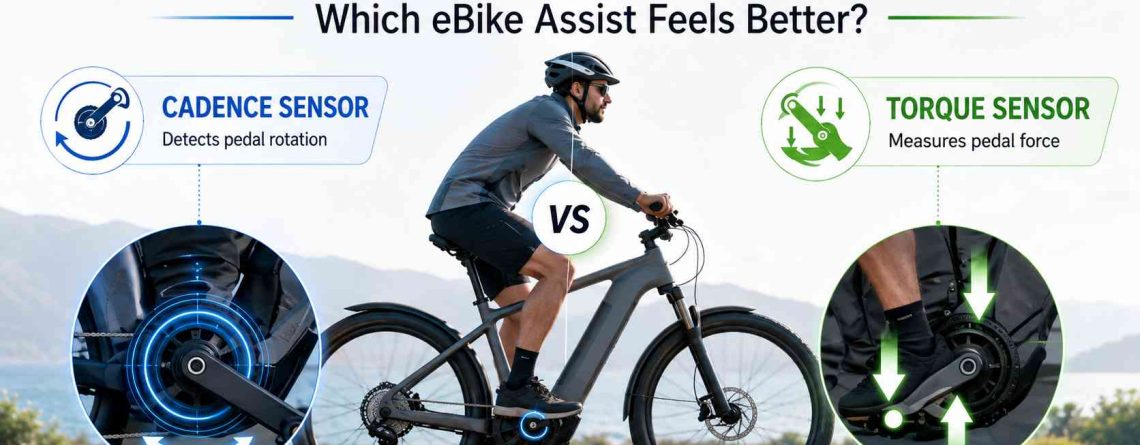
Torque Sensor vs Cadence Sensor: Which eBike Assist Feels Better?
The main difference between a torque sensor and a cadence sensor is what each system measures. A cadence sensor detects pedal rotation, while a torque sensor measures how much force you apply to the pedals. That difference changes how quickly and proportionally an eBike delivers pedal assist.
Quick Answer
- Cadence sensors detect whether and how fast the pedals are turning.
- Torque sensors measure pedal force and usually combine it with cadence data.
- Torque-based assist normally feels more proportional to rider effort.
- Cadence-based assist can feel easier and more consistent with less rider effort.
- Neither system is automatically better for every rider.
Two eBikes can use similar motors and batteries but feel very different when you pedal. One major reason is the pedal-assist sensor.
The choice between a torque sensor and a cadence sensor affects how the motor responds to your legs. Understanding that difference can help you choose an eBike that feels right for your riding style.
Torque Sensor vs Cadence Sensor: Quick Comparison
A cadence sensor responds mainly to pedal movement, while a torque sensor changes assistance according to rider effort.
| Feature | Cadence Sensor | Torque Sensor |
|---|---|---|
| Measures | Pedal rotation or cadence | Pedal torque plus cadence in many systems |
| Assist response | Based mainly on pedaling and selected PAS level | Can scale with how hard the rider pedals |
| Ride feel | Steady and easy to maintain | More proportional and bicycle-like |
| Rider input | Less dependent on pedal force | More closely linked to pedal effort |
| Best suited to | Relaxed cruising and simple assist | Responsive riding and natural control |
How Does a Cadence Sensor Work?
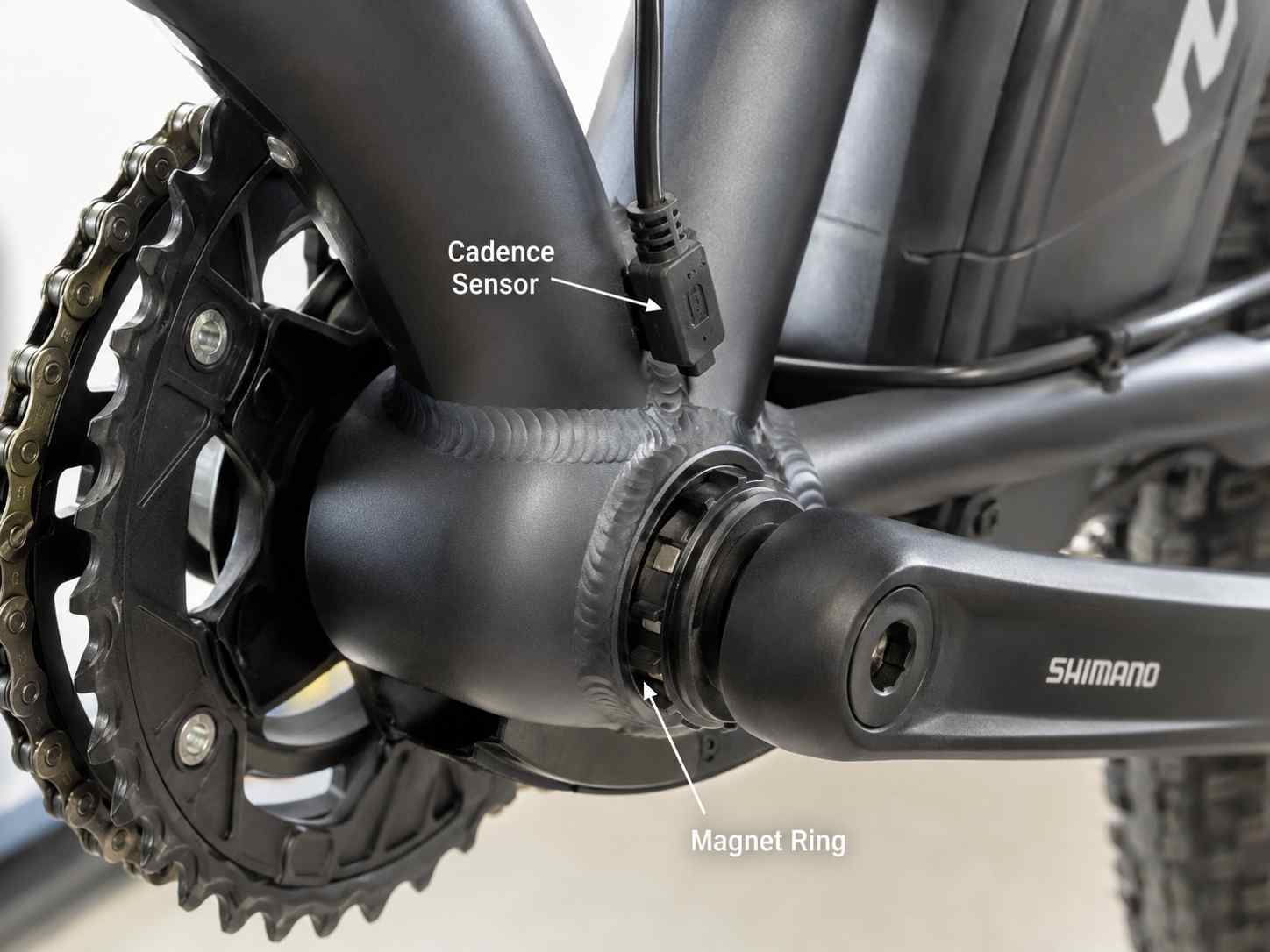
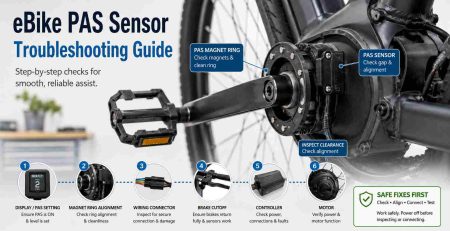
A cadence sensor tells the controller that the cranks are rotating, but a basic cadence sensor does not measure how hard you are pushing on the pedals.
Many cadence systems use a magnet ring or another rotational sensor near the crank or bottom bracket. As the pedals turn, the sensor sends pulses to the controller.
The controller then uses those signals and the selected pedal-assist level to decide how much motor assistance to provide.
This does not mean every cadence-based eBike behaves like a simple on/off switch. The controller software can change assist according to pedal speed or other settings. Sensor resolution and controller tuning also affect how quickly assistance starts and stops.
The main limitation is simpler: pedal rotation alone cannot tell the system whether you are barely touching the pedals or pushing hard against a hill.
How Does a Torque Sensor Work?
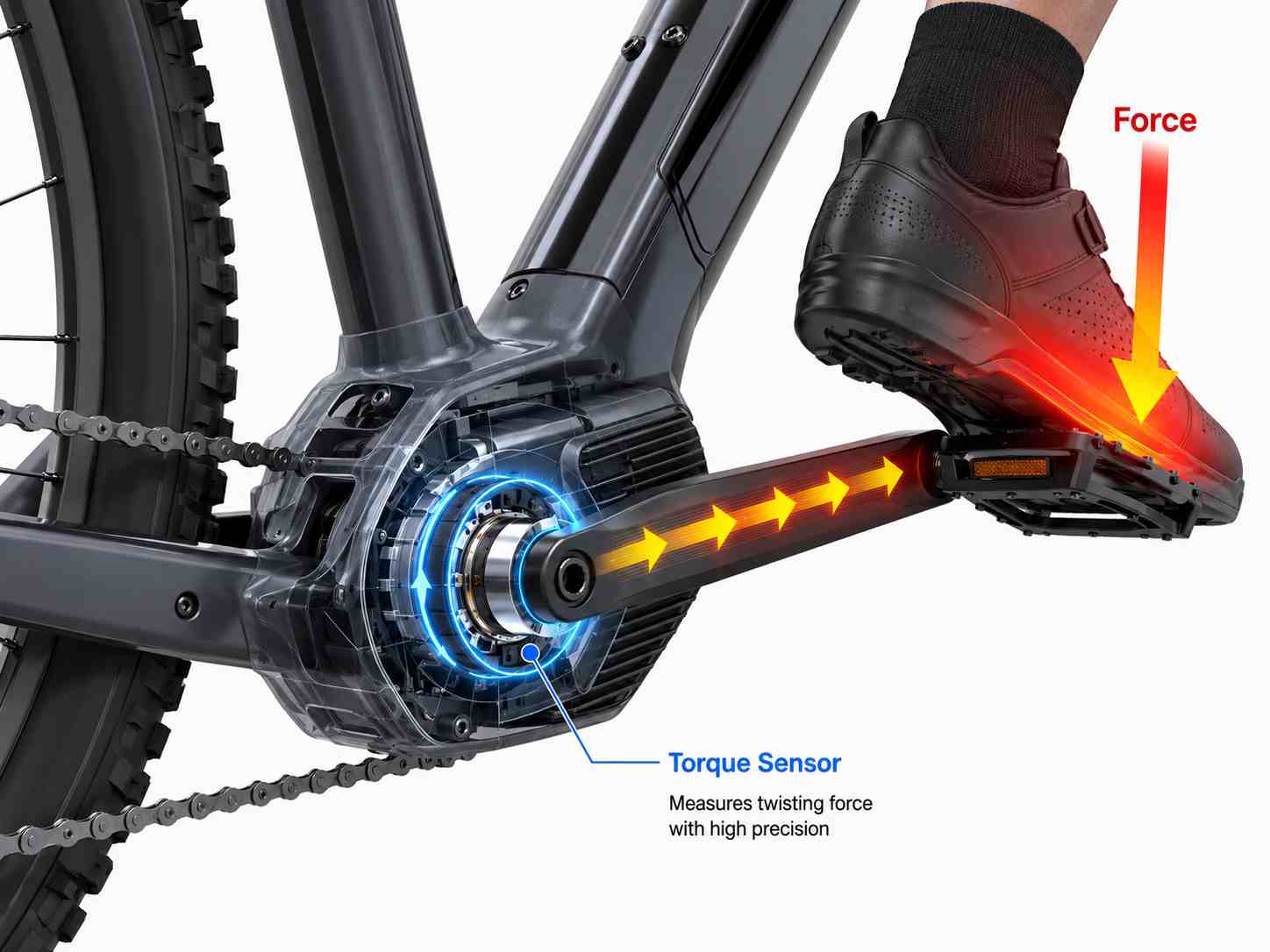
A torque sensor measures pedal force, allowing the controller to increase or decrease motor assistance as rider effort changes.
Torque can be measured in several parts of the drivetrain, including the bottom bracket or other force-sensitive components.
The controller can combine torque with cadence to estimate rider input. Pedal harder and the system can provide more assistance. Reduce your effort and assistance can fall with it.
This usually creates a more proportional feel. Instead of selecting a PAS level and letting the motor do most of the adjustment, your legs become part of the control system.
Which Sensor Feels Better to Ride?
Torque sensing usually feels more natural, while cadence sensing can feel easier and more relaxed.
A torque-sensing eBike tends to reward changes in pedal pressure. This can give the rider precise control when starting, changing speed, or responding to changing terrain.
A cadence-sensing system can be attractive when you want consistent help without needing to push harder to request more motor power. Select the desired assist level, keep the cranks moving, and let the controller provide the programmed support.
Neither ride style is objectively correct. The better system depends on how involved you want your own effort to be.
Does a Torque Sensor Improve Battery Range?
A torque sensor can help a controller deliver power more closely in proportion to rider effort, but it does not guarantee better battery range.
Energy use depends on motor power, assist settings, speed, terrain, rider effort, controller programming, bike weight, and riding conditions.
A well-tuned torque system may reduce unnecessary assistance when the rider pedals lightly. However, a rider who constantly requests high assistance can still use substantial battery energy.
Likewise, a well-configured cadence system can use moderate power when lower PAS levels are selected.
Sensor type affects how assistance is controlled. It does not replace the normal factors that determine eBike range.
Which Should You Choose?
Choose based on the ride feel you want rather than assuming one sensor technology is always superior.
Consider a torque sensor if you want:
- Assist that responds directly to pedal effort
- A more traditional bicycle-like feel
- Fine control when effort changes quickly
- A ride where you remain actively involved in power delivery
Consider a cadence sensor if you want:
- Simple and predictable pedal assist
- Steady motor support while the pedals keep turning
- Less need to push harder when more assistance is selected
- A relaxed cruising style
If you are also comparing motor layouts, see the mid-drive eBike motor guide. Sensor choice and motor type are separate decisions, so this article does not treat torque sensing as the same thing as choosing a mid-drive system.
Frequently Asked Questions
Is a torque sensor better than a cadence sensor?
Not for every rider. Torque sensing gives more proportional control, while cadence sensing can provide easier, steadier assistance. The better choice depends on the riding experience you prefer.
Does a cadence sensor measure pedal force?
A basic cadence sensor does not. It detects pedal movement or rotational speed. Controller programming then determines how that cadence signal becomes motor assistance.
Does a torque sensor also measure cadence?
Many torque-based pedal-assist systems also use cadence information because pedal force and crank speed together give a better picture of rider input.
Which sensor is better for hills?
A torque sensor can make assistance respond naturally as you push harder on a climb. A cadence system can also provide strong hill assistance, but the response depends more on the selected PAS level and controller settings.
Final Answer
In a torque sensor vs cadence sensor comparison, the real difference is control. Cadence sensing reacts mainly to pedal rotation. Torque sensing adds information about how hard you pedal.
Choose torque sensing when you want proportional, rider-led assistance. Choose cadence sensing when you prefer steady, low-effort support. Motor power, battery range, and overall eBike quality still depend on the complete system—not the sensor alone.


LEAVE A COMMENT