





eBike Battery Maintenance: How to Care for Your Battery
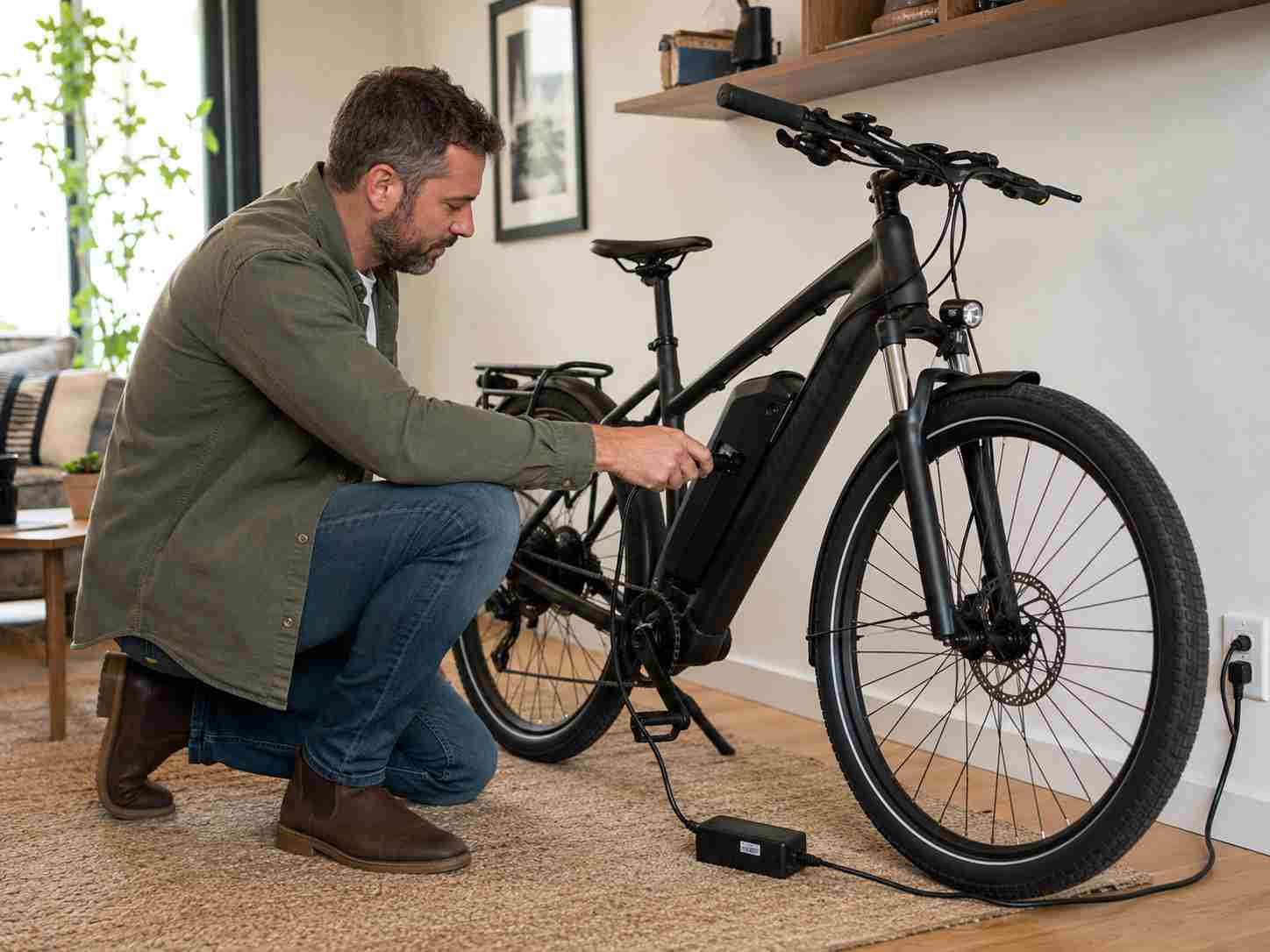
Use a charger designed for your battery’s voltage and chemistry. The charger is part of the battery system, so its output voltage, connector, and charging behavior must be compatible with the pack. If you are not sure whether a charger is suitable, check the specifications before connecting it rather than assuming that a matching plug means it is safe to use.
You also do not need to run a lithium-ion battery completely empty before every charge. For normal riding, charging before the pack becomes deeply discharged is usually more practical and avoids leaving it at a very low state of charge. After a demanding ride, especially in very hot or cold conditions, allow the battery to return toward a moderate temperature before charging.
2. Protect the Battery From Extreme Heat and Cold
High temperature can place extra stress on lithium-ion cells. Avoid leaving the battery for long periods inside a hot vehicle, beside a heater, or in strong summer sunlight when a cooler location is available. If the pack becomes unusually hot during normal riding or charging, stop using it until the cause has been identified.
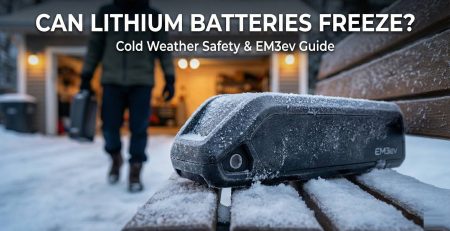
Cold conditions can temporarily reduce battery performance and increase voltage sag under load. If a battery has been stored in very cold conditions, let it warm naturally in a dry, moderate environment before charging. Do not try to speed up the process by placing the battery directly against a heater or another strong heat source.
3. Store the Battery Properly
If the bike will not be used for several weeks or months, do not simply leave the battery connected and forget about it. A cool, dry storage area with a stable temperature is normally a better choice than a place exposed to direct sunlight, moisture, freezing conditions, or large temperature changes.
For long-term storage, follow the battery manufacturer’s recommended storage charge level rather than leaving the pack completely full or nearly empty for months. Check the battery from time to time so normal self-discharge does not leave it at an extremely low charge level. If your battery has a power switch or a specific storage mode, follow the manufacturer’s instructions.
4. Keep the Battery Case and Contacts Clean
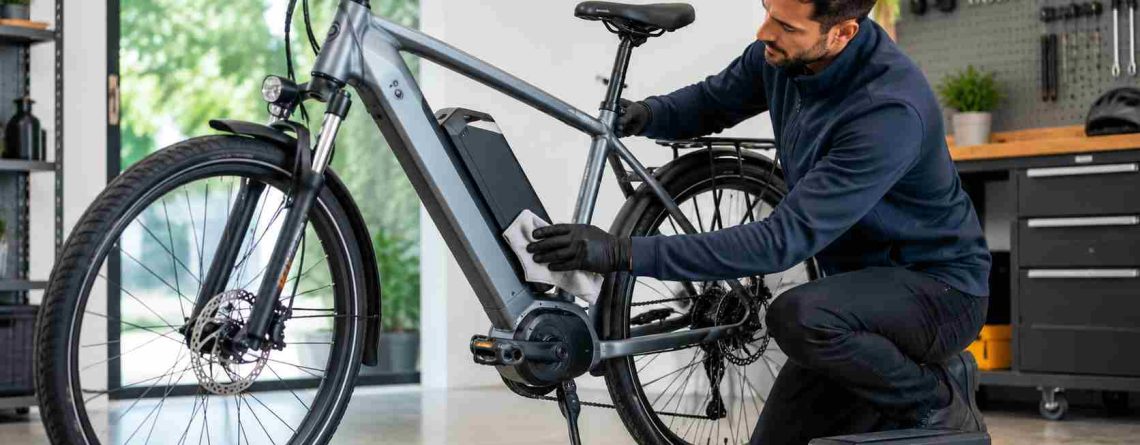
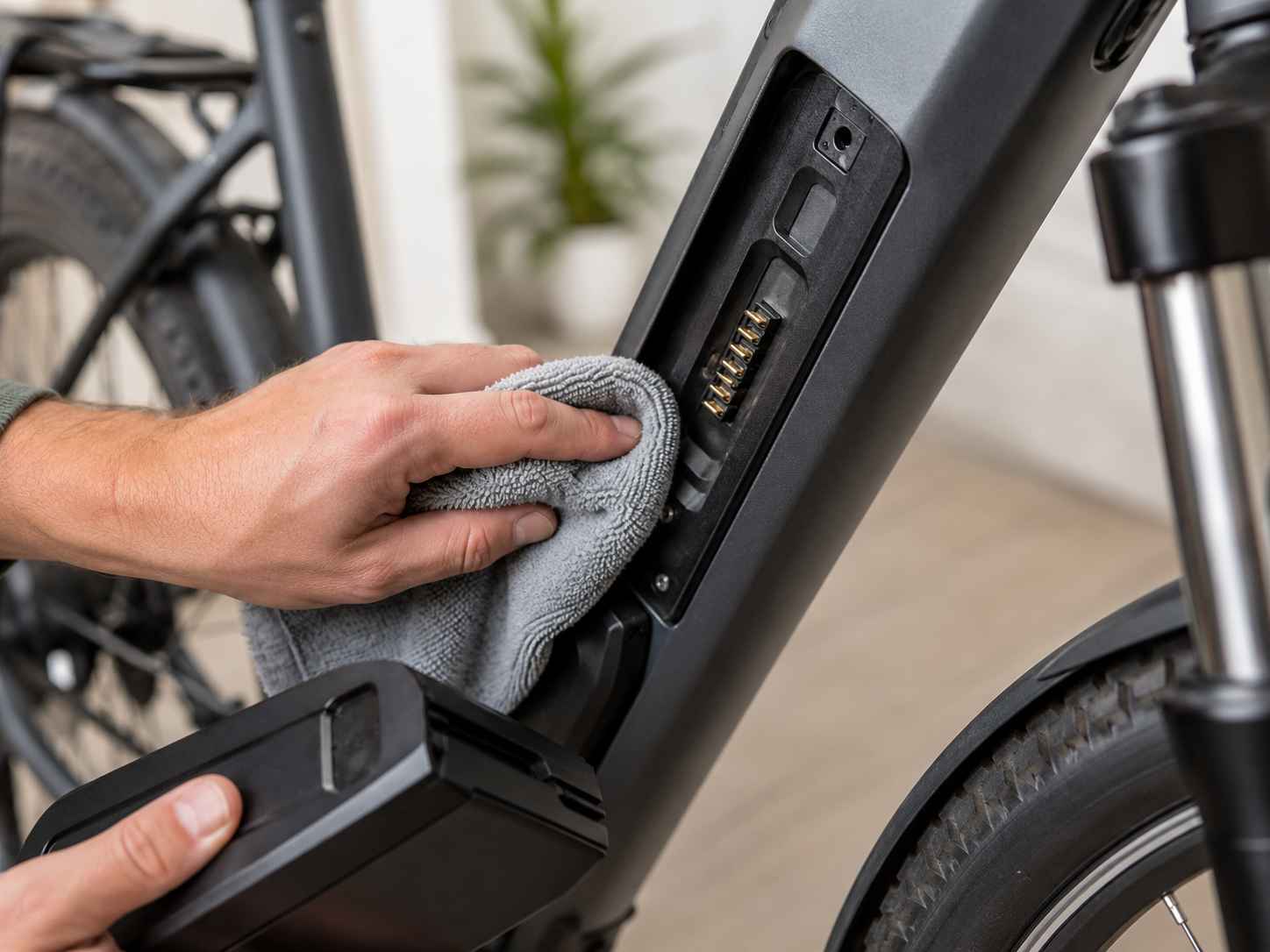
An eBike battery does not need aggressive cleaning. Wipe the outside of the case with a soft, slightly damp cloth and dry it afterward. Avoid pressure washers, strong cleaning solvents, and direct water jets around the charging port, electrical connectors, case seams, or battery mount.
Take a quick look at the electrical contacts while cleaning. Dirt, corrosion, bent contacts, or signs of overheating can lead to poor electrical connections. If a terminal looks damaged or burned, stop using the battery and have the connection inspected rather than scraping, bending, or modifying the contact yourself.
5. Check the Battery Mount and Hardware
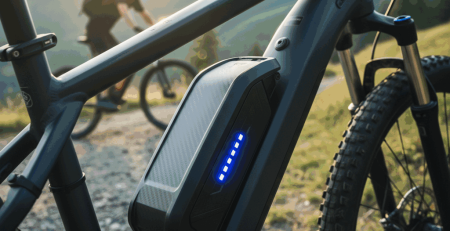
A removable eBike battery should sit securely in its mount. Over time, vibration, rough roads, and repeated removal can loosen mounting hardware or create movement between the battery and its rail. A pack that moves during a ride can place extra stress on the case, connectors, and mounting system.
Check the mount during normal bike maintenance and after unusually rough rides. Make sure the battery still locks into place correctly and that visible mounting hardware remains secure. If the pack starts rattling, moving more than before, or cutting out when the bike hits bumps, solve the mounting or connection problem before continuing regular use.
6. Protect the Battery From Water and Physical Damage
Many eBike batteries are designed for normal outdoor riding, but water resistance does not mean a battery should be submerged or cleaned with high-pressure water. After riding in heavy rain, wipe the battery and surrounding area dry and check that the charging port is clean and dry before connecting the charger.
Physical damage deserves even more attention. A hard crash or impact can affect cells and electrical parts inside the pack even when the outside damage looks limited. A cracked case, crushed section, damaged connector, or loose internal component should be inspected before the battery is returned to normal use.
7. Avoid Leaving the Battery Deeply Discharged
Using a battery until the bike reaches its normal low-voltage cutoff from time to time is different from storing a nearly empty battery for weeks or months. A battery already at a very low charge level has less margin for normal self-discharge while it sits unused.
For everyday riding, recharge when it is convenient instead of deliberately trying to force the battery to zero before every charge. If you finish a ride with very little charge remaining and do not expect to ride again soon, avoid putting the bike into long-term storage in that condition.
8. Pay Attention to Changes in Battery Behavior
Maintenance also means learning what is normal for your battery. Riding range naturally changes with speed, hills, temperature, tire pressure, rider weight, wind, and assist level, so one shorter-than-usual ride does not automatically mean the battery has a problem.
Repeated changes are more useful warning signs. A battery may need inspection if its range drops sharply under similar riding conditions, the bike begins cutting out under loads that were previously normal, charging becomes irregular, the case becomes unusually hot, or the battery no longer fits securely in its mount.
Signs That Need Professional Attention
Stop using or charging a battery if you notice swelling, a cracked or deformed case, leaking material, a strong unusual smell, smoke, hissing, burned connectors, or heat that is clearly abnormal. These are not normal maintenance issues, and a damaged lithium-ion battery should not be opened at home to inspect or replace individual cells.
Gradual capacity loss in an older pack is different from a sudden physical or electrical problem. Batteries naturally lose some usable capacity as they age, so an older pack may eventually become inconvenient even though it still operates normally. The key is to separate gradual aging from sudden heat, damage, swelling, or electrical faults.
Common eBike Battery Maintenance Mistakes
Many battery-care problems come from simple habits rather than complicated technical failures. Common examples include using an unknown charger, storing a nearly empty pack for months, leaving the battery in a very hot location, pressure washing the bike with the battery installed, ignoring a loose mount, or continuing to ride with damaged electrical contacts.
Another common mistake is assuming that battery maintenance means opening the battery case. It usually does not. Cell groups, busbars, wiring, and the BMS can carry significant electrical current, so routine owner maintenance should stay focused on correct charging, storage, cleaning, inspection, mounting, and normal use.
When Maintenance Is No Longer Enough
Good maintenance can reduce avoidable stress, but it cannot restore cells that have permanently lost capacity or repair physical damage inside the pack. If an older battery no longer provides useful range, or a qualified technician has confirmed that replacement is the right option, the next step is to choose a battery that matches the bike’s voltage, controller requirements, connector, and available mounting space. When making the switch, always ensure you drop off your retired pack at a certified eBike battery recycling program rather than throwing it in the regular trash.
Ready for an upgrade? Explore our full collection of reliable, high-performance eBike batteries to find the perfect match for your ride.

EM3ev 36V Super Shark eBike Battery
A downtube-mounted 36V battery option for compatible 36V eBike systems. The current Super Shark range includes a 10S5P high-energy configuration with a smart BMS and genuine branded cells.
Best suited for: riders replacing a compatible 36V frame-mounted battery for commuting, touring, or general eBike use.
EM3ev 48V 21700 King Shark eBike Battery
A 48V battery built around a 13S4P 21700-cell configuration. It is designed for compatible 48V systems that need a practical balance of capacity, current capability, and frame-mounted packaging.
Best suited for: compatible 48V commuter, trekking, hub-motor, and mid-drive systems where the King Shark case fits the frame.
EM3ev 36V Super Shark eBike Battery
A downtube-mounted 36V battery option for compatible 36V eBike systems. The current Super Shark range includes a 10S5P high-energy configuration with a smart BMS and genuine branded cells.
Best suited for: riders replacing a compatible 36V frame-mounted battery for commuting, touring, or general eBike use.View 36V Super Shark
EM3ev 48V 21700 King Shark eBike Battery
A 48V frame-mounted battery built around a 13S4P 21700-cell configuration. It is designed for compatible 48V systems that need a practical balance of capacity, current capability, and frame-mounted packaging.
Best suited for: compatible 48V commuter, trekking, hub-motor, and mid-drive systems where the King Shark case fits the frame.View 48V King Shark
Frequently Asked Questions
How often should I maintain my eBike battery?
There is no single service interval that fits every battery. A quick visual check during normal bicycle maintenance is useful, while the case, mount, connectors, and charging behavior should be checked whenever something changes or after the bike has been exposed to rough riding conditions.
Should I charge my eBike battery after every ride?
Not necessarily. Whether you recharge after each ride depends on how much energy you used and when you plan to ride again. The important point is to avoid routinely leaving the battery deeply discharged, especially when the bike will be stored for a longer period.
Can I wash an eBike battery with water?
Avoid pressure washing the battery or directing water into charging ports and electrical connectors. For normal cleaning, a soft damp cloth is usually enough, followed by drying the case and checking that connectors are clean before the battery is used or charged again.
Should I remove the battery when storing the bike?
For longer storage, removing a removable battery can make it easier to keep the pack in a dry location with a moderate temperature and check it from time to time. Integrated batteries may have different storage requirements, so follow the instructions supplied with the specific bike and battery system.
Final Takeaway
Good eBike battery maintenance does not need to be complicated. Use the correct charger, avoid unnecessary heat, store the pack properly, keep the case and contacts clean, check the battery mount, and pay attention to changes in temperature, range, charging, or electrical behavior.
The aim is not to keep a lithium-ion battery like new forever, because battery cells naturally age with time and use. A sensible maintenance routine simply helps reduce avoidable stress, identify damage early, and get reliable service from the battery throughout its normal working life.





LEAVE A COMMENT