




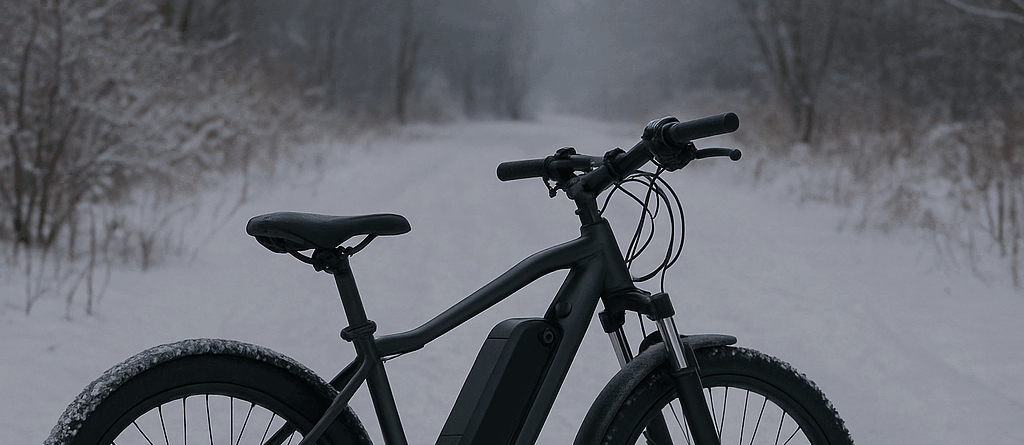
Fix Why Ebike Battery Drains Fast in Winter Now
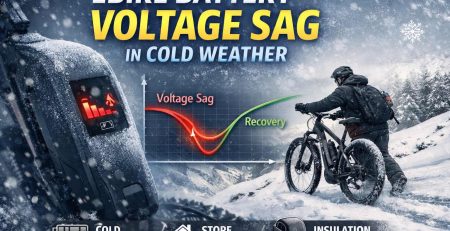
Understanding why ebike battery drains fast in winter is key to solving range anxiety. This issue occurs because cold temperatures thicken the electrolyte fluid inside lithium-ion cells, increasing internal resistance and causing voltage sag.
There is nothing quite like the confusion of seeing your fully charged e-bike drop to 50% after just a few miles on a frosty morning. I’ve been there—stranded three miles from home in the snow because I didn’t account for the temperature drop.
Many riders panic, thinking their battery is dying or broken. The good news? It’s likely just physics. Cold weather affects e-bike batteries in very specific ways, but it doesn’t mean your battery is permanently damaged.
In this guide, we will break down the science behind the drain, the simple steps you can take to prevent it, and how to keep your bike battery in winter healthy for years to come.

Don’t panic—your battery isn’t broken, it’s just cold.
The Science: Why Ebike Battery Drains Fast in Winter
To understand the problem, you need to visualize what’s happening inside the case. Your lithium ion battery relies on the movement of ions between the cathode and anode through a liquid electrolyte.
Think of that electrolyte like maple syrup:
- In Summer (Warm): The syrup is thin and runny. Lithium ions swim through it effortlessly, providing instant power.
- In Winter (Cold): The syrup turns into a thick, sticky sludge. The ions have to fight to move through it.
This struggle creates internal resistance. When you ask the motor for power (throttle or pedal assist), the battery has to work twice as hard to push those ions through the “sludge.” This causes the voltage to drop momentarily (voltage sag), tricking your bike’s controller into thinking the battery is emptier than it actually is.
Winter Range Loss Estimates
Here is a realistic look at what to expect from a bike battery in winter regarding usable capacity:
| Temperature | Efficiency Loss | Estimated Range (if 40mi normally) |
|---|---|---|
| 60°F+ (15°C+) | 0% (Normal) | 40 miles |
| 32°F (0°C) | 15% – 20% Drop | ~32 miles |
| 15°F (-10°C) | 30% – 40% Drop | ~24 miles |
| -5°F (-20°C) | Up to 50% Drop | ~20 miles |
Ebike battery cold weather performance refers to the reduced efficiency of lithium-ion cells when temperatures drop below freezing. In cold climates, riders often experience a temporary range loss of 20% to 50% because the chemical reactions inside the battery slow down, increasing internal resistance and voltage sag.
How to Prevent Ebike Battery Drain in Cold Weather
You can’t change the weather, but you can change how you treat your gear. Here are simple steps to maximize your range during winter rides.
1. Bring the Battery Indoors
Never leave your battery on the bike in a freezing garage or shed overnight. Always store your battery inside where it is warm. If the battery starts the ride at room temperature (68°F), you will keep the battery performing much better than if it starts frozen.
The “One-Hour” Thaw Rule:
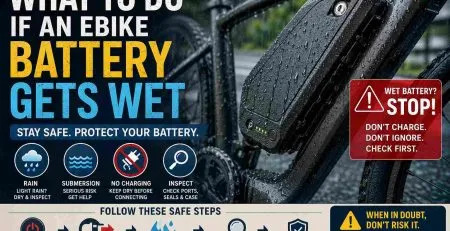
When you bring a freezing cold battery into a warm, toasted living room, condensation can form on the casing—just like water droplets on a cold soda can in summer.
If you plug the charger in immediately while the battery is damp with condensation, you risk a short circuit.
Pro Tip: Wait at least one hour after bringing the battery inside before you plug it in. This gives the battery time to reach room temperature naturally and ensures any moisture has evaporated. It requires patience, but it is the best way to protect the delicate Battery Management System (BMS) inside.
2. Insulate the Battery
Once you are outside, the wind chill will try to cool the battery down. You can buy neoprene covers, or even wrap the battery in a thermal layer. This helps retain the heat generated by the chemical reactions during discharge.
3. Start Riding Immediately
Don’t clip the cold battery onto the bike and wait 20 minutes. Install it right before you ride. Using the battery keeps the internal chemistry active and warm.
4. Check Your Tire Pressure (The Invisible Drain)
Here is a factor most riders ignore: air contracts in the cold. A tire that was perfectly inflated at 70°F might be dangerously soft at 25°F.
Soft tires create more rolling resistance. It’s like trying to ride through wet sand. Your motor has to push harder to maintain speed, which sucks energy from the battery faster.
- The Fix: Check your tire pressure before every winter ride. I recommend running your tires near the maximum recommended PSI listed on the sidewall during winter. This reduces friction and helps you glide easier, saving precious battery life.
5. Adjust Your Riding Style
In summer, you might mash the throttle and zip around in “Turbo” mode without a second thought. In winter, that riding style kills your range.
Rapid acceleration pulls a massive amount of current. In cold weather, this high current causes the voltage to sag instantly, potentially triggering the bike’s low-voltage cutoff even if you have 40% charge left.
Try these adjustments:
- Pedal at the start: Always pedal to get the bike moving from a dead stop. Don’t rely solely on the throttle.
- Lower the Assist: Drop from Level 5 to Level 2 or 3. You will work a little harder, but your battery will thank you with extra miles.
- Spin, Don’t Grind: Use lower gears and spin the pedals faster (higher cadence). This is more efficient for the motor than grinding in a high gear.
Combat Winter Range Loss: Upgrade Your Power
Sometimes, an old or cheap battery is the real culprit. Generic batteries suffer from massive voltage sag in the cold. High-quality cells (like Samsung or LG) handle winter stress much better.
If you are tired of range anxiety, upgrading to a high-capacity EM3ev pack can solve the problem by giving you a massive “buffer” of energy.
EM3ev 48V Super Shark
Best for: Winter Power & Speed.
The higher 48V voltage keeps your bike zippy even when the cold tries to drag it down. Smart BMS protects cells in freezing temps.
EM3ev 52V Jumbo Shark Battery
Best for: Maximum Range.
With massive capacity, you can lose 30% to the cold and still make it home with power to spare—thanks to the larger reserve that keeps performance steady even in winter conditions.
FAQ: Winter Ebike Battery Care
Why does my ebike battery die so fast in winter?
Cold weather increases the internal resistance of the battery cells. The energy is used up heating the battery internally rather than powering the motor, and “voltage sag” causes the system to cut off earlier than usual.
Should I leave my ebike battery plugged in all winter?
No. If you aren’t riding for a long time, store the battery at 50%–60% charge. Do not keep it on the charger continuously, and check the voltage once a month to ensure it hasn’t dropped too low.
At what temperature is it unsafe to ride an ebike?
You can ride in very cold temps (-4°F or lower) without damaging the electronics, provided the battery was warm when you started. However, never charge the battery if it is near or below freezing.
Long-Term Storage: Not Riding Until Spring?
If you decide the snow is too deep and you want to store your e-bike for 3 months, don’t just leave the battery in the garage.
- Disconnect it: Remove the battery from the bike.
- Check the Charge: Aim for 50% to 60% (often 2 LEDs on a 4-LED indicator).
- The Monthly Check-in: Batteries naturally self-discharge over time. Set a reminder on your phone to check the voltage once a month. If it drops too low, top it up briefly. A battery that drops to 0% and sits there for weeks may never wake up again.
Final Thoughts
Winter doesn’t have to mean the end of your riding season. By understanding why ebike battery drains fast in winter, you can adjust your habits: keep it warm, charge your battery indoors, and manage your expectations regarding range.
Remember the simple formula: Charge Warm, Ride Immediately, Insulate.
To keep your battery performing at its peak, treat it like a living thing—keep it cozy, don’t freeze it, and it will power your electric bike reliably through the snow and ice.

LEAVE A COMMENT