




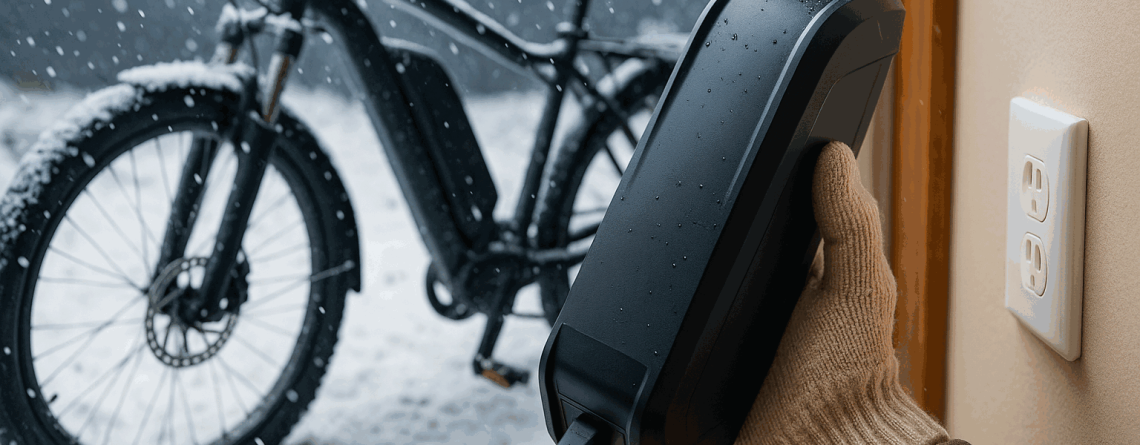
How to Charge Ebike Battery in Cold Weather (Safety Guide)
To safely learn how to charge ebike battery in cold weather, always bring the battery indoors and let it warm up to room temperature (at least 50°F / 10°C) for 1–2 hours before plugging it in. Never charge a lithium battery below freezing (32°F / 0°C), as this causes permanent internal damage and fire risks.
We have all been there. You finish a freezing winter ride, your fingers are numb, and you just want to park the bike in the garage, plug it in, and run inside for a hot coffee.
Stop right there. That simple act could ruin your battery forever.
Charging is the most critical moment for lithium ion batteries during winter. While riding in the cold is generally safe (though you might lose some range), charging a cold battery triggers chemical reactions that can destroy the cells instantly.
This guide explains exactly why cold weather affects e bike battery health and provides simple steps to keep your power pack running for years, no matter how low the thermometer drops.

Rule #1: Never charge in a freezing garage. Always bring it inside.
The Danger Zone: Why Cold Charging is Risky
You might wonder, “If I can ride in the cold, why can’t I charge in the cold?”
It comes down to chemistry. When you ride, lithium ions move from the negative side to the positive side. This process is relatively robust. However, when you charge, the ions move back to the anode.
In cold temperatures, the electrolyte (the liquid inside the battery) thickens. If you try to force energy into the battery when it’s freezing, the ions can’t move fast enough. Instead of storing safely, they stick to the surface of the anode, forming metallic lithium plating.
The Result? Permanent capacity loss and, in severe cases, internal short circuits.
Safe Ebike Battery Charging Temperature Chart
Use this chart to determine when it is safe to plug in your charger.
| Temperature Range | Status | Action |
|---|---|---|
| 50°F to 77°F (10°C to 25°C) | ✅ Ideal | Charged at room temperature. Safe to plug in immediately. |
| 32°F to 50°F (0°C to 10°C) | ⚠️ Caution | Charge slowly (lower amps) if possible. Better to warm it up first. |
| Below 32°F (Below 0°C) | 🛑 DANGER | DO NOT CHARGE. Risk of permanent damage. Bring inside to thaw. |
The Science: Why Cold Charging Damages Batteries
You might wonder, “If I can ride in the cold, why can’t I charge in the cold?”
It comes down to chemistry and viscosity. Inside your battery, lithium ions move through a liquid electrolyte between the cathode and anode. When temperatures drop, this electrolyte becomes thick and sluggish, significantly increasing internal resistance.
1. The Risk of Lithium Plating
When you ride (discharge), the process is naturally exothermic (produces heat), which helps the battery function. However, when you charge the battery, ions are forced back into the anode’s graphite structure. In freezing conditions, the ions cannot move fast enough to enter the anode. Instead, they pile up on the surface, forming metallic lithium plating. This acts like plaque in arteries, permanently reducing capacity and creating a high risk of internal short circuits.
2. Why Charging is Slower
This increased resistance is also why ebike batteries charge slower in cold temperatures. A high-quality BMS (Battery Management System) will detect this resistance and automatically reduce the charging current (amps) to protect the cells. If your battery charges unusually slowly in winter, it is a sign that the chemistry is struggling against the cold.
Step-by-Step: How to Warm Up and Charge Safely
Follow these simple steps to ensure performance and safety during the winter months.
Step 1: Disconnect and Bring Indoors
After your ride, turn off the system. Remove the battery from the bike frame immediately. Do not leave it in the garage or shed, even if it is insulated. The goal is to get the battery at room temperature.
Step 2: The “Thaw” Period (Wait 1–2 Hours)
This is the most crucial step. Just because the plastic casing feels warm doesn’t mean the cells inside are warm. How to warm up an ebike battery before charging safely?
Simply let it sit in a heated room (65°F–70°F) for at least one hour.
- If outside was 32°F (0°C): Wait 1 hour.
- If outside was 15°F (-10°C): Wait 2+ hours.
Warning: Do not use a hair dryer, space heater, or place it on a radiator. Rapid heating causes internal condensation (moisture), which can short-circuit the BMS.
Step 3: Plug in and Monitor
Once the battery has thoroughly warmed to room temperature, connect the charger. Ensure you are using the manufacturer-supplied charger. It is now safe to charge the battery fully. You might notice the charging speed is slightly slower than in summer; this is normal as the BMS regulates the current for safety.
Step 4: Post-Charge Care
Once full (or at 80% for better longevity), unplug it. If you aren’t riding for a few days, keep the battery inside. Remember the golden rule: Ride in the cold, but store it indoors. Only clip it back onto the bike right before you are ready to ride.

Patience pays off. Letting the battery thaw prevents “lithium plating.”
Do’s and Don’ts for Winter Charging
DO THIS
- Store it indoors: Always bring the battery inside for charging and storage.
- Wait 1 hour: Let the battery acclimate before plugging in.
- Check voltage: Monitor health regularly.
- Ride often: Using pedal assist keeps the battery warm during use.
AVOID THIS
- Don’t charge frozen: Never below 32°F (0°C).
- Don’t use heaters: No hair dryers or radiators.
- Don’t leave in garage: Even insulated garages get too cold.
- Don’t ignore dampness: Wipe off snow/condensation first.
How to Store Ebike Battery in Winter (Long-Term Guide)
If you plan to put your bike away for the entire winter season, following the correct storage protocol is just as important as knowing how to charge it. Improper storage can lead to deep discharge, rendering the battery unchargeable in spring.
Follow these tips to maintain ebike battery health in winter charging downtimes:
1. The Ideal Charge Level (40% – 60%)
Never store a battery at 100% or 0% for long periods.
- At 100%: The cells are under high stress, which degrades capacity faster.
- At 0%: The battery will naturally self-discharge over time. If it drops below the critical voltage threshold, the BMS may permanently shut down the pack (brick it) for safety.
The best way to charge an ebike battery in winter for storage is to aim for roughly 50% (often roughly 3.8V per cell).
2. The Best Temperature to Store Ebike Battery
Temperature stability is key. The best temperature to store ebike battery packs is between 50°F and 77°F (10°C – 25°C).
- Avoid: Unheated sheds, garages, or damp basements.
- Do: Store it indoors, such as in a closet or a utility room inside your house.
3. Monthly Voltage Check
Set a reminder on your phone to check your battery once a month. If the charge indicator drops below 40%, give it a short “top-up” charge (30 minutes) to bring it back to the safe storage range.
Need a Battery Built for Tough Conditions?
Generic batteries often lack the sophisticated BMS (Battery Management System) needed to protect cells in winter. High-quality packs monitor individual cell temperatures to prevent charging when it’s unsafe.

EM3ev 48V Jumbo Shark Battery
Best for: Maximum Range.
Winter Endurance. High-capacity cells provide the extra range buffer you need when cold weather reduces efficiency.
EM3ev 52V King Shark
Best for: Winter Power & Speed.
Smart Protection. Equipped with a Bluetooth BMS that lets you see internal temperatures on your phone, so you know exactly when it’s safe to charge
FAQ: Common Winter Charging Questions
Can you charge an e-bike battery in the cold garage?
It is not recommended. Unless your garage is heated and stays above 50°F (10°C), it is likely too cold for safe charging. It is always safer to bring the battery inside your home.
Why does my e-bike charge slower in winter?
This is a safety feature. Cold temperatures increase internal resistance. A smart charger or BMS may reduce the current (amps) to protect the cells from stress, leading to longer charging times.
How do I warm up an ebike battery before charging?
The safest way is time. Bring it indoors and let it sit at room temperature for 1–2 hours. Do not place it directly on a heater or use a heat gun, as this can damage the plastic casing and cause condensation inside the pack.
Should you charge an ebike battery indoors in winter?
Yes, absolutely. Unless your garage is climate-controlled and stays above 50°F, you should charge the battery indoors. This is the single most effective way to prevent lithium plating and extend your battery’s lifespan.
How to keep ebike battery warm in winter while riding?
To maintain ebike battery cold weather performance while riding, you can use a neoprene battery cover. These covers provide thermal insulation, trapping the heat generated by the battery’s internal resistance. Additionally, try to start your ride immediately after bringing the warm battery out of the house to minimize heat loss.
What are common ebike battery charging mistakes to avoid in winter?
The biggest mistakes include charging immediately after a cold ride (without thawing), using external heaters (hair dryers) to warm the battery, and leaving the battery attached to the bike in a freezing shed overnight.
Final Thoughts
Winter riding is exhilarating, but it demands a little extra care for your gear. By following these simple steps—bringing your battery inside, letting it thaw, and keeping it battery warm—you will prevent costly damage.
Remember: battery performance starts with how you treat it when you are off the bike. Keep it cozy, charge it carefully, and it will power your adventures for many winters to come.



LEAVE A COMMENT