




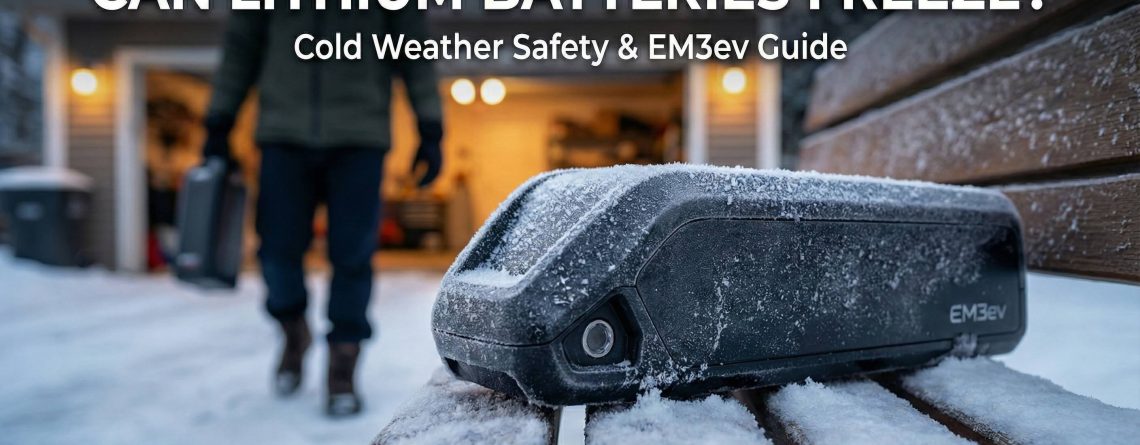
Can Lithium Batteries Freeze? (The Ultimate Guide)
Can lithium batteries freeze? Yes, but the process differs from how water turns to ice. At extreme temperatures typically between –4°F and –20°F (–20°C to –29°C), the liquid electrolyte inside a lithium-ion cell thickens and effectively crystallizes. This physical change drastically increases the internal resistance, making it difficult for ions to move. While the battery can often survive storage in the cold, charging and discharging it while frozen causes irreversible failure.
I still remember the first time I learned about the relationship between lithium ion batteries and extreme cold the hard way. It was a biting January morning, roughly 5°F (-15°C), and I had left my ebike battery in the unheated garage overnight. When I tried to power it up, the display flickered and died. I thought I had broken it forever.
It’s a panic many of us feel when our tech shuts down in winter. You might wonder, “Did the liquid inside actually turn to ice?” or “Is this permanent?”

The truth is, while the battery itself is robust, the chemistry inside is delicate. Whether you are dealing with an ebike, a camera, or just storing backups, understanding how cold temperatures affect lithium ions is critical to saving your wallet from a costly replacement.
Quick Summary
Don’t have time for the science? The golden rule is simple: Never charge below freezing (32°F / 0°C). Discharge is usually okay, but charging causes instant damage.
Key Takeaways: Cold Weather Survival
- Freezing Risk: Electrolyte becomes viscous below -4°F (-20°C).
- Charging Rule: NEVER charge a lithium battery below freezing (32°F / 0°C).
- Performance: Expect a 20-40% temporary range loss in winter.
- Storage: Store at 40-50% voltage; avoid leaving batteries fully charged in uninsulated sheds.

The Science: How Cold Affects Internal Chemistry
To understand the risk, we must look at the electrolyte. Unlike water, which freezes cleanly at 32°F, the electrolyte in a lithium-ion cell is a solvent mixture. In the designated operating temperature range, this liquid allows ions to flow freely.
However, as the temperature drops, the electrolyte becomes viscous—like cold syrup. This sluggishness increases the internal resistance of the battery. If you attempt to force energy into the battery (charging) while the ions are moving this slowly, they cannot enter the anode structure fast enough. Instead, they pile up on the surface in a process called “Lithium Plating.” This metallic buildup creates a barrier that causes long term damage to capacity and can even puncture internal separators, leading to short circuits.
Temperature Thresholds at a Glance
Here is how different levels of cold affect standard lithium chemistry:
| Condition | Temperature Range | Effect on Battery | Performance Impact |
| Ideal Operation | 50°F – 86°F (10°C – 30°C) | Optimal efficiency. | 100% Capacity |
| Caution Zone | 32°F – 50°F (0°C – 10°C) | Increased resistance. | ~85-95% Capacity |
| Freezing Point | < 32°F (0°C) | DO NOT CHARGE. Risk of plating. | ~60-80% Capacity (Temporary Sag) |
| Crystallization | -4°F to -20°F (-20°C to -29°C) | Electrolyte begins to freeze solid. | Battery may shut down (0% output) |
Expert Insight: “I’ve noticed that a fully charged battery resists freezing better than a dead one. A depleted battery (0% SOC) can freeze at temperatures as high as 20°F because the electrolyte density changes. Always store them with some charge (40–60%) if they must be in the cold.”
Does the Battery Die or Just Sleep?
Usually, it just sleeps. When you see a massive voltage drop in cold weather, it’s often the Battery Management System (BMS) cutting power to protect the cells. The capacity isn’t “lost” forever; it’s just temporarily inaccessible because the chemical reaction is too sluggish to deliver current.
How to Prevent Freezing & Why Quality Matters
So, you accidentally left your battery in the shed during a blizzard. Is it ruined? Not necessarily. Recovering a cold-soaked battery requires patience. I’ve revived plenty of packs by simply waiting, but the hardware you choose plays a huge role in safety.
The Role of Smart BMS in Cold Weather
This is where “cheap” vs. “quality” batteries show their true colors. A high-end battery, like those from EM3ev, uses a Smart BMS (Battery Management System) with dedicated temperature sensors. If the pack gets too cold (typically below 0°C), the BMS will physically prevent you from charging it, saving the cells from permanent destruction. Generic packs often lack this safeguard.
Step-by-Step Winter Storage Guide
If you aren’t riding or using your device for a few weeks, following a strict storage protocol is vital. Improper storage is the leading cause of premature failure in lithium ion battery cold weather scenarios.
1. Check the Voltage State
Never store batteries fully charged (100%) or completely depleted (0%) in the cold. A fully charged battery is under high chemical stress, while a dead battery risks dropping below the low-voltage cutoff due to self-discharge.
Maintaining the correct lithium battery storage temperature is just as vital as managing charge levels. While the cells can physically survive temperatures as low as -4°F, the chemical stability is best preserved when kept between 41°F and 68°F (5°C to 20°C). Storing them in a climate-controlled room prevents the internal resistance from spiking and ensures the electrolyte remains in a fluid state, ready for its next use cycle without needing a long warm-up period.
- Target: 40% to 50% charge (approx. 3.6V – 3.7V per cell).
- Why: This voltage is the most stable state for the chemistry.
2. Disconnect from the Device
Parasitic drain from controllers, alarms, or displays can slowly kill a battery over winter. Physically unplug the battery from the e-bike or device.
3. Insulate and Isolate
If you must store the battery in an unheated garage, place it inside a thermal bag or an insulated cooler. This buffers the pack against rapid temperature drops at night. However, bringing it indoors (room temperature) is always the superior option.
4. Monthly “Wake Up” Check
Even when not in use, check your battery status once a month. If the voltage has dropped significantly, bring it to room temperature and top it up back to storage voltage.
Pro Tip: High-capacity batteries (like 52V 20Ah+) generally maintain their internal temperature slightly better during use due to thermal mass, but they still require insulation when parked.
Why EM3ev Batteries Are Safer in Winter
Generic batteries often lack the sensors required to protect against cold damage. A high-quality EM3ev battery is built with a Smart BMS that actively monitors the operating temperature range.
If you plug in your charger when the cells are below freezing, our Smart BMS detects the danger and physically blocks the current. This failsafe prevents you from accidentally causing long term damage or fire risks, a feature rarely found on budget packs.

EM3ev 52V Super Shark
- Smart BMS: Bluetooth monitoring & Temp protection
- Cells: High-quality Samsung/LG cells
- Best for: Daily commuting & safety
EM3ev 52V Jumbo Shark
- Capacity: Larger thermal mass (up to ~24Ah)
- Build: Robust case with strict QA
- Safety: Low-temp charge cutoff enabled
Safety Warning
Never attempt to “jump start” a frozen lithium battery. If you are unsure if your current battery has low-temperature protection, assume it does not and always warm it up indoors before plugging it in.
How to Safely “Thaw” a Cold Battery
If your battery has been sitting in extreme temperatures, you cannot simply plug it in and go. You must acclimatize it properly to avoid thermal shock.
- Bring it Inside: Move the battery to a heated space (65°F-75°F).
- Wait Patiently: Allow at least 2 to 4 hours for the internal cells to reach room temperature. The core of a large battery pack warms up much slower than the plastic case.
- Do Not Rush: Never use a hair dryer, space heater, or oven to speed up the process. Rapid heating can cause condensation to form inside the pack, leading to shorts or water damage.
- Charge After Warming: Only connect the charger once you are certain the entire pack is above freezing.
Frequently Asked Questions: Winter Battery Safety
At what temperature do lithium batteries freeze?
Standard lithium-ion electrolyte typically begins to crystallize between -4°F and -20°F (-20°C to -29°C). However, significant performance loss occurs much earlier, starting at 32°F (0°C), where internal resistance makes charging unsafe.
What is the ideal lithium battery storage temperature?
For long-term health, store your batteries in a cool, dry place between 41°F and 68°F (5°C to 20°C). Avoid uninsulated sheds or garages where temperature fluctuations can lead to internal condensation and accelerated self-discharge.
Can lithium batteries recover after being frozen?
Yes, provided they were not charged while in a frozen state. If a battery is cold-soaked, move it to room temperature and wait at least 4 hours before use. Never use external heat sources to speed up the warming process, as this can cause thermal shock.
Why is charging below 32°F (0°C) dangerous?
Charging in freezing temperatures causes lithium ions to plate onto the anode surface as metallic lithium rather than intercalating into it. This creates permanent “lithium plating” that reduces capacity and can lead to internal short circuits and safety risks.
Final Thoughts
I know it’s a hassle to lug batteries inside during the winter months, but that small effort pays off. Lithium-ion technology is amazing, but it simply wasn’t built for the arctic. By choosing a battery with a Smart BMS (like the EM3ev options above) and keeping your packs above freezing, you ensure they last for years rather than just one season.
Disclaimer: This guide is for informational purposes based on general lithium-ion chemistry. Always consult your specific manufacturer’s manual for exact temperature ratings.





LEAVE A COMMENT