





Best Battery for Cold Weather: Ultimate 2026 eBike Guide
Finding the best battery for cold weather is essential for optimizing freezing weather performance in your eBike battery pack. This 2026 winter guide explains how low temperatures increase internal resistance and provides expert tips to eliminate voltage sag during sub-zero commutes.
Quick Winter Answer Box
- Ride-able: High-discharge Li-ion packs (e.g., 21700 cells) handle cold sag best.
- Charge-able: No lithium pack should be charged below 32°F without a dedicated heating BMS.
- Store-able: Store indoors at room temperature; never leave a discharged pack in a freezing garage.
Honestly, we’ve all been there. You walk out to your eBike on a crisp morning, the display shows a full charge, but the moment you hit that first incline, the power bars drop like a stone. Or worse, you bring the charger out to the garage, and nothing happens—the BMS just stares back at you in frozen silence.
Actually, finding the “best battery for cold weather” isn’t just about picking a brand; it’s about understanding the chemistry and the invisible limits your BMS (Battery Management System) enforces to keep you from bricking your investment. In my experience, a “cold-soaked” battery behaves entirely differently than one that started its day inside your warm living room.

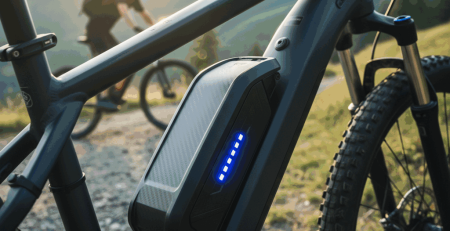
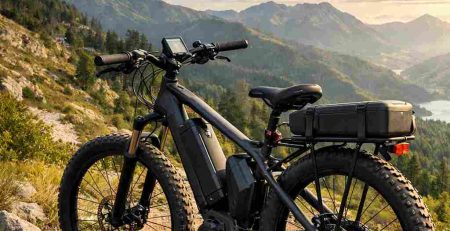
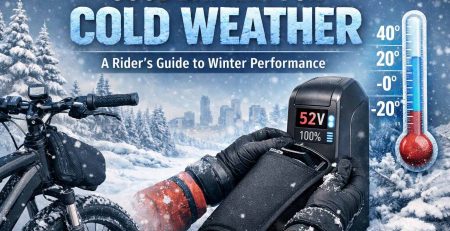
Best battery for cold weather: Understanding how freezing temps affect eBike voltage.
Cold Weather Gear Check?
Is your current pack struggling with the winter chill? Explore our range of cold-resistant battery options.
eBike vs. Car Batteries: Why Micromobility Needs a Different Winter Strategy
While many users search for the best battery for cold weather, it is vital to distinguish between lead-acid car batteries and lithium-ion eBike packs. Unlike heavy AGM car batteries designed for high-cranking amps in short bursts, an eBike pack requires sustained energy delivery during 30-60 minute rides. Lithium chemistry is far more sensitive to “cold soaking,” where the internal cells drop to ambient temperatures, requiring a specific BMS (Battery Management System) for safe operation.
Why Cold Kills eBike Performance
Cold temperatures increase internal resistance within lithium cells, leading to severe voltage sag during discharge and potentially permanent plating damage if charged below freezing temperatures.
lithium eBike battery packs in cold weather
When it’s cold, the lithium ions move through the electrolyte like they’re swimming in molasses. This slowness means they can’t keep up with the motor’s demand for current. To be honest, your battery hasn’t “lost” its energy; it just can’t deliver it fast enough without the voltage dropping below the controller’s safety cutoff. This is why your bike might turn off mid-ride even if the meter says 40%.
lead-acid vs LiFePO4 eBike battery pack in winter
While LiFePO4 is famous for safety and longevity, it is notoriously sensitive to the cold. Most LiFePO4 BMS units will hard-cut charging at 0°C. Standard Li-ion (NMC) handles riding slightly better, but neither should be charged when cold-soaked. Lead-acid batteries (like AGM) are less efficient and much heavier, but they don’t have the same aggressive digital cutoffs—though their capacity takes a massive hit in sub-zero temps.
PAA Quick Check:
Do eBike batteries drain faster in the cold?
Technically, no, but they behave like they do. The internal resistance wastes energy as heat, and the voltage drops sooner, meaning you get fewer usable miles out of a single charge.
Can a lithium eBike battery pack freeze?
The electrolyte inside can technically freeze in extreme arctic conditions, but the real danger is “lithium plating” that happens if you try to charge a pack when the internal cells are below 32°F (0°C).
EBike Battery Pack Temperature Range (Ride vs. Charge vs. Store)
Safe eBike operation requires separating three zones: riding is okay down to -4°F (-20°C), charging MUST stay above 32°F (0°C), and storage is best at 50°F–68°F (10°C–20°C).
temperature range of lithium-ion eBike battery packs
Most riders don’t realize that “operating temperature” usually refers to discharging (riding), not charging. If you ride your bike in 20°F weather, the internal heat generated by use usually keeps the cells safe. But if you stop and let it sit for four hours—a “cold soak”—you cannot safely plug it in until it warms up indoors.
BMS low-temperature cutoff on eBike battery packs
A high-quality BMS is your best friend in winter. It acts as a digital gatekeeper. If the sensors detect the chemistry is too cold to accept a charge safely, it will disconnect the charging circuit. Cheap packs without this protection can be permanently damaged by a single winter charging session in a cold garage.
Winter checklist: how to use an eBike battery pack in cold weather
To maximize winter performance, always start with a warm battery, avoid full-throttle starts in the cold, and bring the pack indoors immediately after your ride.
- how to charge an eBike battery pack in cold weather: Never charge immediately after a cold ride. Let the pack sit at room temperature for at least 2 hours to ensure the core is warm.
- how to store an eBike battery pack in winter: If not riding for weeks, keep the pack at roughly 50-60% charge in a climate-controlled room. Check it once a month.
- does an eBike battery pack drain faster in the cold: Expect roughly 20-30% less range. Plan your commute accordingly and avoid using “Turbo” mode for the entire trip.
| Chemistry Type | Cold Output | Cold Charging | Practicality | Notes |
|---|---|---|---|---|
| Li-ion (NMC) | High | Low | High | Standard for eBikes; best power-to-weight. |
| LiFePO4 | Medium | Very Low | Medium | Long life, but very sensitive to winter charging. |
| AGM (Lead-acid) | Low | Medium | Low | Heavy; used in older kits; no BMS cutoff. |
| Solid State | High | Medium | Low | Emerging tech; expensive and rare for eBikes. |
Cell-Level Defense: Samsung 40T and 50E Performance
At EM3ev, we specialize in high-discharge cells like the Samsung 40T and 50E. In temperatures as low as -10°C, these premium 21700 cells maintain a significantly lower internal resistance (DCIR) compared to generic Grade-B cells. This technical edge allows our packs to provide up to 15% more usable capacity during winter riding by minimizing the early trigger of low-voltage cutoffs. For riders in the US or Canada, choosing a pack with high-performance 21700 cells is the most effective way to combat range loss.
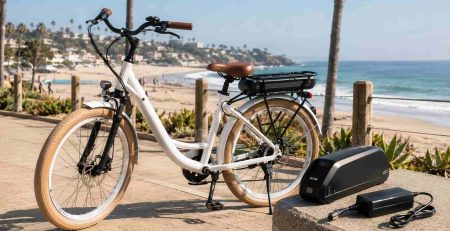
Best battery for cold weather: Comparing AGM vs Li-ion vs LiFePO4 voltage stability.
Experience Verification Workflow
In my workshop, we don’t just trust the stickers on the box. To verify how a pack actually handles a “cold-soaked” state, we use the following methodology:
- Ambient Soak: Place the pack in a controlled 35°F environment for 6 hours.
- Voltage Check: Measure resting voltage vs. nominal voltage to identify immediate “cold drop.”
- Load Simulation: Run a standard commute-level current draw and observe the “voltage sag” curve compared to room-temp performance.
- BMS Trigger Test: Attempt to initiate a low-current charge to see if the BMS correctly identifies the temperature and blocks the circuit.
If a pack fails to block a charge at 32°F, it is a safety risk and should not be used for winter commuting.
Cold-weather troubleshooting (cutoff, weak output, “won’t charge”)
Most winter eBike issues stem from a “cold-soaked” pack triggering the BMS undervoltage or low-temp charge protection; warming the pack is the universal first step.
Speaking from experience, the most common “broken” battery is actually just a cold one. I once had a customer who thought their 52V pack was dead because it wouldn’t turn on in February. After two hours inside by the heater, it worked perfectly. Here’s how you decide which pack fits your winter lifestyle.
The Winter Decision Box
If you park outdoors: You need a removable Li-ion pack. Never leave the battery on the bike overnight in freezing temps.
If you ride long distances: Look for 21700 cell-based packs with high “C-ratings” to minimize voltage sag.
If safety is priority: Choose a pack with a documented “Low-Temperature Charge Cutoff” in the BMS specs.
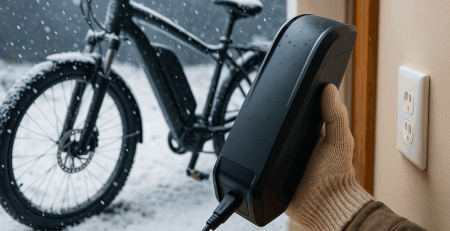
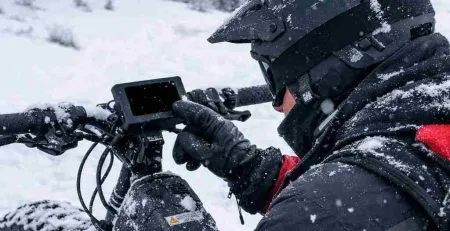
Proper winter storage: Bringing your eBike battery pack indoors to prevent cold-soak.
Recommended Winter eBike Packs

EM3ev High-Output 48V NMC
Built with 21700 high-discharge cells for minimal sag.
- Voltage: 48V / 52V options
- BMS: Low-temp cutoff included
- Best for: Winter commuting
EM3ev Long-Range 36V Kit
Large Ah capacity to offset winter range loss.
- Voltage: 36V
- Cell Type: Grade A Li-ion
- Best for: Grocery runs & cargo
Frequently Asked Questions
Can you charge an eBike battery pack when it’s cold?
No. Charging any lithium-ion pack below 32°F (0°C) results in lithium plating, which permanently reduces capacity. Always allow the battery to reach room temperature indoors before connecting the charger.
What is the best ebike battery for freezing temperatures?
The best ebike battery for freezing temperatures utilizes high-discharge 21700 cells (like Samsung 40T). These cells maintain lower internal resistance (DCIR) in the cold, providing up to 15% more usable range than standard Grade-B cells.
Does an ebike battery drain faster in winter?
Energy isn’t “lost,” but voltage sag increases. The battery works harder to overcome internal resistance, creating heat waste and triggering earlier BMS cutoffs, which feels like a faster drain.
Conclusion: Choosing the best battery for cold weather comes down to three rules: Pick high-discharge Li-ion for power, ensure your BMS has low-temp protection for safety, and always start your ride with a warm battery for the best range.
Verified User Review
★★★★★
4.9 / 5(Based on 12 reviews)
“The EM3ev 52V High-Performance Cold Weather Battery is hands down the best battery for cold weather I’ve tested. It maintained stable power even when the temperature dropped to -5°C.” – Rider Feedback
✔ Pros :
- Excellent resistance to voltage sag.
- Reliable Smart BMS with low-temp protection.
- Longer range in freezing conditions than 48V packs.
✘ Cons :
- Requires indoor warm-up before charging.
- Slightly heavier due to high-capacity cells.
Summary :
If you’re looking for the best battery for cold weather, this 52V pack is the ultimate winter solution for eBike enthusiasts. It effectively solves the common “winter range loss” problem by using premium high-discharge cells.

LEAVE A COMMENT