




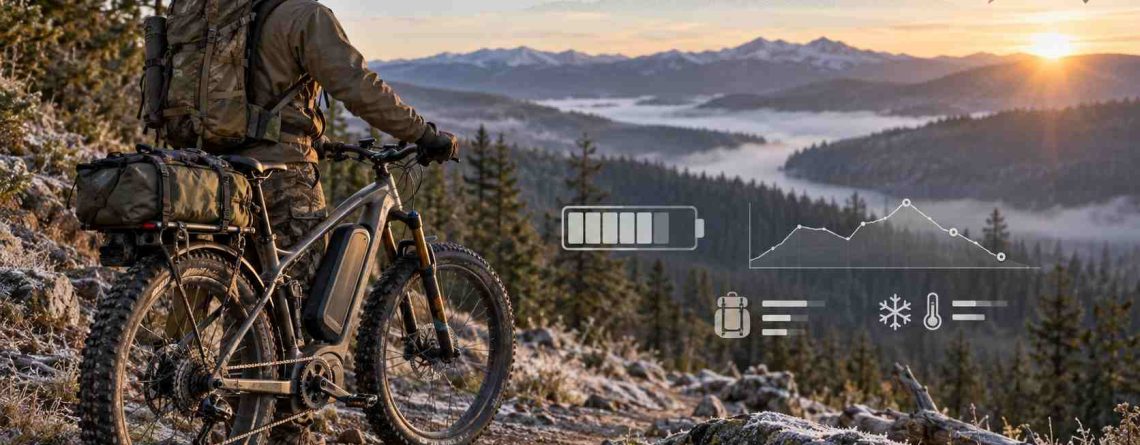
eBike Battery for Hunting: How to Choose the Right Pack
An ebike battery for hunting should match both the bike and the trip. Check voltage, controller and BMS needs, watt-hours, terrain, load, temperature, charging access, and the energy needed for the return ride.
Quick Answer
- Match battery voltage to the bike and controller first.
- Use Wh to compare how much energy different packs store.
- Plan for hills, gear, slow trails, and the return ride.
- Allow for colder weather and limited charging access.
- Choose between one larger pack and a compatible spare based on the trip.
The ride into a hunting area may look simple on paper. You start with a charged battery, a known route, and a load that is easy to estimate. The ride back may be much less predictable.
The trail can become soft or steep, the temperature can fall, and the bike may carry more weight. Those changes can raise energy use even when the return distance is similar to the ride in.
For that reason, hunting battery planning should focus on the full trip. A claimed range number is useful as a reference, but it should not be the only number behind a remote ride.

What Makes an eBike Battery for Hunting Different?
Hunting can increase battery demand because the ride may involve longer routes, more load, steep terrain, cold weather, and little access to charging.
The battery itself does not become a special hunting battery. What changes is the way the bike is used and how much uncertainty the trip may involve.
A normal trail ride may finish near a house, car, or charger. A hunting ride may take the bike farther from easy support, so the return leg deserves as much attention as the outbound trip.
Plan the Return Ride, Not Just the Ride In
Battery range should cover the whole route under realistic conditions. The return trip may have more climbing, a heavier load, colder weather, or a different trail surface.
This does not mean adding a made-up reserve percentage. It means avoiding a plan that only works when every condition stays close to ideal.
Include Hunting Gear in the Load
Clothing, packs, water, tools, and other gear add to the total weight. More weight can raise energy use during starts and climbs, even when the bike feels normal on easier ground.
If the load may change later in the day, include that possibility when comparing battery size and expected range.
Expect Slow Trails and Steep Ground
Loose surfaces, repeated starts, and long grades can make the drive system work harder than steady riding on a paved road.
Terrain therefore matters for range planning, but it does not change the basic electrical rules. Battery voltage must still match the bike, and the BMS must still support the controller.
Cold Weather Can Change the Plan
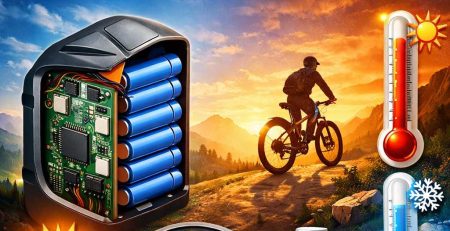
Lithium-ion batteries can deliver less available performance when they are cold. The exact change depends on the pack and the conditions, so a fixed cold-weather loss figure is not useful for every ride.
The safer approach is to follow the battery maker’s temperature guidance and avoid planning a cold hunt around a warm-weather range estimate.
Does hunting require a larger eBike battery?
Not always. Capacity depends on distance, terrain, total load, weather, riding style, and charging access. The pack must also match the bike.
How does hunting gear affect battery range?
Extra weight can increase energy use, especially during climbing and repeated starts. Plan around the real load rather than an unloaded range.
Why should I plan return range separately?
The return ride can have different terrain, load, temperature, and remaining battery energy. It may be harder than the ride in.
How to Choose the Right Hunting eBike Battery
Check the battery in this order: voltage, controller and BMS, Wh, terrain and load, temperature, then charging or spare-battery needs.
Starting with the largest Ah number can lead to a poor choice. A large battery still needs to match the bike’s voltage, controller, connector, charger, and available mounting space.
- Confirm the bike’s nominal system voltage.
- Check the controller’s current needs.
- Check the battery BMS continuous-current rating.
- Compare battery energy in Wh.
- Estimate rider, gear, and possible return load.
- Review hills, trail surface, and repeated starts.
- Check the expected temperature.
- Decide if charging or a spare battery is realistic.
- Confirm connector, charger, battery size, and mounting.
Plan Hunting Range With Watt-Hours
For ebike battery range for hunting, Wh is usually more useful than Ah because watt-hours combine battery voltage and capacity.
Wh = V × Ah
This formula helps compare stored energy, but it does not predict an exact riding distance. Real range also depends on load, terrain, speed, weather, trail surface, and how often the motor works hard.
For hunting use, compare Wh only after the battery passes the basic compatibility checks. Then judge whether the available energy fits both the route and the likely return conditions.
How much battery capacity do I need for a hunting eBike?
There is no single Ah value for every bike. Match the system first, then compare Wh against route length, hills, load, temperature, and charging access.
Is Ah or Wh better for planning hunting range?
Wh is usually more useful because it includes both voltage and Ah, which makes stored energy easier to compare across different battery systems.
Account for Hills and Heavy Loads
Steep grades and repeated starts can increase energy demand, especially when the bike is carrying more weight than usual.
Soft ground can have a similar effect because the motor must work harder to keep the bike moving. A rough route therefore deserves a more cautious energy plan than the same distance on smooth pavement.
Do not turn that idea into a fixed range penalty. The effect depends on the grade, load, bike, controller, speed, and trail surface.
Do steep hills use more battery while hunting?
They can. Long climbs and slow starts under load may increase energy use, but the amount depends on the bike and the riding conditions.
Should I include the return load in my battery plan?
Yes. If the bike may carry more weight later, plan for the more demanding part of the trip rather than the easiest one.
Match Voltage, Controller, and BMS
eBike battery voltage for hunting follows the same rule as any other eBike use. The battery must match the electrical system.
A higher-voltage pack is not a simple way to add more hunting range. The controller, charger, display, and other relevant parts must support that voltage.
The BMS also matters. It must allow the pack to support the controller’s current demand. A battery with more Wh does not always support more current.
Can I use a higher-voltage battery for more range?
Only if the complete electrical system supports that voltage. Do not treat a voltage change as a normal capacity upgrade.
Does more Wh mean more current output?
No. Wh describes stored energy. Current capability depends on the cells, pack design, BMS, and controller requirements.
Plan for Cold-Weather Hunting
An ebike battery for cold weather hunting should be planned around the pack maker’s temperature limits and the conditions expected on the ride.
Cold conditions can reduce available performance, so warm-weather range should not be treated as a promise for a cold morning.
Charging also needs care. Extra caution is needed when charging lithium-ion batteries at low temperatures. If a pack is colder than its allowed charging range, let it return to a suitable temperature before connecting the charger.
Does cold weather reduce hunting eBike battery performance?
It can. Available performance and range may fall in colder conditions. The amount depends on the specific battery and temperature.
Should I charge the battery while it is still cold?
Only within the maker’s charging limits. If the battery is too cold, let it warm to an allowed temperature before charging.
Hunting eBike Battery Planning Checklist
| Hunting Condition | Battery Factor | What to Do |
|---|---|---|
| Long access route | Usable Wh | Plan the ride in and the ride out |
| Steep terrain | Controller/BMS demand | Check pack output capability |
| Heavy gear | Energy use | Plan for the harder leg |
| Cold weather | Battery temperature | Follow pack guidance |
| No field charging | Energy reserve | Consider a compatible spare |
| Remote riding | System match | Check the full setup before the trip |
Experience Validation Process
A simple repeatable process is more useful than a guessed range figure, because the same method can be used for different routes and batteries.
- Record the bike’s voltage, controller needs, battery Wh, BMS details, connector, and charger.
- Review the route, including distance, climbs, trail surface, and likely stops.
- Compare the ride in with the ride out, especially if load or temperature may change.
- Check the weather and decide whether cold conditions could affect the pack.
- Confirm whether suitable charging will actually be available.
- Compare every battery with the same set of checks.
If an important electrical detail is unknown, verify it before depending on the battery in a remote area.
Should You Carry a Spare eBike Battery for Hunting?
A compatible spare battery can add useful energy when charging is not available, but it must match the bike and be carried securely.
One Larger Pack vs a Spare Battery
One large battery keeps the system simple. You only need to mount, connect, monitor, and charge one pack.
The tradeoff is size and weight. A higher-energy battery may need more frame space or a different mounting method.
A spare ebike battery for hunting gives you a separate energy reserve. However, the spare still needs the correct voltage, connector, current capability, and a secure place to travel.
Charging During Multi-Day Trips
eBike battery charging during hunting trips needs a real plan. You need the correct charger, a suitable power source, a safe place, enough time, and a battery that is within its allowed charging temperature.
If any of those points are uncertain, do not build the route around a recharge that may not happen.
Backcountry and Remote Use
An ebike battery for backcountry hunting should be selected with extra attention to return energy because support and charging may be limited.
For longer ebike battery for hunting trips, plan around the complete route rather than the first destination. A long-range pack is useful only when it also matches the controller, BMS, charger, connector, and available mounting space.
Hunting Battery Trip Check
- Correct battery voltage: YES / NO
- Controller and BMS match: YES / NO
- Enough Wh for the full trip: YES / NO
- Terrain and load considered: YES / NO
- Cold weather considered: YES / NO
- Charging or spare plan confirmed: YES / NO
- Connector, charger, and mount checked: YES / NO
Any NO or UNKNOWN: verify that point before relying on the setup for a remote ride.
Two EM3ev Battery Options to Consider
These two packs show different approaches to battery size and mounting. They are not universal hunting batteries, so check the bike before choosing either one.
48V Rail-Mounted Option

EM3ev 48V 17Ah Jumbo Shark
A rail-mounted choice for compatible 48V bikes where practical frame mounting and balanced capacity matter.
- Voltage: 48V
- Capacity: 17Ah / 782Wh
- BMS: 40A smart BMS
- Format: Reention Jumbo rail case
Good fit for: Compatible 48V builds with enough downtube or frame space.
Check controller demand, rail clearance, connector, and charger first.
52V High-Capacity Option

EM3ev Rhino 5P — 52V 25Ah
A higher-energy pack for compatible 52V systems where longer remote rides or heavier loads call for more stored energy.
- Voltage: 52V
- Capacity: 25Ah / 1260Wh
- BMS: 40A+ smart BMS
- Format: Rectangle pack
Good fit for: Verified 52V builds with enough secure mounting space.
Confirm the complete bike system supports 52V before selecting this pack.
Compare Battery Options by System First
Start with voltage and controller needs. Then compare Wh, BMS capability, case style, connector, and mounting space.
Hunting eBike Battery FAQ
Good hunting battery planning starts with bike compatibility, then adds range, terrain, load, weather, and the return trip.
How much battery capacity do I need for a hunting eBike?
There is no universal Ah number. Match the bike first, then compare Wh against distance, hills, load, temperature, and charging access.
How far can an eBike battery last while hunting?
There is no fixed hunting range. Distance depends on Wh, load, speed, terrain, weather, trail surface, and how hard the motor works.
Does hunting gear reduce eBike battery range?
It can. Added weight may increase energy use, especially during starts and climbs. Include the real load when planning the route.
Is Wh or Ah more important for a hunting eBike battery?
Wh is usually more useful because it includes voltage and Ah. It makes stored energy easier to compare between different battery systems.
Do steep hills use more battery while hunting?
They can. Energy use depends on grade, speed, total load, trail surface, motor behavior, and controller settings.
Does cold weather reduce hunting eBike battery performance?
It can. Colder conditions may reduce available performance and range. Follow the battery maker’s operating and charging guidance.
Should I carry a spare eBike battery when hunting?
A spare can help when charging is unavailable. It must match the bike, and it should be secured properly during transport.
Can I use a larger battery on my hunting eBike?
Yes, if the larger pack still matches the system. Check voltage, BMS, controller needs, connector, charger, size, and mounting first.
Conclusion
Choose the pack in this order: bike compatibility, Wh, terrain and load, temperature, then return-energy and charging needs.
Hunting does not require a special battery type. It requires a battery that fits the bike and a plan that reflects the way the bike will be used.
Start with voltage, controller needs, BMS output, connector, charger, and mounting. After those points are clear, compare the amount of energy stored in the pack.
Then add the hunting conditions. Think about hills, extra gear, soft trails, cold weather, limited charging, and the ride back.
A 48V rail-mounted pack may suit one build, while a larger 52V rectangle pack may suit another. The correct choice depends on the bike first and the trip second.
Compare Compatible Battery Packs
Review EM3ev options by voltage, Wh, BMS capability, case format, connector, and mounting requirements.

LEAVE A COMMENT