




Why Your Beach Electric Bicycle Needs Better Protection
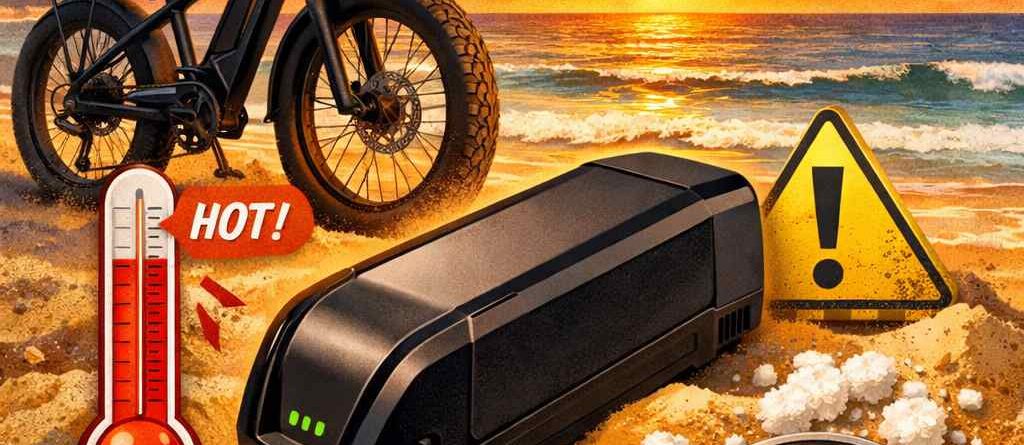
A beach electric bicycle is built for coastal rides, and these bikes offer a classic cruiser look, upright riding comfort, and a relaxed riding position. Its battery pack still needs strong protection from salt air, fine sand, and heat on soft ground.
Defining the Best Electric Bike for Beach Performance
Finding the best electric bike for beach use requires a battery that balances raw power with extreme environmental resistance. Standard packs often struggle with the high torque demands of a fat tire beach cruiser. To ensure a smooth ride, look for high-capacity lithium-ion packs (at least 17Ah) featuring Grade-A Samsung or LG cells. These provide the consistent voltage needed to push through soft terrain without triggering premature BMS thermal cutoffs.
Quick Answer: Coastal Battery Survival
- Protect Connections: Salt air is your main enemy. Keep your ports closed and use a guard like dielectric grease.
- Choose the Right Power: Use a battery with enough Wh capacity to push through heavy sand.
- Clean After Every Ride: Brush off sand and wipe away salt before you plug in the charger.
- Cool Down First: Let your battery reach a normal temperature for an hour before you charge it.
Beach Electric Bicycle Battery Pack — Coastal Protection Review
✅ Pros
- Explains the core coastal risks for eBike batteries: salt-air corrosion, sand intrusion at ports/connectors, and higher heat load.
- Provides a practical care routine: clean after rides, remove salt residue, fully dry, and let the pack cool before charging.
- Good selection logic for beach riding: higher Wh capacity + robust BMS to better handle soft-sand current draw and heat.
⚠️ Cons
- Ingress protection varies by model: exposed charge/discharge ports and connectors may need extra sealing or covers for sandy, salty environments.
- Higher-capacity packs are heavier and bulkier, which can affect handling and mounting options on some beach/cruiser frames.
🧾 Summary
If your beach electric bicycle is used around salt air and soft sand, these protection and maintenance steps are highly practical. Following them can reduce common issues like corroded connectors, gritty port contamination, and heat-related cutoffs.
I still remember my first long ride along the coast. The sun was setting, and my beach cruiser electric bike delivered a smooth ride that made relaxed riding on the shore feel effortless. But the next morning, my bike wouldn’t turn on. I saw a small error on the screen, and then it went dark. I learned the hard way that sand and salt air are a dangerous mix for most cruiser bikes. Even a high-quality eBike battery pack can fail if not properly protected.

Riding near the ocean is a lot of fun, but it is a major test for your gear. When you ride on soft sand, your battery gets very hot. At the same time, salt air is trying to get inside your electronics. If you do not have a good plan for care, your battery might stop working when you need it most. To be honest, most battery failures at the beach are easy to prevent if you know what to look for.
Need a Battery That Can Handle the Beach?
Check our list of batteries built for high-load riding and salt air protection.
Beach eBike battery pack: risks + quick fixes
The best way to save your battery is to clean off salt residue after every ride and let the pack cool down before you start charging.
The ocean breeze is nice, but it carries tiny salt crystals. These crystals can cause a short circuit if they get into your battery ports. Also, sand gets into every gap. It traps heat and makes the battery work much harder. Actually, a few simple steps can keep your bike running for years, even in the toughest coastal areas.
eBike battery pack BMS cutoff after heavy load on sand
Has your bike ever shut off in the middle of a beach ride? Soft sand creates heavy resistance for a fat tire setup and even for standard wide tires, increasing the load on both the front and rear of the bike, especially during longer beach runs. To keep moving, riders often raise their pedal assist modes, and high pedal assistance levels on sand can push a rear hub motor and the battery pack hard enough for the BMS to cut power. This is a common sign that your battery is under too much stress.
This heat is primarily caused by Sand Resistance Heating. When riding a fat tire beach cruiser on soft ground, the motor draws maximum continuous current. EM3ev battery packs utilize a Smart BMS with multiple thermal sensors to monitor cell-level temperatures. If your system cuts out, it’s a vital safety feature preventing thermal runaway caused by the intense friction-related load.
Beach eBike battery pack: risks + quick fixes
The best way to keep your battery safe is to clean off salt with a damp cloth after every ride and let the pack cool down before you charge it.
In my experience, salt air is a silent killer. It doesn’t need to splash on your bike to cause trouble. High humidity near the ocean carries salt into the tiny gaps of your battery. Over time, this leads to rust on the metal pins. Actually, I have seen many riders lose a good battery because they didn’t check for sand in the charge port.
10-minute care after a beach ride
Follow these simple steps as soon as you get home to prevent damage:
- Brush: Use a soft brush to remove sand from the battery seams and the mount.
- Wipe: Use a damp cloth to wipe the outside of the battery case to remove salt.
- Dry: Make sure the charge port is completely dry before you touch it.
- Wait: Let the battery sit inside for an hour to reach a normal temperature.
Battery Safety Checklist
| Part | Look For | Action |
|---|---|---|
| Metal Pins | Green rust or dark marks | Clean with a dry cloth and use protective gel |
| Charge Port | Sand or grit inside | Vacuum the sand out; do not use air spray |
| Case Seams | Sand stuck in the cracks | Wipe it away so it does not get inside |
| Heat/Smell | Sweet smell or hot case | Stop using it; move it to a safe spot |
| Power Cut | Bike turns off on sand | Check if your battery is large enough for sand |
| Charger | Strange lights or noise | Check the plug for sand before you buy a new one |
Beach Riding Battery Capacity & Spec Comparison
| Voltage Class | Ideal Terrain | Est. Sand Range | Recommended Cells |
|---|---|---|---|
| 36V / 48V | Hard-packed sand, Boardwalks | 15-25 miles | Standard 18650 / 21700 |
| 52V (High Torque) | Soft sand, Steep dunes | 20-35 miles | Samsung 35E / LG MJ1 |
Note: Higher voltage reduces current draw for the same power output, keeping your battery cooler during intense coastal sessions

Experience Validation Workflow
I use this simple method to check if a battery is still safe to use. This is better than guessing.
- Write it down: Note how hot it was and if the sand was soft or hard.
- Watch for signs: See if the battery light blinks or if the case feels hot to the touch.
- Check the easy things first: Always check the metal pins for salt before you assume the battery is broken.
- The Red-Line: if the case looks swollen or smells like chemicals, it is time for a new battery.
Common Question: Is my battery waterproof?
Answer: Most batteries are water-resistant, not waterproof. They can handle rain, but saltwater is much more dangerous. Never ride into the ocean waves!
How to choose a replacement eBike battery pack for beach riding
Pick a battery with high Wh capacity and a strong BMS to handle the extra heat and motor strain caused by riding on soft sand.
Choosing a battery for the beach is different from choosing one for the city, because beach riding puts more strain on lithium ion batteries and usually requires more usable capacity. If your motor has to fight through deep sand, it will draw more power every second. That is especially true for bikes with a rear hub motor, where heat builds faster if the battery is too small. I always tell my friends to go one size larger than they think they need for the coast.
Wh capacity for beach riding
Think of watt-hours (Wh) as your fuel supply. On flat roads, range is usually steady. On sand, though, it can drop by as much as half. Actually, it is very common to see a 50% drop in distance when the sand is soft. If you want to ride for a long time, look for a battery with a “High” Wh rating. This gives you a safety margin so you don’t get stuck far from home.
Voltage: 36V, 48V, or 52V?
Almost all modern lithium ion batteries used in e-bikes are built to be reliable, but the beach is a special case. Most cruiser bikes with a classic cruiser design use a 36V or 48V system, so you need to make sure the battery matches your frame style and overall fit. A 48V or 52V battery pack gives you more power to get through soft sand. Before upgrading, make sure your controller can handle the higher voltage. To be honest, a 52V battery feels much stronger when the sand gets deep. If you are not sure if your bike can handle the extra power, contact customer support to check your specs before you buy.
Many riders want to maintain a constant 20 mph on the coast, but you should always check local laws before upgrading for higher speed. If you are adding a high-capacity pack to rear racks, choose a sleek matte black casing to match your bike’s look.
How to store your battery near the beach
Humidity can be just as damaging as salt. Do not leave your battery in a damp shed or a hot garage. Store it indoors in a cool, dry place. This stops the salt air from rusting the inside parts. Keep it charged to about half (50%) if you are not going to ride for a few weeks. This is the best way to keep the cells healthy.
Coastal Decision Box
Answer these questions to find your best battery path:
- How often do you ride on sand? (Sometimes vs. Every day)
- Is the salt air very strong? (Low vs. High)
- Do you carry a heavy load? (Light vs. Heavy)
- Can you store it inside? (Yes vs. No)
Tip: If you ride on sand every day with a heavy load, an EM3ev battery with a high-power BMS is your best choice.


Standard Cruiser Pack
Best for: Occasional rides on hard sand or boardwalks.
- Voltage: 48V
- Power: Medium
- Good for: Light loads
High-Output Beach Pack
Best for: Frequent rides in deep, soft sand.
- Voltage: 52V
- Power: High
- Good for: EM3ev battery high-load spec
Ready for a Better Beach Ride?
Do not let a weak battery stop your fun. Check our list of batteries that are built to handle salt and sand.
Coastal eBike Battery FAQ
Why is ebike battery salt water exposure so dangerous?
Unlike freshwater, ebike battery salt water exposure creates a highly conductive path for electricity. Salt ions significantly increase water conductivity, which can lead to rapid electrolysis, internal short circuits, and a high risk of fire. Even dried salt residue acts as a desiccant, pulling moisture from the air and causing long-term corrosion on metal connectors. Always wipe your ports with a damp cloth followed by a dry one after every coastal trip.
Can sand damage an eBike battery pack?
Yes, sand acts like sandpaper and can wear down your battery locks or trap heat against the case.
Sand can work its way into small gaps around the battery mount. If you leave it there, it can scratch metal parts and make the battery harder to remove. I always suggest a quick brush after every ride to keep the connections clean and safe.
Is my battery waterproof enough for the beach?
Most batteries can handle a light splash, but they are not built to be dipped in the ocean.
Saltwater is very different from rain. It carries electricity easily and can cause a fire or a short circuit. Even if the battery looks dry, salt left inside can cause rust later. Never ride your bike into the waves or deep tide pools.
Why does my bike cut out when I ride on sand?
Riding on soft sand pulls a lot of power, which can make the battery safety system turn off the bike.
When you ride on soft ground, the motor has to work harder, and that creates more heat in the battery pack. If the temperature rises too high, the BMS may shut the system down to protect the cells.
Should I charge my battery right after a beach ride?
No, you should always wait an hour to let the battery cool down before you plug it in.
Charging a hot battery can shorten its lifespan. After a beach ride, give it time to return to a normal temperature before plugging it in. This simple wait will help your battery last for many more years.
How should I store my battery if I live near the ocean?
Store your battery inside a cool, dry room to protect it from the salty, humid air.
Do not leave your battery in a damp garage or outside. The salt in the air can cause rust even if the bike is not moving. Actually, keeping it in a climate-controlled room is the best way to keep the electronics safe from corrosion.
36V vs 48V: Which is better for the beach?
A 48V or 52V battery is usually better for sand because it provides more torque to keep the bike moving.
A 36V battery may be fine for boardwalk riding, but it can struggle in deep sand. A higher-voltage battery usually handles heavy loads better. Just confirm that your bike is compatible before you upgrade.
3 Actionable Takeaways
- Keep it Clean: Use a soft brush and a damp cloth after every ride to remove sand and salt.
- Watch the Heat: Give your battery an hour to cool down before you start charging.
- Choose High Power: If you ride on sand often, pick a battery with a high Wh capacity and a strong BMS.



LEAVE A COMMENT